

Motmot

Brown Noddy vs Murphy's Petrel

Anous stolidus versus Pterodroma ultima

Play a quiz with Brown Noddy and Murphy's Petrel

Brown Noddy (Anous stolidus) Brown Noddy
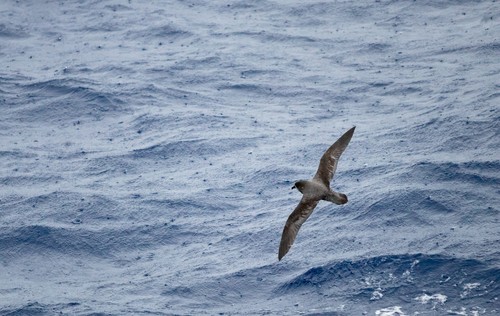
Murphy's Petrel (Pterodroma ultima) Murphy's Petrel

Media

Loading…

In short

The most reliable way to separate Brown Noddy from Murphy's Petrel is by overall structure and plumage tone: Brown Noddy is a dark chocolate-brown tern with a pale crown and incomplete white eye-ring, while Murphy's Petrel is a bulkier, all-dark sooty-grey petrel with a pale chin and pinkish legs. In flight, Brown Noddy shows a long, wedge-shaped tail and a more tern-like, buoyant flight, whereas Murphy's Petrel appears heavier, with longer, broader wings and a stiffer, gliding flight style. If you see the pale crown and white eye-ring, it's a Brown Noddy; if the bird is uniformly dark with a pale chin and pinkish legs, it's Murphy's Petrel. Both can appear dark at a distance, but their structure and subtle plumage details are key.

Identification tips

  1. Head pattern: Brown Noddy always shows a pale-grey or white crown and forehead with a narrow, incomplete white eye-ring; Murphy's Petrel has a uniformly dark head with only a pale chin, never a pale crown or eye-ring. This is the single most reliable field mark at any age.
  2. Plumage tone: Brown Noddy is dark chocolate-brown overall, while Murphy's Petrel is sooty-grey. At a distance, both can look dark, but the noddy's brown is warmer and the petrel's grey is colder.
  3. Tail shape: Brown Noddy has a long, wedge-shaped tail, visible in flight and when perched. Murphy's Petrel has a shorter, more squared tail typical of petrels.
  4. Leg color: Murphy's Petrel has pinkish legs, which can be seen when the bird is perched or landing; Brown Noddy's legs and feet are dark.
  5. Size and structure: Brown Noddy is slender and tern-like, with a relatively small head and long tail. Murphy's Petrel is bulkier, with a large head, thick neck, and long, broad wings.
  6. Flight style: Brown Noddy flies with buoyant, tern-like wingbeats and often hovers or dips close to the water. Murphy's Petrel uses stiff-winged glides and dynamic soaring, rarely flapping for long periods.
  7. Bill shape: Brown Noddy has a fine, straight, medium-length bill typical of terns. Murphy's Petrel has a thicker, hooked bill, but this can be hard to see at a distance.
  8. Underwing and upperwing: No distinctive age-specific upperwing patterns are described for either species, so focus on overall color and structure.
  9. Eye-ring: The incomplete white eye-ring of Brown Noddy is absent in Murphy's Petrel.
  10. Chin color: Murphy's Petrel has a pale chin contrasting with the rest of the face; Brown Noddy's chin is not paler than the rest of the head.
  11. Habitat context: If seen near land, especially in a colony or perched on vegetation, Brown Noddy is much more likely. Murphy's Petrel is almost always seen far from land.
  12. Group behavior: Brown Noddies are often in groups or colonies; Murphy's Petrels are usually solitary at sea.
  13. Sex and age: Neither species shows sexual dimorphism; age-related differences are minimal for field ID, but Brown Noddy's pale crown is present in all plumages.
  14. Pitfalls: At a distance or in poor light, both can look uniformly dark. Always look for the pale crown and eye-ring for noddy, and the pale chin and pinkish legs for petrel.
  15. When in doubt: Structure and head pattern are the best clues—tern-like with a pale crown is Brown Noddy; bulky, all-dark with a pale chin is Murphy's Petrel.

Size

Brown Noddy is 38–45 cm in length with a wingspan of 75–86 cm, while Murphy's Petrel is slightly shorter at 38–41 cm but has a much longer wingspan of about 97 cm and is significantly heavier (about 360 g). Brown Noddy is the largest noddy, but Murphy's Petrel is bulkier overall, with a more robust body and longer wings. The noddy looks more slender and tern-like, while the petrel is stouter and more powerful in build.

Plumage

Juvenile and adult Brown Noddies have dark chocolate-brown plumage with a distinctive pale-grey or white crown and forehead, and a narrow, incomplete white eye-ring. Their tail is long and wedge-shaped. In contrast, Murphy's Petrel (all ages) is uniformly sooty-grey, except for a pale chin, and lacks any pale crown or eye-ring. The petrel's legs are pinkish, a subtle but sometimes visible mark when perched or landing. No distinctive age-specific upperwing patterns are described for either species, so focus on the head and underpart contrasts. Brown Noddy's brown tones and pale head are diagnostic, while Murphy's Petrel's sooty-grey uniformity and pale chin set it apart.

Behaviour

Brown Noddy typically flies with buoyant, tern-like wingbeats and often perches on cliffs, trees, or shrubs, sometimes in large colonies. Murphy's Petrel is a classic gadfly petrel, using long, stiff-winged glides and dynamic soaring over open ocean, rarely perching where easily observed. In flight, the noddy looks lighter and more agile, while the petrel appears heavier and more purposeful. Brown Noddy is often seen in groups near breeding sites, while Murphy's Petrel is usually solitary or in loose associations far from land.

Habitat

Brown Noddy breeds colonially on tropical islands worldwide, often nesting on cliffs, trees, or shrubs, and is usually seen near land or coastal waters. Murphy's Petrel is an oceanic species, rarely seen close to shore except at remote breeding islands in the South Pacific. If you are near land or in a colony, Brown Noddy is much more likely; a lone, dark seabird far offshore is more likely Murphy's Petrel.

Submit a better description

Use the same sections as the comparison. Your text is published immediately.

The most reliable way to separate Brown Noddy from Murphy's Petrel is by overall structure and plumage tone: Brown Noddy is a dark chocolate-brown tern with a pale crown and incomplete white eye-ring, while Murphy's Petrel is a bulkier, all-dark sooty-grey petrel with a pale chin and pinkish legs. In flight, Brown Noddy shows a long, wedge-shaped tail and a more tern-like, buoyant flight, whereas Murphy's Petrel appears heavier, with longer, broader wings and a stiffer, gliding flight style. If you see the pale crown and white eye-ring, it's a Brown Noddy; if the bird is uniformly dark with a pale chin and pinkish legs, it's Murphy's Petrel. Both can appear dark at a distance, but their structure and subtle plumage details are key.

  1. Head pattern: Brown Noddy always shows a pale-grey or white crown and forehead with a narrow, incomplete white eye-ring; Murphy's Petrel has a uniformly dark head with only a pale chin, never a pale crown or eye-ring. This is the single most reliable field mark at any age.
  2. Plumage tone: Brown Noddy is dark chocolate-brown overall, while Murphy's Petrel is sooty-grey. At a distance, both can look dark, but the noddy's brown is warmer and the petrel's grey is colder.
  3. Tail shape: Brown Noddy has a long, wedge-shaped tail, visible in flight and when perched. Murphy's Petrel has a shorter, more squared tail typical of petrels.
  4. Leg color: Murphy's Petrel has pinkish legs, which can be seen when the bird is perched or landing; Brown Noddy's legs and feet are dark.
  5. Size and structure: Brown Noddy is slender and tern-like, with a relatively small head and long tail. Murphy's Petrel is bulkier, with a large head, thick neck, and long, broad wings.
  6. Flight style: Brown Noddy flies with buoyant, tern-like wingbeats and often hovers or dips close to the water. Murphy's Petrel uses stiff-winged glides and dynamic soaring, rarely flapping for long periods.
  7. Bill shape: Brown Noddy has a fine, straight, medium-length bill typical of terns. Murphy's Petrel has a thicker, hooked bill, but this can be hard to see at a distance.
  8. Underwing and upperwing: No distinctive age-specific upperwing patterns are described for either species, so focus on overall color and structure.
  9. Eye-ring: The incomplete white eye-ring of Brown Noddy is absent in Murphy's Petrel.
  10. Chin color: Murphy's Petrel has a pale chin contrasting with the rest of the face; Brown Noddy's chin is not paler than the rest of the head.
  11. Habitat context: If seen near land, especially in a colony or perched on vegetation, Brown Noddy is much more likely. Murphy's Petrel is almost always seen far from land.
  12. Group behavior: Brown Noddies are often in groups or colonies; Murphy's Petrels are usually solitary at sea.
  13. Sex and age: Neither species shows sexual dimorphism; age-related differences are minimal for field ID, but Brown Noddy's pale crown is present in all plumages.
  14. Pitfalls: At a distance or in poor light, both can look uniformly dark. Always look for the pale crown and eye-ring for noddy, and the pale chin and pinkish legs for petrel.
  15. When in doubt: Structure and head pattern are the best clues—tern-like with a pale crown is Brown Noddy; bulky, all-dark with a pale chin is Murphy's Petrel.

Brown Noddy is 38–45 cm in length with a wingspan of 75–86 cm, while Murphy's Petrel is slightly shorter at 38–41 cm but has a much longer wingspan of about 97 cm and is significantly heavier (about 360 g). Brown Noddy is the largest noddy, but Murphy's Petrel is bulkier overall, with a more robust body and longer wings. The noddy looks more slender and tern-like, while the petrel is stouter and more powerful in build.

Juvenile and adult Brown Noddies have dark chocolate-brown plumage with a distinctive pale-grey or white crown and forehead, and a narrow, incomplete white eye-ring. Their tail is long and wedge-shaped. In contrast, Murphy's Petrel (all ages) is uniformly sooty-grey, except for a pale chin, and lacks any pale crown or eye-ring. The petrel's legs are pinkish, a subtle but sometimes visible mark when perched or landing. No distinctive age-specific upperwing patterns are described for either species, so focus on the head and underpart contrasts. Brown Noddy's brown tones and pale head are diagnostic, while Murphy's Petrel's sooty-grey uniformity and pale chin set it apart.

Brown Noddy typically flies with buoyant, tern-like wingbeats and often perches on cliffs, trees, or shrubs, sometimes in large colonies. Murphy's Petrel is a classic gadfly petrel, using long, stiff-winged glides and dynamic soaring over open ocean, rarely perching where easily observed. In flight, the noddy looks lighter and more agile, while the petrel appears heavier and more purposeful. Brown Noddy is often seen in groups near breeding sites, while Murphy's Petrel is usually solitary or in loose associations far from land.

Brown Noddy breeds colonially on tropical islands worldwide, often nesting on cliffs, trees, or shrubs, and is usually seen near land or coastal waters. Murphy's Petrel is an oceanic species, rarely seen close to shore except at remote breeding islands in the South Pacific. If you are near land or in a colony, Brown Noddy is much more likely; a lone, dark seabird far offshore is more likely Murphy's Petrel.

Discard your changes?

You have unsaved edits. If you leave now, those changes will be lost.

Brown Noddy · Murphy's Petrel · My Tricky Birds