
Buff-rumped Thornbill vs Brown Gerygone
Acanthiza reguloides versus Gerygone mouki
Play a quiz with Buff-rumped Thornbill and Brown Gerygone
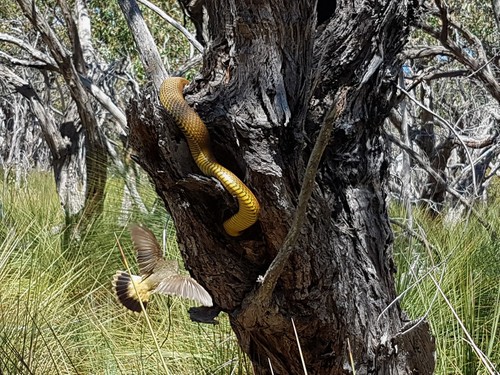 Buff-rumped Thornbill
 Brown Gerygone
In short
The most reliable field mark to separate Buff-rumped Thornbill from Brown Gerygone is the Buff-rumped Thornbill’s distinctive buff-colored rump, which stands out against its otherwise plain greenish-brown upperparts—this is never shown by Brown Gerygone. In contrast, Brown Gerygone lacks any contrasting rump and instead shows a more uniform olive-brown or olive-grey back, with paler grey or cream underparts and a subtle white eyebrow. Both are small, active birds, but the thornbill’s pale yellow underparts and white iris (in adults) are also helpful, while the gerygone is more washed-out below and has a soft, questioning call. Watch for the thornbill’s acrobatic foraging and tendency to join larger groups, versus the gerygone’s preference for small parties in dense coastal rainforest.
Identification tips
- Buff rump (thornbill only): Look for a clear buff or pale patch at the base of the back, especially when the bird flicks its tail or in flight. Brown Gerygone never shows a contrasting rump.
- Tail pattern: Buff-rumped Thornbill has a broad, blackish tail band with a pale tip, visible when the tail is spread. Brown Gerygone’s tail is dark, sometimes with white tips, but lacks the strong banding.
- Underparts color: Thornbill shows very pale-yellow underparts; gerygone is paler still, but more grey, cream, or washed-out brown—never yellowish.
- Upperparts: Thornbill is plain greenish-brown above; gerygone is olive-brown or olive-grey, sometimes with a slightly warmer tone, but both are generally drab.
- Facial marks: Brown Gerygone has a subtle white eyebrow and a grey-tinged face, especially in adults. Thornbill lacks any strong facial pattern.
- Iris color (adults): Adult Buff-rumped Thornbills have white eyes; gerygones have dark eyes. Juvenile thornbills also have dark eyes, so use this mark only for adults.
- Group size and behavior: Thornbills often forage in large, noisy groups, showing acrobatic, head-down movements. Gerygones are quieter, in small groups or alone, and move more gently through dense foliage.
- Habitat: Thornbills prefer open eucalypt woodland and dry forest; gerygones are tied to dense, coastal rainforest. Use habitat as a strong supporting clue.
- Voice: Thornbill’s call is a rapid, twittering series; gerygone’s is a soft, questioning phrase. Listen for persistent background chatter for thornbill.
- Bill and structure: Both have thin, pointed bills, but gerygone may appear slightly finer and more delicate overall.
- Perched posture: Thornbills may appear more upright and active, often flicking tails; gerygones are more horizontal and less animated.
- Flight style: Thornbills have an undulating flight path, typical of Acanthiza; gerygones move more directly between perches.
- Juvenile confusion: Juvenile thornbills lack the white iris but still show the buff rump, which remains diagnostic.
- Seasonal context: Outside the breeding season, thornbills may join larger mixed groups; gerygones do not.
- Pitfalls: Do not rely on overall brownish coloration or small size—both share these traits. Focus on rump color, tail pattern, and facial marks for reliable separation.
Size
Both species are very small passerines, with Buff-rumped Thornbill measuring 8–10 cm in length and Brown Gerygone about 10 cm. In the field, size is not a reliable separator, as their overall length overlaps and both appear dainty and slight. Bill structure is similar—thin and pointed—though the gerygone may appear slightly more delicate due to its finer features.
Plumage
Juvenile and adult Buff-rumped Thornbills are best identified by the distinctive buff rump, visible both when perched and in flight, contrasting with plain greenish-brown upperparts and very pale-yellow underparts. The tail is marked by a broad, blackish band with a pale tip. Adults have white irises, while juveniles have dark eyes. Brown Gerygone, in all plumages, lacks any buff or contrasting rump; its upperparts are olive-brown or olive-grey (depending on subspecies), and its underparts are much paler—grey, cream, or washed-out brown. The gerygone’s tail is dark, sometimes with white tips, but never shows the broad black band and pale tip combination of the thornbill. Gerygone shows a subtle white eyebrow and a grey-tinged face, which can be a helpful facial mark, especially in adults. No distinctive age-specific upperwing patterns are described for either species, so focus on rump and face for separation.
Behaviour
Buff-rumped Thornbills are often seen in chatty, acrobatic groups, sometimes up to 20 or more, and may join even larger clans outside the breeding season. They are highly active, often foraging head-down and moving through open woodland or forest edges. Brown Gerygones are more likely to be found singly or in small groups of two to four, moving quietly through dense coastal rainforest foliage. Thornbills are noticeably more social and conspicuous in their foraging style, while gerygones are more retiring and less likely to join large flocks.
Habitat
Buff-rumped Thornbill is found in dry sclerophyll forests and open eucalypt woodlands with a sparse understorey, mainly across eastern Australia from Queensland to southeastern South Australia. Brown Gerygone is restricted to coastal rainforest and dense forest along the eastern seaboard. If you are in open, drier woodland, thornbill is far more likely; in dense, moist coastal rainforest, expect gerygone.
Voice
Buff-rumped Thornbill gives a rapid, twittering "pitta-pitta-pitta-pit" call, often heard as a continuous background chatter from a group. Brown Gerygone’s call is a soft, questioning "what-is-it", much gentler and less persistent than the thornbill’s. If you hear a persistent, high-pitched twittering, suspect thornbill; a soft, plaintive call suggests gerygone.