
Calandra Lark vs Crested Lark
Melanocorypha calandra versus Galerida cristata
Play a quiz with Calandra Lark and Crested Lark
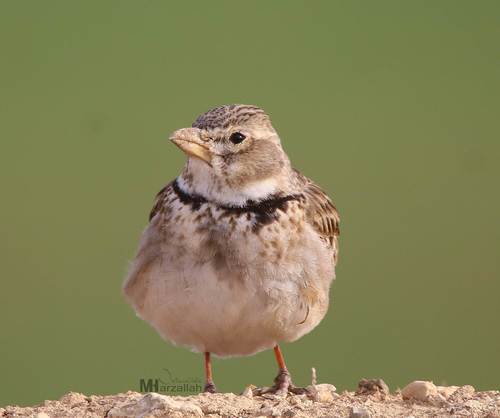 Calandra Lark
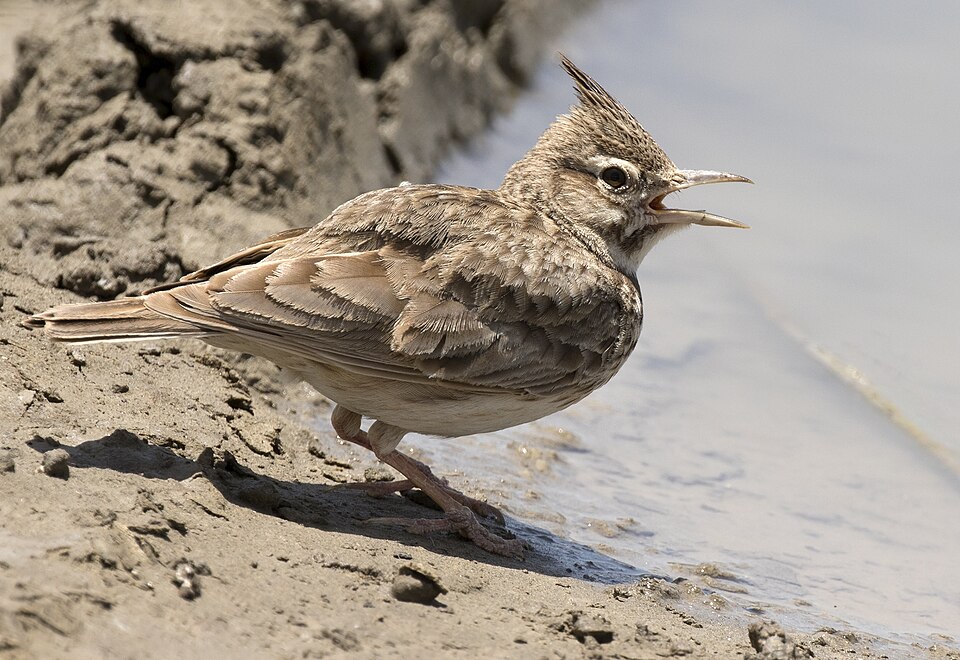 Crested Lark
In short
The most reliable field mark between Calandra Lark and Crested Lark is seen in flight: Calandra Lark shows broad, dark underwings and a short, white-edged tail, while Crested Lark flashes reddish underwings and lacks strong tail patterning. Structure also helps—Calandra is heavier-bodied and lacks a crest, whereas Crested Lark is smaller, slimmer, and always sports a prominent crest. Juvenile Crested Larks have more spotted backs, but this is subtle at distance. Use flight views and overall shape first, then check for the crest and underwing color to separate these two, especially in Mediterranean and Eurasian open country.
Identification tips
- Underwing color in flight: Calandra Lark shows broad, dark underwings; Crested Lark flashes reddish underwings. This is the single best mark when the bird is airborne.
- Tail pattern in flight: Calandra Lark has a short tail with distinct white edges; Crested Lark's tail is short with light brown outer feathers and lacks a strong white edge.
- Crest: Crested Lark always shows a prominent, pointed crest, especially when alert or singing. Calandra Lark never has a crest—if you see a crest, it's not Calandra.
- Body structure: Calandra Lark is heavier, bulkier, and more robust, with a thickset body and broad wings. Crested Lark is smaller, slimmer, and more compact, though still stocky around the head.
- Back pattern (juveniles): Juvenile Crested Larks have more spots on the back than adults, but this is subtle and not usually diagnostic at a distance. No comparable juvenile pattern is noted for Calandra.
- Plumage texture: Crested Lark's plumage is described as downy, sparse, and sometimes appears whitish; Calandra Lark is more uniformly brown.
- Perched jizz: Calandra Lark sits heavy and thickset, lacking a crest; Crested Lark perches upright, often with the crest raised, giving a peaked silhouette.
- Flight style: Calandra Lark flies with short, broad wings and a more direct, powerful flight; Crested Lark has undulating flight, often singing at moderate height.
- Habitat: Calandra Lark prefers open grasslands and steppe; Crested Lark is more likely in wastelands, field edges, and urban outskirts.
- Song: Only Crested Lark's song is described—a liquid, warbling series of notes. If you hear a distinctive song, it's more likely Crested Lark.
- Bill and head: While not described in detail, Crested Lark's head appears bulkier relative to body size, especially with the crest raised.
- Sex and season: Both species show little or no sexual dimorphism and no significant seasonal plumage change.
- Pitfalls: Beware of confusing Calandra Lark with Bimaculated Lark further east; for Crested Lark, the main confusion is with Thekla Lark, but Thekla has heavier streaks and grey underwings (not reddish).
- Local abundance: In Mediterranean grasslands, Calandra Lark is more likely; in disturbed, urban, or weedy areas, Crested Lark dominates.
- When in doubt: Prioritize underwing color and tail pattern in flight, then check for the presence or absence of a crest when perched.
Size
Calandra Lark is distinctly heavier, averaging 59 g [wikidata], compared to the Crested Lark's range of 37–55 g [wikipedia]. Calandra is bulkier and more robust overall, with short, broad wings and a thickset body. Crested Lark is smaller, with a more compact, slimmer build, though still stocky around the head and body. Both are similar in length to Eurasian Skylark, but Calandra Lark feels larger and more powerful in flight and on the ground.
Plumage
- Juvenile/immature plumage: Juvenile Crested Larks have more spots on their back than adults, but this is not a strong field mark at distance. No specific juvenile/immature marks are described for Calandra Lark in the sources.
- Adult/flight plumage: Calandra Lark in flight shows broad, dark underwings and a short tail with white edges—these are the best marks for separating it from Crested Lark. Crested Lark, by contrast, shows reddish underwings in flight and a short tail with light brown outer feathers, lacking any strong white edge. Both are brown above, but Crested Lark's plumage is described as downy, sparse, and appears whitish in some lights. The crest is always present and obvious on Crested Lark, but entirely absent on Calandra Lark.
- Sex/season: No significant sexual dimorphism in either species; both sexes look alike. Seasonal variation is not described as diagnostic.
Behaviour
Crested Lark frequently raises its prominent crest, especially during display, singing, or when agitated. It often sings from the ground or in undulating flight at moderate height (30–60 m), sometimes perching on rocks or low posts. Calandra Lark lacks a crest and is more robust in movement, with heavier, more direct flight. Both species forage on the ground, but Crested Lark is more likely to be seen in disturbed or urban-edge habitats, while Calandra Lark prefers open grassland and steppe.
Habitat
Calandra Lark breeds in open, warm temperate grasslands and steppe around the Mediterranean, Turkey, northern Iran, and southern Russia. It is replaced further east by Bimaculated Lark. Crested Lark is much more widespread, found across Eurasia and northern Africa, and is especially common in wastelands, field edges, and even urban outskirts. If the bird is in a very open, grassy, or steppe-like habitat, Calandra is more likely; in disturbed, weedy, or urban-edge areas, Crested Lark is more typical.
Voice
Crested Lark is a songbird with a liquid, warbling song, often described as 'whee-whee-wheeoo' or 'twee-tee-too.' It sings from the ground or at altitude, but not during its ascent like Eurasian Skylark. No vocal description is provided for Calandra Lark in the sources, so voice is not a reliable separator here.