
Motmot

Calandra Lark vs Eurasian Skylark

Melanocorypha calandra versus Alauda arvensis

Play a quiz with Calandra Lark and Eurasian Skylark
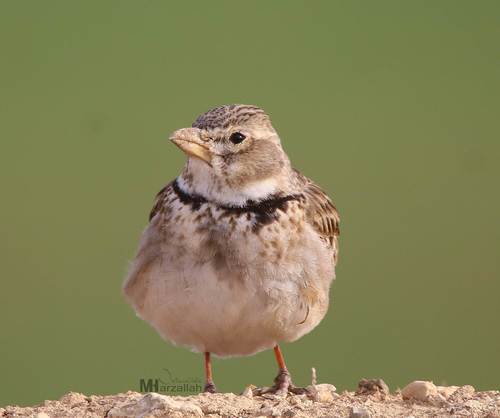
Calandra Lark (Melanocorypha calandra) Calandra Lark

Eurasian Skylark (Alauda arvensis) Eurasian Skylark

Media

Loading…

In short

The most reliable field mark between Calandra Lark and Eurasian Skylark is seen in flight: Calandra Lark shows distinctly dark underwings and a short tail edged with white, while Eurasian Skylark has paler underwings and a short tail with white edges visible mainly from behind. Calandra is noticeably heavier-bodied and bulkier, with broader wings and a stubbier tail. Both species can show white in the tail and wings, but the Calandra’s pattern is bolder and its underwings are much darker. Structure and flight style differ: Calandra appears more robust and heavy, while Eurasian Skylark is slimmer and more buoyant, often seen hovering high while singing. Use flight views and overall jizz for best separation, especially with immatures.

Identification tips

  1. Underwing color in flight: Calandra Lark shows distinctly dark underwings (all ages), while Eurasian Skylark’s underwings are paler. This is the most reliable separation in flight.
  2. Tail pattern: Both have white in the tail, but Calandra’s short tail is edged with white and is obvious from the side and below; Eurasian Skylark’s white tail edges are best seen when the bird is flying away.
  3. Wing shape: Calandra Lark has short, broad wings; Eurasian Skylark’s wings are also broad but the bird appears slimmer and more elongated overall.
  4. Overall structure: Calandra is bulkier and heavier-bodied, with a stubbier tail; Eurasian Skylark is more slender and delicate.
  5. Crest: Eurasian Skylark has a short, blunt crest that can be raised or lowered; Calandra Lark lacks a crest and has a plainer head profile.
  6. Flight style: Eurasian Skylark often hovers high in the air while singing; Calandra Lark is less likely to hover and flies more directly and heavily.
  7. Song: A long, continuous, bubbling song delivered from a hovering bird is diagnostic of Eurasian Skylark.
  8. Habitat: In southern Europe and the Mediterranean, Calandra Lark prefers drier, steppe-like grasslands; Eurasian Skylark is more likely in farmland and grassy fields, but habitat overlap does occur.
  9. Plumage tone: Eurasian Skylark is dull brown above and paler below; Calandra Lark is also brownish but appears more robust and less streaked.
  10. Sexual dimorphism: Male Eurasian Skylarks have broader wings than females, but this is subtle and not a primary field mark in the field.
  11. Size: Calandra Lark is noticeably larger and heavier (body mass ~59 g) than Eurasian Skylark.
  12. Perched posture: Calandra Lark appears more upright and robust when perched; Eurasian Skylark is more delicate and less upright.
  13. Pitfalls: Both species can show white in the tail and wings, but the context (flight angle, underwing color) is crucial for correct ID.
  14. Age: No specific juvenile or immature upperwing patterns are described for either species, so these marks work for all ages.
  15. Range: Outside the Mediterranean and steppe regions, Eurasian Skylark is far more likely; check local abundance if unsure.

Size

Calandra Lark is substantially heavier (body mass ~59 g [wikidata]) and bulkier than Eurasian Skylark, which is smaller and more delicate (no direct mass given, but length 18–19 cm [wikipedia]). Calandra’s larger, more robust build is apparent in direct comparison, with broader wings and a stubbier, shorter tail. Eurasian Skylark is slimmer, with a more elongated look, especially in flight.

Plumage

In flight, Calandra Lark of all ages shows short, broad wings with distinctly dark underwing coverts and a short tail edged with white. This dark underwing is a key separation from Eurasian Skylark, which has paler underwings and shows white edges on the tail and rear wing, but only when flying away. Both species have white in the tail, but Calandra’s is more obvious from the side and below, while Eurasian Skylark’s is best seen from behind. Eurasian Skylark is overall duller, brown above and paler below, with a short, blunt crest that can be raised. Calandra Lark lacks a crest and appears plainer-headed. No age-specific juvenile or immature upperwing pattern is noted for either species, so these flight marks apply to all ages. Adult male Eurasian Skylarks have broader wings than females, but this is subtle and not a primary field mark.

Behaviour

Eurasian Skylark is famous for its hovering, high-altitude song flights, often rising to great heights and singing for minutes at a time. Calandra Lark is less likely to hover and appears heavier and more direct in flight. On the ground, Calandra Lark moves with a more robust, lark-like gait, while Eurasian Skylark is more delicate and less conspicuous when not singing. Both species can be seen in open country, but their behavior in flight is a strong clue: look for the hovering, singing display of Eurasian Skylark versus the more direct, heavy flight of Calandra.

Habitat

Both species favor open country, but Calandra Lark is more restricted to warm temperate regions around the Mediterranean, Turkey, northern Iran, and southern Russia. Eurasian Skylark is much more widespread across Europe and the Palearctic, and is also found in introduced populations in Australia, New Zealand, Canada, and Hawaii. In areas of overlap, Calandra prefers steppe-like, drier grasslands, while Eurasian Skylark is common in farmland, heath, and grassy fields.

Voice

Eurasian Skylark is renowned for its long, bubbling, unbroken song delivered in hovering flight, often lasting several minutes and performed high above the ground. Calandra Lark’s song is not described in the provided notes, but Eurasian Skylark’s display is so distinctive that a singing, hovering bird is almost certainly a Skylark. Use song and display flight as a strong separation when observed.

Submit a better description

Use the same sections as the comparison. Your text is published immediately.

The most reliable field mark between Calandra Lark and Eurasian Skylark is seen in flight: Calandra Lark shows distinctly dark underwings and a short tail edged with white, while Eurasian Skylark has paler underwings and a short tail with white edges visible mainly from behind. Calandra is noticeably heavier-bodied and bulkier, with broader wings and a stubbier tail. Both species can show white in the tail and wings, but the Calandra’s pattern is bolder and its underwings are much darker. Structure and flight style differ: Calandra appears more robust and heavy, while Eurasian Skylark is slimmer and more buoyant, often seen hovering high while singing. Use flight views and overall jizz for best separation, especially with immatures.

  1. Underwing color in flight: Calandra Lark shows distinctly dark underwings (all ages), while Eurasian Skylark’s underwings are paler. This is the most reliable separation in flight.
  2. Tail pattern: Both have white in the tail, but Calandra’s short tail is edged with white and is obvious from the side and below; Eurasian Skylark’s white tail edges are best seen when the bird is flying away.
  3. Wing shape: Calandra Lark has short, broad wings; Eurasian Skylark’s wings are also broad but the bird appears slimmer and more elongated overall.
  4. Overall structure: Calandra is bulkier and heavier-bodied, with a stubbier tail; Eurasian Skylark is more slender and delicate.
  5. Crest: Eurasian Skylark has a short, blunt crest that can be raised or lowered; Calandra Lark lacks a crest and has a plainer head profile.
  6. Flight style: Eurasian Skylark often hovers high in the air while singing; Calandra Lark is less likely to hover and flies more directly and heavily.
  7. Song: A long, continuous, bubbling song delivered from a hovering bird is diagnostic of Eurasian Skylark.
  8. Habitat: In southern Europe and the Mediterranean, Calandra Lark prefers drier, steppe-like grasslands; Eurasian Skylark is more likely in farmland and grassy fields, but habitat overlap does occur.
  9. Plumage tone: Eurasian Skylark is dull brown above and paler below; Calandra Lark is also brownish but appears more robust and less streaked.
  10. Sexual dimorphism: Male Eurasian Skylarks have broader wings than females, but this is subtle and not a primary field mark in the field.
  11. Size: Calandra Lark is noticeably larger and heavier (body mass ~59 g) than Eurasian Skylark.
  12. Perched posture: Calandra Lark appears more upright and robust when perched; Eurasian Skylark is more delicate and less upright.
  13. Pitfalls: Both species can show white in the tail and wings, but the context (flight angle, underwing color) is crucial for correct ID.
  14. Age: No specific juvenile or immature upperwing patterns are described for either species, so these marks work for all ages.
  15. Range: Outside the Mediterranean and steppe regions, Eurasian Skylark is far more likely; check local abundance if unsure.

Calandra Lark is substantially heavier (body mass ~59 g [wikidata]) and bulkier than Eurasian Skylark, which is smaller and more delicate (no direct mass given, but length 18–19 cm [wikipedia]). Calandra’s larger, more robust build is apparent in direct comparison, with broader wings and a stubbier, shorter tail. Eurasian Skylark is slimmer, with a more elongated look, especially in flight.

In flight, Calandra Lark of all ages shows short, broad wings with distinctly dark underwing coverts and a short tail edged with white. This dark underwing is a key separation from Eurasian Skylark, which has paler underwings and shows white edges on the tail and rear wing, but only when flying away. Both species have white in the tail, but Calandra’s is more obvious from the side and below, while Eurasian Skylark’s is best seen from behind. Eurasian Skylark is overall duller, brown above and paler below, with a short, blunt crest that can be raised. Calandra Lark lacks a crest and appears plainer-headed. No age-specific juvenile or immature upperwing pattern is noted for either species, so these flight marks apply to all ages. Adult male Eurasian Skylarks have broader wings than females, but this is subtle and not a primary field mark.

Eurasian Skylark is famous for its hovering, high-altitude song flights, often rising to great heights and singing for minutes at a time. Calandra Lark is less likely to hover and appears heavier and more direct in flight. On the ground, Calandra Lark moves with a more robust, lark-like gait, while Eurasian Skylark is more delicate and less conspicuous when not singing. Both species can be seen in open country, but their behavior in flight is a strong clue: look for the hovering, singing display of Eurasian Skylark versus the more direct, heavy flight of Calandra.

Both species favor open country, but Calandra Lark is more restricted to warm temperate regions around the Mediterranean, Turkey, northern Iran, and southern Russia. Eurasian Skylark is much more widespread across Europe and the Palearctic, and is also found in introduced populations in Australia, New Zealand, Canada, and Hawaii. In areas of overlap, Calandra prefers steppe-like, drier grasslands, while Eurasian Skylark is common in farmland, heath, and grassy fields.

Eurasian Skylark is renowned for its long, bubbling, unbroken song delivered in hovering flight, often lasting several minutes and performed high above the ground. Calandra Lark’s song is not described in the provided notes, but Eurasian Skylark’s display is so distinctive that a singing, hovering bird is almost certainly a Skylark. Use song and display flight as a strong separation when observed.

Discard your changes?

You have unsaved edits. If you leave now, those changes will be lost.

Calandra Lark · Eurasian Skylark · My Tricky Birds