
Caspian Tern vs Arctic Tern
Hydroprogne caspia versus Sterna paradisaea
Play a quiz with Caspian Tern and Arctic Tern
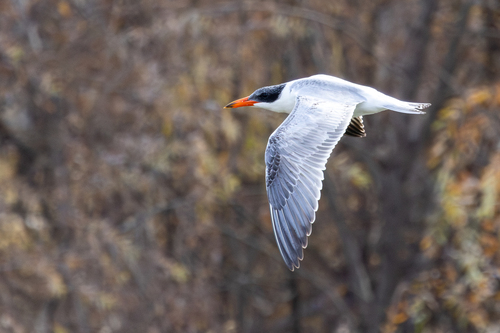 Caspian Tern
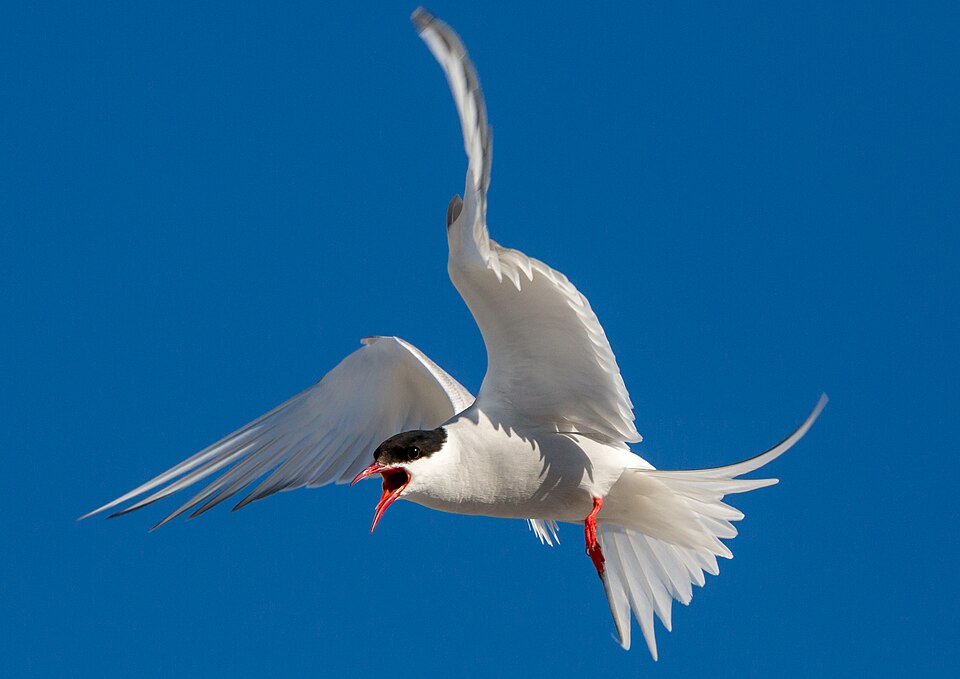 Arctic Tern
In short
The single most reliable field mark between Caspian and Arctic Terns is size: Caspian is vastly larger, with a thick, heavy red-orange bill, while Arctic is much smaller and more delicate, with a slender, dark red bill. In flight, Caspian Tern shows a less forked tail and broader wings, whereas Arctic Tern has long, narrow wings and a deeply forked tail. Juvenile Arctic Terns have a distinctive dark carpal bar and 'scaly' upperwing pattern, which Caspian lacks. If you see a tern with a massive, blunt bill and a powerful, gull-like flight, it's Caspian; if it's slim, buoyant, and long-tailed, it's Arctic.
Identification tips
- Size is the most immediate clue: Caspian Tern is over five times heavier than Arctic Tern and much longer in both body and wingspan. If the bird looks gull-sized among terns, it's Caspian.
- Bill structure and color: Caspian Tern has a thick, long, blunt red-orange bill with a black tip; Arctic Tern has a slender, straight, dark red bill (darker in winter, never orange, and never with a black tip in adults). Juvenile Arctic Terns have a black bill.
- Tail shape in flight: Caspian Tern's tail is only slightly forked and looks square or shallowly notched; Arctic Tern's tail is deeply forked, with long streamers extending well beyond the wingtips in adults.
- Wing shape and flight style: Caspian has broad, powerful wings and a strong, direct flight; Arctic has long, narrow, pointed wings and a buoyant, fluttery flight.
- Juvenile/immature upperwing pattern: Juvenile Arctic Terns show a dark carpal bar and 'scaly' upperwing and mantle (dark feather tips), with a whiter forecrown and short tail streamers. Caspian juveniles do not show these marks.
- Adult head pattern: Both have black caps in breeding, but Caspian's is more solid and extends lower, while Arctic's is more confined to the crown and nape with white cheeks. In winter, Arctic develops a white forehead, Caspian's cap becomes streaked but remains mostly black.
- Leg color: Caspian has black legs; Arctic has dark red legs in breeding, turning blackish in winter. Juvenile Arctic Terns have black legs.
- Underwing pattern: Caspian shows pale underwings with contrasting dark primaries; Arctic's underwings are pale grey with translucent wingtips, lacking the strong contrast.
- Bill color in juveniles: Juvenile Arctic Terns have a black bill, while Caspian chicks are variable in color but never show the black bill and scaly upperwing combination.
- Voice: Caspian's call is a loud, harsh croak, much deeper than the nasal, rasping calls of Arctic.
- Behavior: Caspian often perches on the ground or posts and appears dominant; Arctic is more aerial, rarely perching, and is agile in flight.
- Habitat context: Caspian is more likely on large lakes, rivers, or open beaches; Arctic is found in high-latitude breeding grounds or at sea during migration.
- Seasonal changes: In winter, Arctic Tern's bill and legs darken, and the forehead whitens; Caspian's cap becomes streaked but the bill remains orange-red with a black tip.
- Mixed flocks: If seen with other terns, Caspian will tower over them in size and bulk; Arctic will blend in with other medium-sized terns but stand out by its long tail and buoyant flight.
- When in doubt, focus on structure and size: Even at a distance, Caspian's heavy build and massive bill are unique, while Arctic's slim, long-tailed silhouette and delicate bill are diagnostic.
Size
Caspian Tern is the world's largest tern, averaging 634 g and measuring 48–60 cm in length with a 127–145 cm wingspan. In contrast, Arctic Tern is much smaller at 114 g, 33–36 cm long, and a 76–85 cm wingspan. Caspian appears bulky and heavyset, while Arctic is slim and lightweight. Even at a distance, Caspian's size is closer to a small gull, while Arctic is never mistaken for anything but a medium-sized tern.
Plumage
Juvenile and immature Arctic Terns have a 'scaly' appearance to the upperwings and mantle, with dark feather tips and a prominent dark carpal bar—these marks are absent in Caspian Tern of any age. Adult Caspian Tern has a white head with a black cap (streaked in winter), thick red-orange bill with a black tip, pale grey upperwings with blackish underwing primaries, and a less forked white tail. Adult Arctic Tern has a black crown and nape, white cheeks, slim dark red bill (darker in winter), pale grey upperwings with translucent wingtips, and a deeply forked white tail. In winter, Arctic Tern's forehead whitens and the bill/legs darken, while Caspian's cap becomes streaked but remains mostly black. Juvenile Arctic Terns also show a whiter forecrown and short tail streamers, while Caspian chicks are variable but lack the scaly pattern.
Behaviour
Caspian Tern flies with deep, powerful wingbeats and a direct, purposeful flight, often recalling a small gull. It often perches on the ground or on posts, appearing heavy and dominant among other terns. Arctic Tern is buoyant and graceful in flight, with quick, fluttery wingbeats and agile, twisting movements. It rarely perches for long and is more aerial, often seen hovering or dipping delicately over water. Caspian's flight is less agile and more labored, while Arctic is elegant and light.
Habitat
Both species can be seen near water, but Caspian Tern favors larger lakes, wide rivers, and coastal areas with open beaches or sandbars, often nesting on open ground or gravel. Arctic Tern breeds in high-latitude Arctic and subarctic regions, often on rocky coasts, tundra, or small islands, and is mostly seen in migration along coasts or at sea. Outside the breeding season, Arctic Tern is pelagic and migratory, while Caspian is more likely to be found near large inland or coastal water bodies.
Voice
Caspian Tern gives a loud, harsh, heron-like croak, deeper and more guttural than any Arctic Tern call. Arctic Tern's calls are higher-pitched, nasal, and rasping, especially the alarm and advertising calls. Caspian's voice is distinctive and unlikely to be confused with the more delicate, sharp calls of Arctic.