
Motmot

Cliff Swallow vs Cave Swallow

Petrochelidon pyrrhonota versus Petrochelidon fulva

Play a quiz with Cliff Swallow and Cave Swallow
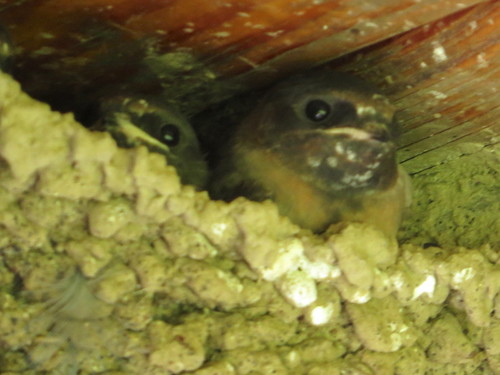
Cliff Swallow (Petrochelidon pyrrhonota) Cliff Swallow
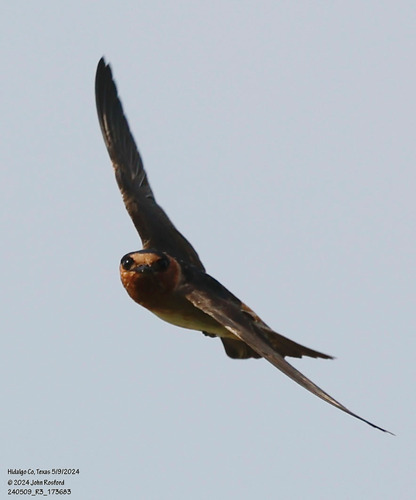
Cave Swallow (Petrochelidon fulva) Cave Swallow

Media

Loading…

In short

The most reliable field mark to separate Cliff Swallow from Cave Swallow is the color pattern of the forehead and throat: adult Cliff Swallows show a bright white forehead and a dark throat, while adult Cave Swallows have a dark cap, a pale or buffy throat, and a tawny or orange-buff forehead. Juvenile Cliff Swallows have variable, often speckled white foreheads and throats, while Cave Swallow juveniles resemble adults but with duller colors. Both species have square tails and similar size and shape, so focus on the face and throat pattern, especially in perched or close flight views. Habitat can sometimes help, but both species use man-made structures in parts of their range, so do not rely on context alone.

Identification tips

  1. Forehead color (adults): Cliff Swallow has a bright white forehead; Cave Swallow has a tawny or orange-buff (not white) forehead. This is the single most reliable field mark in good light.
  2. Throat color (adults): Cliff Swallow shows a dark throat with rich red cheeks; Cave Swallow has a pale or buffy throat, often contrasting with a darker cap and face.
  3. Juvenile face pattern: Juvenile Cliff Swallows have variable, speckled white foreheads and throats, unique to each chick, which fade with age. Juvenile Cave Swallows lack these white markings and resemble duller adults.
  4. Crown/cap: Cave Swallow has a dark cap that contrasts with its pale throat and tawny forehead; Cliff Swallow's crown is less contrasting, often iridescent in good light.
  5. Rump color: Cliff Swallow has a buffy rump, which can be visible in flight or when perched; Cave Swallow's rump is less distinctly colored.
  6. Upperparts: Cave Swallow's upperparts are more gray-blue, while Cliff Swallow's are dark brownish with possible iridescence. This is subtle and best used as supporting evidence.
  7. Tail shape: Both species have a square tail, so this is not useful for separation. Do not rely on tail shape.
  8. Size and structure: Both are similar in size and shape, with short legs and small bills. Size is not a reliable separator.
  9. Colony size: Cliff Swallow often nests in very large colonies (hundreds to thousands of nests), while Cave Swallow colonies are usually smaller, though overlap can occur.
  10. Habitat context: If observed nesting in a natural cave or sinkhole in Texas or the southwest, Cave Swallow is more likely, but both species use man-made structures, so always confirm with plumage.
  11. Flight style: Both are agile and aerial; flight style does not separate them.
  12. Plumage variation: Cliff Swallow juveniles are the only ones with variable, speckled white facial markings. If you see a swallow with a messy or speckled white face, especially in a colony, it is likely a juvenile Cliff Swallow.
  13. Subspecies variation: Some Cave Swallow subspecies (in South America) nest on cliffs and have smaller wingspans, but in North America, focus on the facial pattern for ID.
  14. Sex differences: Both species are sexually monomorphic in plumage; do not attempt to sex them in the field by appearance.
  15. Lighting: Good light is essential for seeing the subtle color differences in the forehead, throat, and rump. In poor light, use multiple marks and be cautious.

Size

Both Cliff Swallow and Cave Swallow are very similar in size and weight. Cliff Swallow averages about 13 cm in length, while Cave Swallow ranges from 12 to 14 cm. The largest Cave Swallow subspecies (P. f. pallida) has a wing length of 107–112 mm, which is comparable to Cliff Swallow. Both species are compact, with short legs and small bills, and differences in size are not reliable in the field.

Plumage

Juvenile Cliff Swallows are best recognized by their variable, often speckled white foreheads and throats, which are unique to each chick and fade as they mature. Juvenile Cave Swallows resemble adults but with duller, less vivid colors and lack the distinctive white facial markings of juvenile Cliff Swallows. Adult Cliff Swallows have a crisp white forehead, dark throat, rich red cheeks, and a buffy rump, while adult Cave Swallows show a tawny or orange-buff forehead, a pale or buffy throat, and a dark cap. Both have dark upperparts, but Cave Swallow's are more gray-blue, and Cliff Swallow's can show iridescence in good light. The tail is square in both, so not useful for separation.

Behaviour

Both species are highly aerial and agile, spending much of their time in flight catching insects. Cliff Swallows are extremely social, often nesting in very large colonies (sometimes over 2,000 nests), while Cave Swallows also nest colonially but typically in smaller groups. Both species will use man-made structures for nesting, and their flight style is similar: rapid, agile, and with frequent gliding. Perched, both species show similar posture and proportions.

Habitat

Cliff Swallow traditionally nests on cliffs but now commonly uses bridges, buildings, and other man-made structures. Cave Swallow in North America typically nests and roosts in caves and sinkholes, but also uses culverts and bridges, especially in Texas and the southwest. In the field, both can be found at the same sites, especially where suitable nesting structures are available, so habitat alone is not diagnostic, though Cave Swallow is more likely in natural caves in its core range.

Submit a better description

Use the same sections as the comparison. Your text is published immediately.

The most reliable field mark to separate Cliff Swallow from Cave Swallow is the color pattern of the forehead and throat: adult Cliff Swallows show a bright white forehead and a dark throat, while adult Cave Swallows have a dark cap, a pale or buffy throat, and a tawny or orange-buff forehead. Juvenile Cliff Swallows have variable, often speckled white foreheads and throats, while Cave Swallow juveniles resemble adults but with duller colors. Both species have square tails and similar size and shape, so focus on the face and throat pattern, especially in perched or close flight views. Habitat can sometimes help, but both species use man-made structures in parts of their range, so do not rely on context alone.

  1. Forehead color (adults): Cliff Swallow has a bright white forehead; Cave Swallow has a tawny or orange-buff (not white) forehead. This is the single most reliable field mark in good light.
  2. Throat color (adults): Cliff Swallow shows a dark throat with rich red cheeks; Cave Swallow has a pale or buffy throat, often contrasting with a darker cap and face.
  3. Juvenile face pattern: Juvenile Cliff Swallows have variable, speckled white foreheads and throats, unique to each chick, which fade with age. Juvenile Cave Swallows lack these white markings and resemble duller adults.
  4. Crown/cap: Cave Swallow has a dark cap that contrasts with its pale throat and tawny forehead; Cliff Swallow's crown is less contrasting, often iridescent in good light.
  5. Rump color: Cliff Swallow has a buffy rump, which can be visible in flight or when perched; Cave Swallow's rump is less distinctly colored.
  6. Upperparts: Cave Swallow's upperparts are more gray-blue, while Cliff Swallow's are dark brownish with possible iridescence. This is subtle and best used as supporting evidence.
  7. Tail shape: Both species have a square tail, so this is not useful for separation. Do not rely on tail shape.
  8. Size and structure: Both are similar in size and shape, with short legs and small bills. Size is not a reliable separator.
  9. Colony size: Cliff Swallow often nests in very large colonies (hundreds to thousands of nests), while Cave Swallow colonies are usually smaller, though overlap can occur.
  10. Habitat context: If observed nesting in a natural cave or sinkhole in Texas or the southwest, Cave Swallow is more likely, but both species use man-made structures, so always confirm with plumage.
  11. Flight style: Both are agile and aerial; flight style does not separate them.
  12. Plumage variation: Cliff Swallow juveniles are the only ones with variable, speckled white facial markings. If you see a swallow with a messy or speckled white face, especially in a colony, it is likely a juvenile Cliff Swallow.
  13. Subspecies variation: Some Cave Swallow subspecies (in South America) nest on cliffs and have smaller wingspans, but in North America, focus on the facial pattern for ID.
  14. Sex differences: Both species are sexually monomorphic in plumage; do not attempt to sex them in the field by appearance.
  15. Lighting: Good light is essential for seeing the subtle color differences in the forehead, throat, and rump. In poor light, use multiple marks and be cautious.

Both Cliff Swallow and Cave Swallow are very similar in size and weight. Cliff Swallow averages about 13 cm in length, while Cave Swallow ranges from 12 to 14 cm. The largest Cave Swallow subspecies (P. f. pallida) has a wing length of 107–112 mm, which is comparable to Cliff Swallow. Both species are compact, with short legs and small bills, and differences in size are not reliable in the field.

Juvenile Cliff Swallows are best recognized by their variable, often speckled white foreheads and throats, which are unique to each chick and fade as they mature. Juvenile Cave Swallows resemble adults but with duller, less vivid colors and lack the distinctive white facial markings of juvenile Cliff Swallows. Adult Cliff Swallows have a crisp white forehead, dark throat, rich red cheeks, and a buffy rump, while adult Cave Swallows show a tawny or orange-buff forehead, a pale or buffy throat, and a dark cap. Both have dark upperparts, but Cave Swallow's are more gray-blue, and Cliff Swallow's can show iridescence in good light. The tail is square in both, so not useful for separation.

Both species are highly aerial and agile, spending much of their time in flight catching insects. Cliff Swallows are extremely social, often nesting in very large colonies (sometimes over 2,000 nests), while Cave Swallows also nest colonially but typically in smaller groups. Both species will use man-made structures for nesting, and their flight style is similar: rapid, agile, and with frequent gliding. Perched, both species show similar posture and proportions.

Cliff Swallow traditionally nests on cliffs but now commonly uses bridges, buildings, and other man-made structures. Cave Swallow in North America typically nests and roosts in caves and sinkholes, but also uses culverts and bridges, especially in Texas and the southwest. In the field, both can be found at the same sites, especially where suitable nesting structures are available, so habitat alone is not diagnostic, though Cave Swallow is more likely in natural caves in its core range.

Discard your changes?

You have unsaved edits. If you leave now, those changes will be lost.

Cliff Swallow · Cave Swallow · My Tricky Birds