
Collared Flycatcher vs Whinchat
Ficedula albicollis versus Saxicola rubetra
Play a quiz with Collared Flycatcher and Whinchat
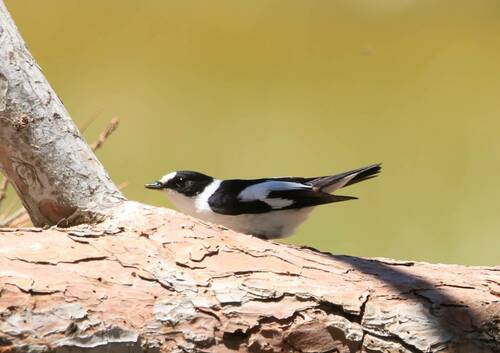 Collared Flycatcher
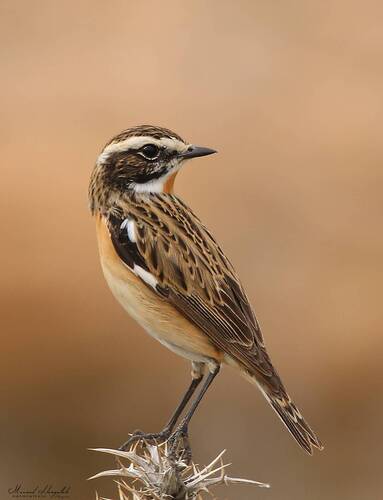 Whinchat
In short
The most reliable field mark between Collared Flycatcher and Whinchat is the presence of a strong white supercilium (eyebrow) and mottled brown upperparts in Whinchat of all ages, versus the Collared Flycatcher's bold black-and-white pattern in adult males and much plainer, less contrasting look in females and immatures. Juvenile and female Collared Flycatchers can be surprisingly similar to Whinchat in overall brownish tones, but Whinchat always shows a clear pale eyebrow and a dark tail with white bases to the outer feathers, while Collared Flycatcher never does. In flight, Whinchat flicks its tail and wings, flashing white in the tail, while Collared Flycatcher (especially adult males) shows a large white wing patch and sometimes white in the tail sides. Structure and behavior also help: Whinchat is slimmer, longer-winged, and perches upright on low shrubs, while Collared Flycatcher is more compact and typically forages higher in trees.
Identification tips
- Supercilium (Eyebrow): Whinchat of all ages shows a strong, pale supercilium (white in males, buff in females/immatures) that stands out against a darker face. Collared Flycatcher never shows a strong eyebrow, even in juveniles and females.
- Tail Pattern: Whinchat has a blackish tail with conspicuous white bases to the outer feathers, visible when the tail is flicked or in flight. Collared Flycatcher has a black tail, sometimes with white sides in males, but never with the Whinchat's white tail base pattern.
- Wing Pattern (Adult Males): Collared Flycatcher males in breeding plumage have a large, bold white wing patch; Whinchat males have small white wing patches on the greater and inner median coverts, much less extensive than Collared Flycatcher.
- Face Pattern: Whinchat males have a blackish face mask bordered by a white supercilium and malar stripe; females have a duller, brownish mask and buff supercilium. Collared Flycatcher lacks any mask or malar stripe, and the face is plain or only slightly marked.
- Underparts: Whinchat males in breeding plumage have a bright orange-buff throat and breast, fading to pale buff or whitish on the belly. Collared Flycatcher males are white below; females and immatures are also pale, but lack the orange-buff wash of Whinchat.
- Back and Rump: Whinchat's back and rump are mottled brown, matching the upperparts; Collared Flycatcher is black above in adult males, brownish in females/immatures, but the rump is not distinctly paler or orange-buff as in some stonechats.
- Bill Shape: Collared Flycatcher has a broad-based, pointed bill typical of aerial insectivores; Whinchat's bill is finer and more slender, suited to ground and low-perch feeding.
- Primary Projection: Whinchat has noticeably longer wingtips (primary projection) than Collared Flycatcher, an adaptation for long-distance migration. This gives Whinchat a more attenuated, less compact look when perched.
- Posture and Jizz: Whinchat perches upright on low shrubs or stems, often in open country, and frequently flicks its tail and wings. Collared Flycatcher is more compact and tends to perch higher in trees, rarely flicking its tail.
- Flight Style: Whinchat makes short, bounding flights between low perches, often flashing white in the tail and wings. Collared Flycatcher sallies from higher perches and shows a more direct, less flickering flight.
- Habitat: Whinchat is found in open, grassy or shrubby areas; Collared Flycatcher is almost always in mature woodland or parks with large trees.
- Seasonal Variation: In non-breeding plumage, Collared Flycatcher males become browner and can resemble females/immatures, but still lack Whinchat's facial pattern and tail markings. Whinchat males retain white wing patches all year.
- Vocalization: Collared Flycatcher's slow, strained whistles are unlike Whinchat's calls. If you hear a slow, whistling song in woodland, suspect Collared Flycatcher.
- Pitfalls: Female and juvenile Collared Flycatchers can look surprisingly like Whinchat in overall color, but always lack the strong supercilium and white tail base. Whinchat never shows a full white collar, bold white forehead patch, or large white wing panel as in adult male Collared Flycatcher.
- Hybrid Confusion: Collared Flycatcher can hybridize with Pied and Semicollared Flycatchers, but not with Whinchat; confusion with Whinchat is almost always due to age/sex plumage similarities, not hybridization.
Size
Both species are similar in length, with Collared Flycatcher at 12–13.5 cm and Whinchat at 12–14 cm [wikipedia]. However, Whinchat is slightly slimmer and less 'dumpy' than Collared Flycatcher, with longer wingtips—a subtle but useful distinction in the field. Weight overlaps but Whinchat can be a bit heavier (13–26 g) than Collared Flycatcher (not specified here, but generally lighter for its length).
Plumage
- Juveniles and Females: Both can appear brownish above and pale below, but Whinchat always has a strong, pale supercilium and a mottled brown back and rump, while Collared Flycatcher lacks a strong eyebrow and has a plainer face. Whinchat's tail is blackish with white bases to the outer feathers, which is visible in flight and when flicked; Collared Flycatcher has a black tail, sometimes with white sides in males, but never the same white tail base pattern as Whinchat.
- Adult Breeding Males: Collared Flycatcher is strikingly black above and white below, with a bold white collar, large white wing patch, and a large white forehead patch. Whinchat males never show this pattern; instead, they have a blackish face mask, strong white supercilium, orange-buff throat and breast, and small white wing patches. The back and rump remain mottled brown.
- Non-breeding/Winter Males: Collared Flycatcher males become browner and lose the sharp contrast, resembling females and juveniles, but still lack the Whinchat's facial pattern and tail markings. Whinchat males retain white wing patches all year, but otherwise look like females.
- Flight: Whinchat often flicks its tail and wings, showing white in the tail and small white wing flashes; Collared Flycatcher (especially males) shows a prominent white wing patch and, in some, white tail sides, but not the white tail base pattern of Whinchat.
Behaviour
Whinchat typically perches on low shrubs, posts, or tall grass, often in open country, and is frequently seen flicking its tail and wings to display white flashes. It moves with small, rapid hops on the ground. Collared Flycatcher is more arboreal, foraging higher in trees, especially in deciduous woodland, and is less likely to be seen perching low or flicking its tail. Collared Flycatcher often sallies from perches to catch insects in flight, while Whinchat makes short sallies from low perches to the ground.
Habitat
Collared Flycatcher breeds in mature deciduous woodlands, parks, and gardens, with a preference for areas with old trees and cavities for nesting. Whinchat prefers open country, such as meadows, rough grassland, and heath with scattered shrubs or low perches. If you see the bird in open, grassy habitat, Whinchat is much more likely; in mature woodland, Collared Flycatcher is the default.
Voice
Collared Flycatcher's song is described as slow, strained whistles, quite unlike the Whinchat. Whinchat's vocalizations are not described in detail here, but are not similar to Collared Flycatcher's song. Pied Flycatchers can mimic Collared Flycatcher in areas where they overlap, but Whinchat does not.