
Motmot

Common Chaffinch vs Common Linnet

Fringilla coelebs versus Linaria cannabina

Play a quiz with Common Chaffinch and Common Linnet
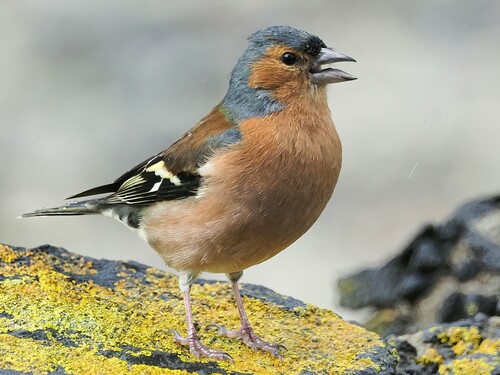
Common Chaffinch (Fringilla coelebs) Common Chaffinch
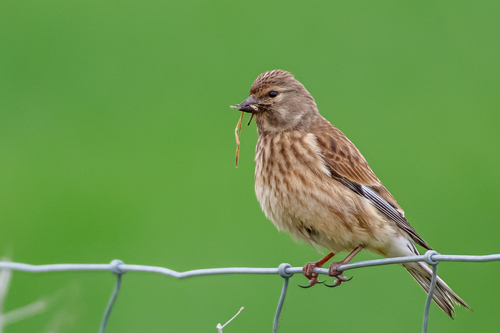
Common Linnet (Linaria cannabina) Common Linnet

Media

Loading…

In short

The most reliable field mark to separate Common Chaffinch from Common Linnet is the presence of bold white wing bars and white tail sides on the Chaffinch, visible in all ages and especially striking in flight. Linnets lack these strong white wing markings, showing instead plain brown upperparts and less contrast in the wings. Adult male Chaffinches are unmistakable with their blue-grey cap and rust-red underparts, while male Linnets in summer show red on the forehead and breast but never have the Chaffinch's blue-grey tones or wing pattern. Females and juveniles of both species are duller, but the Chaffinch's wing bars and white tail edges remain a key separator. Both species are small finches, but Chaffinch is slightly heavier and appears stockier, while Linnet is slimmer and longer-tailed.

Identification tips

  1. White wing bars and tail edges (all ages Chaffinch): Look for two bold white wing bars and white sides to the tail on Chaffinch, visible in flight and when perched; Linnet never shows these.
  2. Wing pattern in flight (all ages): Chaffinch flashes white in the wings and tail during flight, creating a striking pattern; Linnet's wings and tail are plain and lack any white flashes.
  3. Adult male head and underparts (breeding season): Male Chaffinch has a blue-grey cap, black forehead, and rust-red underparts; male Linnet has a red forehead and breast but no blue-grey or black on the head.
  4. Female and juvenile plumage: Female and young Chaffinch are dull brownish but still show the white wing bars and tail edges; female and young Linnet are plain brown above, streaked below, and lack any strong wing or tail markings.
  5. Bill shape and color: Both have finch-like bills, but Chaffinch's bill turns bluish-grey in spring, while Linnet's is grey; this is subtle and not always reliable at a distance.
  6. Overall shape and jizz: Chaffinch appears stockier and more compact, with a shorter tail; Linnet is slimmer, longer-tailed, and more elongated, especially when perched.
  7. Flight style: Chaffinch shows a bounding, undulating flight with obvious white wing and tail flashes; Linnet's flight is more direct and lacks strong pattern.
  8. Habitat context: Chaffinch is common in wooded areas, parks, and gardens; Linnet prefers open country, farmland, and scrub with bushes.
  9. Seasonal changes: After autumn moult, Chaffinch may appear browner due to buff feather tips, but wing bars remain; Linnet does not acquire any white wing markings in any season.
  10. Red coloration (males in summer): Only male Linnet has a red forehead and breast; Chaffinch's red is on the underparts only, and never on the forehead.
  11. Rump color: Chaffinch has a light olive-green rump; Linnet's upperparts, including the rump, are plain brown.
  12. Tail pattern: Chaffinch's tail has white wedges on the outer feathers; Linnet's tail is dark and lacks white.
  13. Perched posture: Chaffinch often looks more upright and broad-bodied; Linnet perches more horizontally and appears longer-tailed.
  14. Mixed flocks: Both can join mixed finch flocks in winter, so check wing and tail pattern carefully when scanning groups.
  15. When in doubt: If you see a small brown finch with no obvious white in the wings or tail, and especially if it is slim and long-tailed, suspect Linnet; if you see strong white wing bars or tail edges, it's a Chaffinch.

Size

Common Chaffinch is slightly heavier (22.0 g) than Common Linnet (19.0 g) [wikidata], and tends to look chunkier with a more robust build. Linnet is slimmer and has a relatively longer tail, giving it a more elongated appearance both perched and in flight. Both are small finches, but Chaffinch often appears more compact and broad-bodied, while Linnet looks more delicate and streamlined.

Plumage

Juvenile and female Chaffinches are dull brownish but always show two strong white wing bars and white edges to the tail, which are visible in all ages and sexes [wikipedia]. In flight, these white markings create a striking pattern against otherwise dark wings and tail. Linnets, including juveniles and females, lack any bold white wing bars; their wings are plain brown with no strong contrast, and the tail is dark without prominent white edges. Adult male Chaffinch in breeding plumage shows a blue-grey cap, black forehead, and rich rust-red underparts, while male Linnet in summer has a red forehead and breast but no blue-grey or black on the head. Female and young Linnets are plain brown above and streaked below, with no strong wing or tail pattern. After autumn moult, Chaffinch plumage is slightly browner due to buff feather fringes, but the wing bars and tail edges remain visible. Linnet never shows these white markings in any season or age.

Behaviour

Both species are seed-eating finches and may forage on the ground or in low vegetation. Chaffinches often feed in mixed flocks, sometimes with other finches, and can be seen hopping on the ground or flying up to low branches. Linnets are also social, often seen in flocks, especially outside the breeding season, and may appear more restless and active, with a tendency to perch on the tops of bushes or wires. In flight, Chaffinch shows a bounding, undulating flight with prominent white flashes in the wings and tail, while Linnet's flight is more direct and less obviously patterned.

Habitat

Chaffinch is widespread and common in a variety of habitats, including woodlands, parks, gardens, and farmland with trees or hedges [wikipedia]. Linnet prefers more open country, such as farmland, heathland, and scrubby areas, often with scattered bushes or hedgerows. While both can occur in similar agricultural landscapes, Chaffinch is more likely in areas with mature trees, and Linnet is more typical of open, bushy habitats.

Submit a better description

Use the same sections as the comparison. Your text is published immediately.

The most reliable field mark to separate Common Chaffinch from Common Linnet is the presence of bold white wing bars and white tail sides on the Chaffinch, visible in all ages and especially striking in flight. Linnets lack these strong white wing markings, showing instead plain brown upperparts and less contrast in the wings. Adult male Chaffinches are unmistakable with their blue-grey cap and rust-red underparts, while male Linnets in summer show red on the forehead and breast but never have the Chaffinch's blue-grey tones or wing pattern. Females and juveniles of both species are duller, but the Chaffinch's wing bars and white tail edges remain a key separator. Both species are small finches, but Chaffinch is slightly heavier and appears stockier, while Linnet is slimmer and longer-tailed.

  1. White wing bars and tail edges (all ages Chaffinch): Look for two bold white wing bars and white sides to the tail on Chaffinch, visible in flight and when perched; Linnet never shows these.
  2. Wing pattern in flight (all ages): Chaffinch flashes white in the wings and tail during flight, creating a striking pattern; Linnet's wings and tail are plain and lack any white flashes.
  3. Adult male head and underparts (breeding season): Male Chaffinch has a blue-grey cap, black forehead, and rust-red underparts; male Linnet has a red forehead and breast but no blue-grey or black on the head.
  4. Female and juvenile plumage: Female and young Chaffinch are dull brownish but still show the white wing bars and tail edges; female and young Linnet are plain brown above, streaked below, and lack any strong wing or tail markings.
  5. Bill shape and color: Both have finch-like bills, but Chaffinch's bill turns bluish-grey in spring, while Linnet's is grey; this is subtle and not always reliable at a distance.
  6. Overall shape and jizz: Chaffinch appears stockier and more compact, with a shorter tail; Linnet is slimmer, longer-tailed, and more elongated, especially when perched.
  7. Flight style: Chaffinch shows a bounding, undulating flight with obvious white wing and tail flashes; Linnet's flight is more direct and lacks strong pattern.
  8. Habitat context: Chaffinch is common in wooded areas, parks, and gardens; Linnet prefers open country, farmland, and scrub with bushes.
  9. Seasonal changes: After autumn moult, Chaffinch may appear browner due to buff feather tips, but wing bars remain; Linnet does not acquire any white wing markings in any season.
  10. Red coloration (males in summer): Only male Linnet has a red forehead and breast; Chaffinch's red is on the underparts only, and never on the forehead.
  11. Rump color: Chaffinch has a light olive-green rump; Linnet's upperparts, including the rump, are plain brown.
  12. Tail pattern: Chaffinch's tail has white wedges on the outer feathers; Linnet's tail is dark and lacks white.
  13. Perched posture: Chaffinch often looks more upright and broad-bodied; Linnet perches more horizontally and appears longer-tailed.
  14. Mixed flocks: Both can join mixed finch flocks in winter, so check wing and tail pattern carefully when scanning groups.
  15. When in doubt: If you see a small brown finch with no obvious white in the wings or tail, and especially if it is slim and long-tailed, suspect Linnet; if you see strong white wing bars or tail edges, it's a Chaffinch.

Common Chaffinch is slightly heavier (22.0 g) than Common Linnet (19.0 g) [wikidata], and tends to look chunkier with a more robust build. Linnet is slimmer and has a relatively longer tail, giving it a more elongated appearance both perched and in flight. Both are small finches, but Chaffinch often appears more compact and broad-bodied, while Linnet looks more delicate and streamlined.

Juvenile and female Chaffinches are dull brownish but always show two strong white wing bars and white edges to the tail, which are visible in all ages and sexes [wikipedia]. In flight, these white markings create a striking pattern against otherwise dark wings and tail. Linnets, including juveniles and females, lack any bold white wing bars; their wings are plain brown with no strong contrast, and the tail is dark without prominent white edges. Adult male Chaffinch in breeding plumage shows a blue-grey cap, black forehead, and rich rust-red underparts, while male Linnet in summer has a red forehead and breast but no blue-grey or black on the head. Female and young Linnets are plain brown above and streaked below, with no strong wing or tail pattern. After autumn moult, Chaffinch plumage is slightly browner due to buff feather fringes, but the wing bars and tail edges remain visible. Linnet never shows these white markings in any season or age.

Both species are seed-eating finches and may forage on the ground or in low vegetation. Chaffinches often feed in mixed flocks, sometimes with other finches, and can be seen hopping on the ground or flying up to low branches. Linnets are also social, often seen in flocks, especially outside the breeding season, and may appear more restless and active, with a tendency to perch on the tops of bushes or wires. In flight, Chaffinch shows a bounding, undulating flight with prominent white flashes in the wings and tail, while Linnet's flight is more direct and less obviously patterned.

Chaffinch is widespread and common in a variety of habitats, including woodlands, parks, gardens, and farmland with trees or hedges [wikipedia]. Linnet prefers more open country, such as farmland, heathland, and scrubby areas, often with scattered bushes or hedgerows. While both can occur in similar agricultural landscapes, Chaffinch is more likely in areas with mature trees, and Linnet is more typical of open, bushy habitats.

Discard your changes?

You have unsaved edits. If you leave now, those changes will be lost.

Common Chaffinch · Common Linnet · My Tricky Birds