

Motmot

Common Chiffchaff vs Iberian Chiffchaff

Phylloscopus collybita versus Phylloscopus ibericus

Play a quiz with Common Chiffchaff and Iberian Chiffchaff
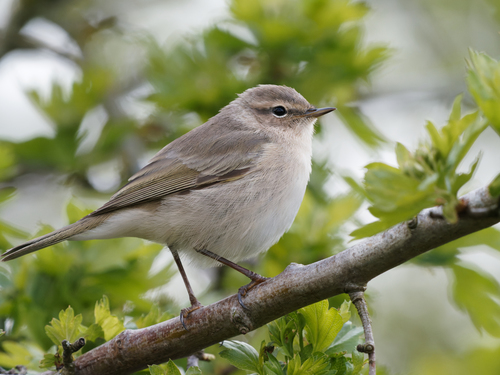
Common Chiffchaff (Phylloscopus collybita) Common Chiffchaff
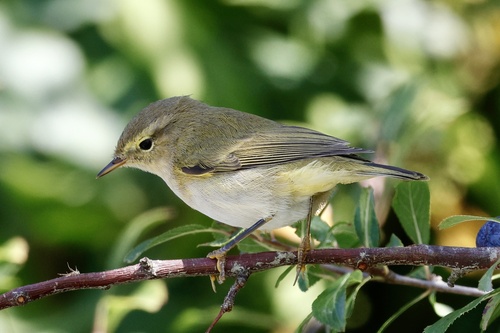
Iberian Chiffchaff (Phylloscopus ibericus) Iberian Chiffchaff

Media

Loading…

In short

The most reliable way to separate Common Chiffchaff from Iberian Chiffchaff in the field is by voice, but subtle plumage and structural differences can help with silent birds. Common Chiffchaff is typically duller, with brownish-green upperparts and off-white underparts, while Iberian Chiffchaff shows cleaner, brighter green upperparts and a yellower breast, more like a Willow Warbler. The primary projection is shorter on Common Chiffchaff, giving it a more compact, 'dumpy' look, whereas Iberian Chiffchaff appears slightly longer-winged and sleeker. Both species can be extremely similar, especially in worn or juvenile plumages, so use a combination of structure, plumage, and especially song for confident identification.

Identification tips

  1. Primary projection: Common Chiffchaff has a short primary projection (the tips of the longest flight feathers barely extend beyond the tertials when perched), giving the wing a rounded, compact look. Iberian Chiffchaff has a longer projection, making the wing look more pointed and the bird sleeker. This is best judged on perched birds in good light.
  2. Upperparts color: Common Chiffchaff is brownish-green above, often appearing dull or even slightly grey-brown in worn plumage. Iberian Chiffchaff is a cleaner, brighter green above, lacking the brown wash. This is most obvious in fresh plumage but can be subtle in worn birds.
  3. Underparts: Common Chiffchaff is off-white below, sometimes with a yellowish wash on the flanks in fresh birds. Iberian Chiffchaff has a distinctly yellow breast and a white belly, more like Willow Warbler. This contrast is a key field mark in good light.
  4. Eyestripe and supercilium: Iberian Chiffchaff has a more distinct, darker eyestripe and a brighter supercilium, enhancing the facial contrast. Common Chiffchaff's face is plainer, with a short, dull whitish supercilium.
  5. Tail movement: Watch for the tail-wagging behavior: Common Chiffchaff often dips and wags its tail sideways, a habit less typical of Iberian Chiffchaff.
  6. Song: Common Chiffchaff sings a simple, repetitive 'chiff-chaff' phrase. Iberian Chiffchaff's song is faster, more varied, and less obviously disyllabic, with rattles and whistles. Use song as the primary separator in spring and early summer.
  7. Call: Common Chiffchaff gives a soft 'hweet'; Iberian Chiffchaff's call is similar but faster and more monotonous. Calls are less reliable than song but can help with experience.
  8. Structure and jizz: Common Chiffchaff appears dumpy and compact, with a short tail and rounded wings. Iberian Chiffchaff is slightly larger, longer-winged, and sleeker. This is subtle and best used in direct comparison.
  9. Juvenile plumage: Juvenile Common Chiffchaffs are browner above and yellowish-white below, but quickly moult into a greener plumage. Juvenile Iberian Chiffchaffs are not specifically described, but likely show the same cleaner green and yellow tones as adults after moult.
  10. Range and context: In northern and eastern Europe, a chiffchaff is almost certainly Common. In southwestern Iberia and northwestern Africa, Iberian is more likely. In the hybrid zone, use multiple features.
  11. Leg color: Both species have dark legs; this is not a reliable separator between these two (unlike Willow Warbler).
  12. Seasonal wear: Both species become duller and browner as plumage wears, but Iberian Chiffchaff retains a greener, yellower look than Common Chiffchaff.
  13. Pitfalls: Worn or juvenile birds of both species can look very similar, especially outside the breeding season. Use structure and any available vocalizations in these cases.
  14. Mixed singers: In the hybrid zone, some birds sing intermediate or mixed songs, making identification by voice alone unreliable. Always combine multiple features.
  15. Direct comparison: When possible, compare birds side by side; the differences in upperpart color, underpart contrast, and structure are most obvious this way.

Size

Both species are very similar in size, but Iberian Chiffchaff is described as slightly larger and longer-winged than Common Chiffchaff. Common Chiffchaff measures about 10–12 cm in length, with males weighing 7–8 g and females 6–7 g [wikipedia]. The size difference is subtle and not always reliable in the field, but the slightly longer and sleeker look of Iberian Chiffchaff may be noticeable with direct comparison.

Plumage

Juvenile and fresh post-moult birds of both species can be brighter, but the key difference is that Common Chiffchaff (all ages) is generally brown-washed green above, with a duller, more muted appearance and off-white underparts that may show some yellow on the flanks in fresh plumage. Iberian Chiffchaff, by contrast, has cleaner, brighter green upperparts without the brownish hue, and a distinctly yellow breast with a white belly, recalling Willow Warbler. The eyestripe is more pronounced and darker in Iberian Chiffchaff, further enhancing the contrast with the supercilium. Juvenile Common Chiffchaffs are browner above and yellowish-white below, but quickly moult into a brighter, greener plumage. After moult, both species can look fresher, but Iberian Chiffchaff retains a more olive-green and yellow look, while Common Chiffchaff remains duller and browner.

Behaviour

Common Chiffchaff is known for its distinctive tail movement: a dip followed by a sideways wag, a behavior less typical of Iberian Chiffchaff. In flight, Common Chiffchaff shows rounded wings and a compact shape, while Iberian Chiffchaff appears slightly longer-winged and sleeker. Both species are active, restless foragers in foliage, but the tail-wagging of Common Chiffchaff can be a useful behavioral clue.

Habitat

Both species breed in open woodlands, but their ranges only overlap in a narrow zone. Common Chiffchaff is widespread across northern and temperate Europe and the Palearctic, while Iberian Chiffchaff breeds in southwestern Europe and northwestern Africa. Outside the hybrid zone, range is a strong clue: in northern Europe, a chiffchaff is almost certainly Common; in southwestern Iberia, Iberian is more likely. Both winter in Africa, but Common Chiffchaff also winters in southern Europe and Asia.

Voice

Voice is the most reliable separator. Common Chiffchaff has a simple, repetitive 'chiff-chaff' song, one of the classic spring sounds, and a monosyllabic 'hweet' call. Iberian Chiffchaff's song is more complex, faster, and less disyllabic, often described as 'chiff-chiff-chiff-chiff-dr-dr-dr-dr-swit-swit-swit', with rattles and drawn-out whistles. The call is similar but faster and more monotonous than Common Chiffchaff. Mixed singers can occur in the hybrid zone, complicating identification by voice alone.

Submit a better description

Use the same sections as the comparison. Your text is published immediately.

The most reliable way to separate Common Chiffchaff from Iberian Chiffchaff in the field is by voice, but subtle plumage and structural differences can help with silent birds. Common Chiffchaff is typically duller, with brownish-green upperparts and off-white underparts, while Iberian Chiffchaff shows cleaner, brighter green upperparts and a yellower breast, more like a Willow Warbler. The primary projection is shorter on Common Chiffchaff, giving it a more compact, 'dumpy' look, whereas Iberian Chiffchaff appears slightly longer-winged and sleeker. Both species can be extremely similar, especially in worn or juvenile plumages, so use a combination of structure, plumage, and especially song for confident identification.

  1. Primary projection: Common Chiffchaff has a short primary projection (the tips of the longest flight feathers barely extend beyond the tertials when perched), giving the wing a rounded, compact look. Iberian Chiffchaff has a longer projection, making the wing look more pointed and the bird sleeker. This is best judged on perched birds in good light.
  2. Upperparts color: Common Chiffchaff is brownish-green above, often appearing dull or even slightly grey-brown in worn plumage. Iberian Chiffchaff is a cleaner, brighter green above, lacking the brown wash. This is most obvious in fresh plumage but can be subtle in worn birds.
  3. Underparts: Common Chiffchaff is off-white below, sometimes with a yellowish wash on the flanks in fresh birds. Iberian Chiffchaff has a distinctly yellow breast and a white belly, more like Willow Warbler. This contrast is a key field mark in good light.
  4. Eyestripe and supercilium: Iberian Chiffchaff has a more distinct, darker eyestripe and a brighter supercilium, enhancing the facial contrast. Common Chiffchaff's face is plainer, with a short, dull whitish supercilium.
  5. Tail movement: Watch for the tail-wagging behavior: Common Chiffchaff often dips and wags its tail sideways, a habit less typical of Iberian Chiffchaff.
  6. Song: Common Chiffchaff sings a simple, repetitive 'chiff-chaff' phrase. Iberian Chiffchaff's song is faster, more varied, and less obviously disyllabic, with rattles and whistles. Use song as the primary separator in spring and early summer.
  7. Call: Common Chiffchaff gives a soft 'hweet'; Iberian Chiffchaff's call is similar but faster and more monotonous. Calls are less reliable than song but can help with experience.
  8. Structure and jizz: Common Chiffchaff appears dumpy and compact, with a short tail and rounded wings. Iberian Chiffchaff is slightly larger, longer-winged, and sleeker. This is subtle and best used in direct comparison.
  9. Juvenile plumage: Juvenile Common Chiffchaffs are browner above and yellowish-white below, but quickly moult into a greener plumage. Juvenile Iberian Chiffchaffs are not specifically described, but likely show the same cleaner green and yellow tones as adults after moult.
  10. Range and context: In northern and eastern Europe, a chiffchaff is almost certainly Common. In southwestern Iberia and northwestern Africa, Iberian is more likely. In the hybrid zone, use multiple features.
  11. Leg color: Both species have dark legs; this is not a reliable separator between these two (unlike Willow Warbler).
  12. Seasonal wear: Both species become duller and browner as plumage wears, but Iberian Chiffchaff retains a greener, yellower look than Common Chiffchaff.
  13. Pitfalls: Worn or juvenile birds of both species can look very similar, especially outside the breeding season. Use structure and any available vocalizations in these cases.
  14. Mixed singers: In the hybrid zone, some birds sing intermediate or mixed songs, making identification by voice alone unreliable. Always combine multiple features.
  15. Direct comparison: When possible, compare birds side by side; the differences in upperpart color, underpart contrast, and structure are most obvious this way.

Both species are very similar in size, but Iberian Chiffchaff is described as slightly larger and longer-winged than Common Chiffchaff. Common Chiffchaff measures about 10–12 cm in length, with males weighing 7–8 g and females 6–7 g [wikipedia]. The size difference is subtle and not always reliable in the field, but the slightly longer and sleeker look of Iberian Chiffchaff may be noticeable with direct comparison.

Juvenile and fresh post-moult birds of both species can be brighter, but the key difference is that Common Chiffchaff (all ages) is generally brown-washed green above, with a duller, more muted appearance and off-white underparts that may show some yellow on the flanks in fresh plumage. Iberian Chiffchaff, by contrast, has cleaner, brighter green upperparts without the brownish hue, and a distinctly yellow breast with a white belly, recalling Willow Warbler. The eyestripe is more pronounced and darker in Iberian Chiffchaff, further enhancing the contrast with the supercilium. Juvenile Common Chiffchaffs are browner above and yellowish-white below, but quickly moult into a brighter, greener plumage. After moult, both species can look fresher, but Iberian Chiffchaff retains a more olive-green and yellow look, while Common Chiffchaff remains duller and browner.

Common Chiffchaff is known for its distinctive tail movement: a dip followed by a sideways wag, a behavior less typical of Iberian Chiffchaff. In flight, Common Chiffchaff shows rounded wings and a compact shape, while Iberian Chiffchaff appears slightly longer-winged and sleeker. Both species are active, restless foragers in foliage, but the tail-wagging of Common Chiffchaff can be a useful behavioral clue.

Both species breed in open woodlands, but their ranges only overlap in a narrow zone. Common Chiffchaff is widespread across northern and temperate Europe and the Palearctic, while Iberian Chiffchaff breeds in southwestern Europe and northwestern Africa. Outside the hybrid zone, range is a strong clue: in northern Europe, a chiffchaff is almost certainly Common; in southwestern Iberia, Iberian is more likely. Both winter in Africa, but Common Chiffchaff also winters in southern Europe and Asia.

Voice is the most reliable separator. Common Chiffchaff has a simple, repetitive 'chiff-chaff' song, one of the classic spring sounds, and a monosyllabic 'hweet' call. Iberian Chiffchaff's song is more complex, faster, and less disyllabic, often described as 'chiff-chiff-chiff-chiff-dr-dr-dr-dr-swit-swit-swit', with rattles and drawn-out whistles. The call is similar but faster and more monotonous than Common Chiffchaff. Mixed singers can occur in the hybrid zone, complicating identification by voice alone.

Discard your changes?

You have unsaved edits. If you leave now, those changes will be lost.

Common Chiffchaff · Iberian Chiffchaff · My Tricky Birds