Motmot

Common Linnet vs Eurasian Siskin

Linaria cannabina versus Spinus spinus

Play a quiz with Common Linnet and Eurasian Siskin
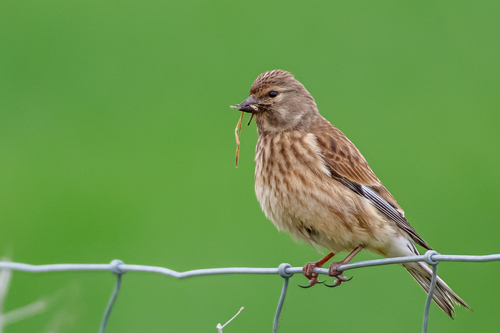
Common Linnet (Linaria cannabina) Common Linnet
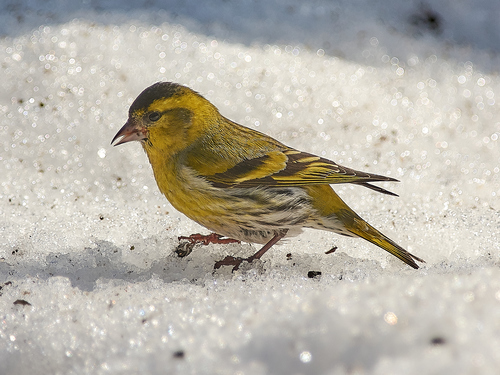
Eurasian Siskin (Spinus spinus) Eurasian Siskin

Media

Loading…

In short

The most reliable field mark to separate Common Linnet from Eurasian Siskin is the presence of bright yellow in the wings and tail on siskin of all ages, especially obvious in flight, versus the plain brown upperparts and lack of yellow in linnet. Adult male siskins are striking with a black cap and yellow face, while male linnets show red on the crown and breast in summer. Females and juveniles of both species are duller, but siskins still show yellow wingbars and tail sides, whereas linnets remain brown and streaked. Siskins are smaller and shorter-tailed, and their active, acrobatic feeding style is distinctive compared to the more upright, slim linnet.

Identification tips

  1. Yellow in wings and tail (all ages): Siskins always show yellow wingbars and yellow sides to the tail, visible in flight and when perched. Linnets never show yellow in these areas.
  2. Adult male plumage: Male siskin has a black cap, yellow face and breast, and unstreaked throat; male linnet in summer has a red crown and breast with a grey nape, but no yellow or black cap.
  3. Female/juvenile confusion: Female and juvenile siskins are olive and streaked, but always have yellow wingbars and tail sides. Female and juvenile linnets are brown above, white below with buff streaks, and lack any yellow or black cap.
  4. Bill shape: Siskin's bill is short, fine, and pointed, adapted for extracting seeds from cones. Linnet's bill is longer, more conical, and grey, suited for larger seeds.
  5. Tail length and shape: Linnet has a noticeably longer tail, giving a more elongated appearance, especially when perched. Siskin is short-tailed and compact.
  6. Flight style: Siskin's flight is rapid and bounding, often in flocks, while linnet's flight is more direct and less bouncy.
  7. Feeding behavior: Siskins often feed acrobatically, hanging upside down in trees. Linnets feed more conventionally on the ground or in low vegetation.
  8. Habitat context: Siskin is most often in coniferous or mixed woods, especially with alder or spruce, but may visit gardens in winter. Linnet prefers open country, farmland, and hedgerows.
  9. Cap and bib: Siskin males have a black cap and bib; females have a greenish head. Linnet never has a black cap or bib.
  10. Underparts: Siskin's underparts are white with grey streaks (female/juvenile) or yellow (male), while linnet's are white with buff streaks (female/juvenile) or red (male, summer).
  11. Upperparts: Siskin is greyish-green above; linnet is plain brown.
  12. Sociability: Siskins are highly sociable and trusting, often in large flocks. Linnets are also sociable but less so than siskins.
  13. Voice: Siskin's song is a lively mix of tweets and trills, often heard in flight. Linnet's song is less distinctive for separation.
  14. Seasonal marks: Only male linnet in summer shows red on the crown and breast; outside breeding season, this is less obvious, so rely more on yellow in wings/tail for siskin.
  15. Pitfalls: Beware of dull female/juvenile siskins, which can appear drab, but always check for yellow in wings and tail. Linnets never show this yellow, regardless of age or sex.

Size

Common Linnet is noticeably heavier (19.0 g vs 13.8 g) and appears longer and slimmer with a longer tail. Siskin is smaller, more compact, and short-tailed, which is apparent both perched and in flight. This size difference is subtle at a distance but becomes obvious when both species are seen together or compared to familiar finches.

Plumage

Juvenile and female Eurasian Siskins always show some yellow in the wings and tail, with broad yellow wingbars and yellow sides to the tail, even when overall plumage is subdued. Linnets of all ages lack any yellow; their upperparts are plain brown and underparts are white with buff streaks (females/juveniles) or with red (adult males in summer). Male siskins are unmistakable with a black cap, yellow face and breast, and unstreaked throat, while male linnets have a grey nape and red crown and breast. Female and juvenile siskins are more olive and streaked, but still show yellow wing and tail highlights and lack the red and grey of linnet. Linnet never shows a black cap or bib, and its bill is grey, not dark. Siskin's bill is short and fine, adapted for extracting seeds from cones, while linnet's is longer and more conical.

Behaviour

Siskins are highly active, often feeding acrobatically and hanging upside down like tits, especially in trees. They are sociable and trusting, frequently seen in flocks, and have a rapid, bounding flight. Linnets are more upright and slim when perched, often seen in open country or hedgerows, and feed more conventionally on the ground or in low vegetation. They are less likely to be seen performing acrobatic feeding maneuvers.

Habitat

Eurasian Siskin is typically found in coniferous and mixed woodland, especially where alder and spruce are present, but in winter can appear in gardens and parks. Common Linnet prefers open country, farmland, hedgerows, and scrubby areas, rarely venturing into dense woodland. Habitat context can help: a small finch in conifers is more likely a siskin, while one in open fields or hedges is likely a linnet.

Voice

Siskin has a lively, twittering song with a mix of tweets and trills, often given in flight or from treetops. Linnet's song is less described in the notes, but is not a key separation point here; focus on visual marks.

Submit a better description

Use the same sections as the comparison. Your text is published immediately.

The most reliable field mark to separate Common Linnet from Eurasian Siskin is the presence of bright yellow in the wings and tail on siskin of all ages, especially obvious in flight, versus the plain brown upperparts and lack of yellow in linnet. Adult male siskins are striking with a black cap and yellow face, while male linnets show red on the crown and breast in summer. Females and juveniles of both species are duller, but siskins still show yellow wingbars and tail sides, whereas linnets remain brown and streaked. Siskins are smaller and shorter-tailed, and their active, acrobatic feeding style is distinctive compared to the more upright, slim linnet.

  1. Yellow in wings and tail (all ages): Siskins always show yellow wingbars and yellow sides to the tail, visible in flight and when perched. Linnets never show yellow in these areas.
  2. Adult male plumage: Male siskin has a black cap, yellow face and breast, and unstreaked throat; male linnet in summer has a red crown and breast with a grey nape, but no yellow or black cap.
  3. Female/juvenile confusion: Female and juvenile siskins are olive and streaked, but always have yellow wingbars and tail sides. Female and juvenile linnets are brown above, white below with buff streaks, and lack any yellow or black cap.
  4. Bill shape: Siskin's bill is short, fine, and pointed, adapted for extracting seeds from cones. Linnet's bill is longer, more conical, and grey, suited for larger seeds.
  5. Tail length and shape: Linnet has a noticeably longer tail, giving a more elongated appearance, especially when perched. Siskin is short-tailed and compact.
  6. Flight style: Siskin's flight is rapid and bounding, often in flocks, while linnet's flight is more direct and less bouncy.
  7. Feeding behavior: Siskins often feed acrobatically, hanging upside down in trees. Linnets feed more conventionally on the ground or in low vegetation.
  8. Habitat context: Siskin is most often in coniferous or mixed woods, especially with alder or spruce, but may visit gardens in winter. Linnet prefers open country, farmland, and hedgerows.
  9. Cap and bib: Siskin males have a black cap and bib; females have a greenish head. Linnet never has a black cap or bib.
  10. Underparts: Siskin's underparts are white with grey streaks (female/juvenile) or yellow (male), while linnet's are white with buff streaks (female/juvenile) or red (male, summer).
  11. Upperparts: Siskin is greyish-green above; linnet is plain brown.
  12. Sociability: Siskins are highly sociable and trusting, often in large flocks. Linnets are also sociable but less so than siskins.
  13. Voice: Siskin's song is a lively mix of tweets and trills, often heard in flight. Linnet's song is less distinctive for separation.
  14. Seasonal marks: Only male linnet in summer shows red on the crown and breast; outside breeding season, this is less obvious, so rely more on yellow in wings/tail for siskin.
  15. Pitfalls: Beware of dull female/juvenile siskins, which can appear drab, but always check for yellow in wings and tail. Linnets never show this yellow, regardless of age or sex.

Common Linnet is noticeably heavier (19.0 g vs 13.8 g) and appears longer and slimmer with a longer tail. Siskin is smaller, more compact, and short-tailed, which is apparent both perched and in flight. This size difference is subtle at a distance but becomes obvious when both species are seen together or compared to familiar finches.

Juvenile and female Eurasian Siskins always show some yellow in the wings and tail, with broad yellow wingbars and yellow sides to the tail, even when overall plumage is subdued. Linnets of all ages lack any yellow; their upperparts are plain brown and underparts are white with buff streaks (females/juveniles) or with red (adult males in summer). Male siskins are unmistakable with a black cap, yellow face and breast, and unstreaked throat, while male linnets have a grey nape and red crown and breast. Female and juvenile siskins are more olive and streaked, but still show yellow wing and tail highlights and lack the red and grey of linnet. Linnet never shows a black cap or bib, and its bill is grey, not dark. Siskin's bill is short and fine, adapted for extracting seeds from cones, while linnet's is longer and more conical.

Siskins are highly active, often feeding acrobatically and hanging upside down like tits, especially in trees. They are sociable and trusting, frequently seen in flocks, and have a rapid, bounding flight. Linnets are more upright and slim when perched, often seen in open country or hedgerows, and feed more conventionally on the ground or in low vegetation. They are less likely to be seen performing acrobatic feeding maneuvers.

Eurasian Siskin is typically found in coniferous and mixed woodland, especially where alder and spruce are present, but in winter can appear in gardens and parks. Common Linnet prefers open country, farmland, hedgerows, and scrubby areas, rarely venturing into dense woodland. Habitat context can help: a small finch in conifers is more likely a siskin, while one in open fields or hedges is likely a linnet.

Siskin has a lively, twittering song with a mix of tweets and trills, often given in flight or from treetops. Linnet's song is less described in the notes, but is not a key separation point here; focus on visual marks.

Discard your changes?

You have unsaved edits. If you leave now, those changes will be lost.

Common Linnet · Eurasian Siskin · My Tricky Birds