
Motmot

Common Linnet vs Lesser Redpoll

Linaria cannabina versus Acanthis cabaret

Play a quiz with Common Linnet and Lesser Redpoll
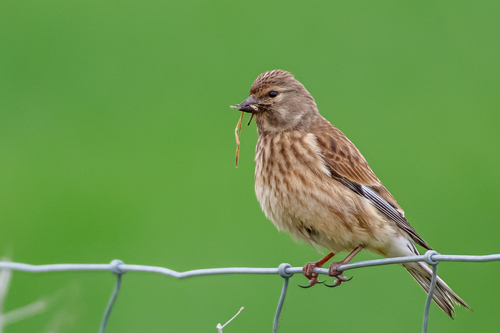
Common Linnet (Linaria cannabina) Common Linnet
Lesser Redpoll (Acanthis cabaret) Lesser Redpoll

Media

Loading…

In short

The most reliable field mark between Common Linnet and Lesser Redpoll is the presence of a black bib and red forehead patch on the redpoll, which the linnet lacks. Adult male linnets in summer show a red breast and head-patch, but females and immatures do not, making confusion likely outside peak breeding plumage. Lesser Redpolls always have a red forehead, black bib, and two pale wingbars, while linnets are browner above with a longer tail and lack the black bib. In flight or at a distance, focus on the redpoll's streaked rump and pale wingbars versus the linnet's plainer brown upperparts and more slender, elongated shape.

Identification tips

  1. Red Forehead Patch (All Ages, Redpoll Only): Lesser Redpoll always shows a bright red patch on the forehead, even in females and immatures. Linnet never shows this feature.
  2. Black Bib (All Ages, Redpoll Only): Redpolls have a distinct black bib under the bill. Linnets lack any black on the throat or chin.
  3. Wingbars (All Ages, Redpoll Only): Redpolls show two pale wingbars on the upperwing, visible both perched and in flight. Linnets have plain brown wings without obvious wingbars.
  4. Breast Color (Adult Males, Breeding Season): Male linnets in summer have a red breast and red on the head, but females and immatures do not. Redpoll males may have a pinkish breast, but this is less extensive and never as bright or extensive as the linnet's.
  5. Streaking: Redpolls are heavily streaked on the upperparts, rump, and flanks, with a streaked vent. Linnets are browner above with less streaking, especially on the rump.
  6. Tail Shape and Length: Linnet has a longer, more pointed tail, giving a slender, elongated appearance. Redpoll's tail is shorter and more notched, contributing to a compact look.
  7. Bill Color: Redpolls have a yellowish bill with a dark tip; linnets have a grey bill.
  8. Size and Structure: Linnets are heavier and longer, appearing more slender and upright. Redpolls are smaller, rounder, and more compact.
  9. Habitat Clues: Redpolls are most often found in birch or alder woodland, especially in winter. Linnets prefer open country, farmland, and hedgerows.
  10. Behavior: Redpolls often feed acrobatically in trees, sometimes hanging upside down. Linnets are more likely to be seen perched upright on wires or foraging on the ground.
  11. Female and Immature Pitfall: Female and immature linnets lack red on the head and breast, making them especially easy to confuse with redpolls. Look for the redpoll's red forehead and black bib, which are always present.
  12. Flight Pattern: In flight, redpolls show pale wingbars and a compact, short-tailed shape. Linnets have a longer tail and plainer wings.
  13. Vocalization (Not Diagnostic Here): No clear vocal differences are described in the provided notes.
  14. Seasonal Pitfall: Outside the breeding season, male linnets lose much of their red, increasing confusion. Rely on structural and face pattern differences.
  15. Mixed Flocks: Both species may join mixed finch flocks in winter. Use the combination of red forehead, black bib, and wingbars for redpoll, versus the longer-tailed, plain-faced linnet.

Size

Common Linnet is noticeably heavier (19.0 g [wikidata]) than Lesser Redpoll (12–16 g [wikipedia]), and appears longer and slimmer with a longer tail. Redpolls look more compact and short-tailed, especially when perched. This difference is subtle in the field but can be useful when birds are side by side or in mixed flocks.

Plumage

Juvenile and female Common Linnets are brown above with streaked buff breasts and white underparts, lacking any red or black on the face or bib. By contrast, all Lesser Redpolls—male, female, and immature—show a bright red forehead patch, a black bib, and two pale wingbars on the brownish-grey, streaked upperparts. Males may have a pinkish wash on the breast, but even females and immatures retain the red forehead and black bib. The redpoll's rump is streaked, and there is a broad dark brown streak across the vent, while linnets have plainer brown upperparts and a longer, more pointed tail. In flight, the redpoll's pale wingbars and compact shape stand out, while linnet shows a longer tail and less contrast on the wings.

Behaviour

Both species are active and often forage in flocks, but redpolls are more likely to be seen hanging acrobatically from birch or alder catkins, sometimes feeding upside-down. Linnets are more likely to be seen on the ground or perched upright on hedges and wires, with a more upright, slender posture. Redpolls often appear restless and flit between trees, while linnets may sit more quietly for longer periods.

Habitat

Lesser Redpolls are typically found in birch and alder woodland, especially in winter, and are partial migrants that may appear in gardens and weedy fields during irruptions. Common Linnets prefer open country, farmland, and hedgerows, often avoiding dense woodland. If the bird is in a dense stand of birch or alder, especially in winter, redpoll is more likely; linnet is more expected in open scrub, farmland, or hedgerows.

Submit a better description

Use the same sections as the comparison. Your text is published immediately.

The most reliable field mark between Common Linnet and Lesser Redpoll is the presence of a black bib and red forehead patch on the redpoll, which the linnet lacks. Adult male linnets in summer show a red breast and head-patch, but females and immatures do not, making confusion likely outside peak breeding plumage. Lesser Redpolls always have a red forehead, black bib, and two pale wingbars, while linnets are browner above with a longer tail and lack the black bib. In flight or at a distance, focus on the redpoll's streaked rump and pale wingbars versus the linnet's plainer brown upperparts and more slender, elongated shape.

  1. Red Forehead Patch (All Ages, Redpoll Only): Lesser Redpoll always shows a bright red patch on the forehead, even in females and immatures. Linnet never shows this feature.
  2. Black Bib (All Ages, Redpoll Only): Redpolls have a distinct black bib under the bill. Linnets lack any black on the throat or chin.
  3. Wingbars (All Ages, Redpoll Only): Redpolls show two pale wingbars on the upperwing, visible both perched and in flight. Linnets have plain brown wings without obvious wingbars.
  4. Breast Color (Adult Males, Breeding Season): Male linnets in summer have a red breast and red on the head, but females and immatures do not. Redpoll males may have a pinkish breast, but this is less extensive and never as bright or extensive as the linnet's.
  5. Streaking: Redpolls are heavily streaked on the upperparts, rump, and flanks, with a streaked vent. Linnets are browner above with less streaking, especially on the rump.
  6. Tail Shape and Length: Linnet has a longer, more pointed tail, giving a slender, elongated appearance. Redpoll's tail is shorter and more notched, contributing to a compact look.
  7. Bill Color: Redpolls have a yellowish bill with a dark tip; linnets have a grey bill.
  8. Size and Structure: Linnets are heavier and longer, appearing more slender and upright. Redpolls are smaller, rounder, and more compact.
  9. Habitat Clues: Redpolls are most often found in birch or alder woodland, especially in winter. Linnets prefer open country, farmland, and hedgerows.
  10. Behavior: Redpolls often feed acrobatically in trees, sometimes hanging upside down. Linnets are more likely to be seen perched upright on wires or foraging on the ground.
  11. Female and Immature Pitfall: Female and immature linnets lack red on the head and breast, making them especially easy to confuse with redpolls. Look for the redpoll's red forehead and black bib, which are always present.
  12. Flight Pattern: In flight, redpolls show pale wingbars and a compact, short-tailed shape. Linnets have a longer tail and plainer wings.
  13. Vocalization (Not Diagnostic Here): No clear vocal differences are described in the provided notes.
  14. Seasonal Pitfall: Outside the breeding season, male linnets lose much of their red, increasing confusion. Rely on structural and face pattern differences.
  15. Mixed Flocks: Both species may join mixed finch flocks in winter. Use the combination of red forehead, black bib, and wingbars for redpoll, versus the longer-tailed, plain-faced linnet.

Common Linnet is noticeably heavier (19.0 g [wikidata]) than Lesser Redpoll (12–16 g [wikipedia]), and appears longer and slimmer with a longer tail. Redpolls look more compact and short-tailed, especially when perched. This difference is subtle in the field but can be useful when birds are side by side or in mixed flocks.

Juvenile and female Common Linnets are brown above with streaked buff breasts and white underparts, lacking any red or black on the face or bib. By contrast, all Lesser Redpolls—male, female, and immature—show a bright red forehead patch, a black bib, and two pale wingbars on the brownish-grey, streaked upperparts. Males may have a pinkish wash on the breast, but even females and immatures retain the red forehead and black bib. The redpoll's rump is streaked, and there is a broad dark brown streak across the vent, while linnets have plainer brown upperparts and a longer, more pointed tail. In flight, the redpoll's pale wingbars and compact shape stand out, while linnet shows a longer tail and less contrast on the wings.

Both species are active and often forage in flocks, but redpolls are more likely to be seen hanging acrobatically from birch or alder catkins, sometimes feeding upside-down. Linnets are more likely to be seen on the ground or perched upright on hedges and wires, with a more upright, slender posture. Redpolls often appear restless and flit between trees, while linnets may sit more quietly for longer periods.

Lesser Redpolls are typically found in birch and alder woodland, especially in winter, and are partial migrants that may appear in gardens and weedy fields during irruptions. Common Linnets prefer open country, farmland, and hedgerows, often avoiding dense woodland. If the bird is in a dense stand of birch or alder, especially in winter, redpoll is more likely; linnet is more expected in open scrub, farmland, or hedgerows.

Discard your changes?

You have unsaved edits. If you leave now, those changes will be lost.

Common Linnet · Lesser Redpoll · My Tricky Birds