
Motmot

Common Swift vs Common Chaffinch

Apus apus versus Fringilla coelebs

Play a quiz with Common Swift and Common Chaffinch
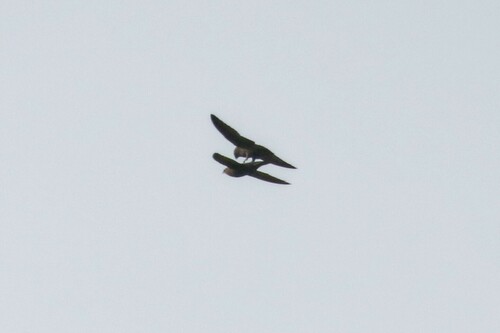
Common Swift (Apus apus) Common Swift
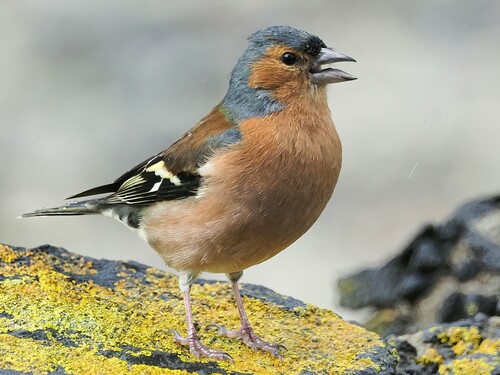
Common Chaffinch (Fringilla coelebs) Common Chaffinch

Media

Loading…

In short

The most reliable field mark to separate Common Swift from Common Chaffinch in any plumage is overall structure and flight style: swifts are sickle-winged, all-dark, fast-flying aerialists, while chaffinches are compact, short-tailed finches with prominent white wing bars and tail sides, usually seen perched or in bounding flight. Juvenile and female chaffinches can look dull, but always show those white wing and tail patches, absent in swifts. Swifts never perch on wires or branches, while chaffinches rarely feed on the wing. If you spot a bird with a boomerang-shaped wing outline and no white in the wings or tail, it's a swift; if you see white wing bars or tail flashes, it's a chaffinch.

Identification tips

  1. Wing and tail pattern: Swifts (all ages) are uniformly dark with no white in wings or tail. Chaffinches (all ages and sexes) show two white wing bars and white outer tail feathers—visible even in flight or on perched birds.
  2. Flight style: Swifts have long, narrow, crescent-shaped wings and a rapid, agile flight, rarely perching except at nest sites. Chaffinches have short, rounded wings and a bounding, undulating flight, often perching on branches or wires.
  3. Body shape: Swifts are slender and streamlined with a short, deeply forked tail. Chaffinches are compact, with a stouter body and a less forked, shorter tail.
  4. Bill: Swifts have a tiny, almost invisible bill suited for aerial insect feeding. Chaffinches have a stout, conical finch bill for seed eating—easily seen on perched birds.
  5. Plumage (male chaffinch): Adult male chaffinches have a blue-grey cap and rust-red underparts, never shown by swifts. Swifts are always dark brownish-black.
  6. Plumage (female/juvenile chaffinch): Females and juveniles are duller but still show white wing bars and tail sides. Swifts never show these contrasts.
  7. Perching behavior: Swifts do not perch on wires or branches; chaffinches do so frequently.
  8. Feeding behavior: Swifts feed exclusively on the wing, high in the air. Chaffinches feed mostly on the ground or in low vegetation.
  9. Habitat context: Swifts are usually seen overhead in open areas, especially near water or urban areas. Chaffinches are found in wooded or shrubby habitats, gardens, and parks.
  10. Vocalizations: Swifts produce loud, piercing screams, especially in groups. Chaffinches have a musical song and a sharp 'pink' call.
  11. Seasonal appearance: Chaffinches may look browner after autumn moult but retain white wing/tail marks. Swifts' plumage does not change seasonally.
  12. Size impression: Swifts look longer-winged and larger in flight than chaffinches, which are more compact.
  13. Mistaken identity in flight: Dull female/juvenile chaffinches might seem dark at a distance, but white wing/tail flashes are always present. Swifts never show any white.
  14. Group behavior: Swifts often fly in screaming parties; chaffinches are more likely to be seen singly or in small, quiet flocks.
  15. Contextual clues: If you see a bird always in the air, especially high and fast, think swift. If it spends time on the ground or in bushes, it's a chaffinch.

Size

Common Swifts are larger and more elongated, measuring 16–17 cm in length with a 38–40 cm wingspan. Common Chaffinches are smaller and stockier, about 14.5 cm long with a 24.5–28.5 cm wingspan, and weigh around 22 g [wikidata]. Swifts appear much longer-winged and narrower-bodied in flight, while chaffinches look more compact and finch-like.

Plumage

No matter the age or sex, Common Swifts are uniform blackish-brown with a small, often invisible pale throat patch and completely lack any white in the wings or tail. Juvenile and adult chaffinches, even dull females and immatures, always show two contrasting white wing bars and white patches on the outer tail feathers. Adult male chaffinches are brightly colored with a blue-grey cap and rust-red underparts, but females and juveniles are duller, with grey-brown upperparts and paler underparts, yet still retain the white wing and tail markings. After the autumn moult, chaffinches can look browner due to buff feather tips, but the white wing bars and tail sides remain diagnostic. Swifts never show any wing or tail pattern beyond their overall dusky color.

Behaviour

Swifts are almost always seen in fast, direct flight high in the sky, rarely if ever perching except on vertical surfaces (like nest sites). Their flight is rapid, with long glides and sharp turns. Chaffinches are usually seen perched in trees, shrubs, or on the ground, and their flight is undulating (bounding) with bursts of flapping and short glides. Chaffinches often feed on the ground or in low vegetation, and only occasionally make short flights to catch insects. Swifts never land on wires or branches, while chaffinches frequently do.

Habitat

Swifts are most often seen in open skies over towns, fields, and water, rarely landing except at nest sites. Chaffinches are common in woodlands, parks, gardens, and hedgerows, often foraging on the ground or in low vegetation. If you see a bird feeding on the ground or perched in a bush, it's a chaffinch; a bird always in the air, especially high up, is likely a swift.

Voice

Swifts give loud, piercing screams, often in groups, with a higher-pitched version from females. Chaffinches have a varied, musical song and a sharp 'pink' or 'spink' call. If you hear a screaming party overhead, it's swifts; if you hear a finch-like song or a metallic call from a perched bird, it's a chaffinch.

Submit a better description

Use the same sections as the comparison. Your text is published immediately.

The most reliable field mark to separate Common Swift from Common Chaffinch in any plumage is overall structure and flight style: swifts are sickle-winged, all-dark, fast-flying aerialists, while chaffinches are compact, short-tailed finches with prominent white wing bars and tail sides, usually seen perched or in bounding flight. Juvenile and female chaffinches can look dull, but always show those white wing and tail patches, absent in swifts. Swifts never perch on wires or branches, while chaffinches rarely feed on the wing. If you spot a bird with a boomerang-shaped wing outline and no white in the wings or tail, it's a swift; if you see white wing bars or tail flashes, it's a chaffinch.

  1. Wing and tail pattern: Swifts (all ages) are uniformly dark with no white in wings or tail. Chaffinches (all ages and sexes) show two white wing bars and white outer tail feathers—visible even in flight or on perched birds.
  2. Flight style: Swifts have long, narrow, crescent-shaped wings and a rapid, agile flight, rarely perching except at nest sites. Chaffinches have short, rounded wings and a bounding, undulating flight, often perching on branches or wires.
  3. Body shape: Swifts are slender and streamlined with a short, deeply forked tail. Chaffinches are compact, with a stouter body and a less forked, shorter tail.
  4. Bill: Swifts have a tiny, almost invisible bill suited for aerial insect feeding. Chaffinches have a stout, conical finch bill for seed eating—easily seen on perched birds.
  5. Plumage (male chaffinch): Adult male chaffinches have a blue-grey cap and rust-red underparts, never shown by swifts. Swifts are always dark brownish-black.
  6. Plumage (female/juvenile chaffinch): Females and juveniles are duller but still show white wing bars and tail sides. Swifts never show these contrasts.
  7. Perching behavior: Swifts do not perch on wires or branches; chaffinches do so frequently.
  8. Feeding behavior: Swifts feed exclusively on the wing, high in the air. Chaffinches feed mostly on the ground or in low vegetation.
  9. Habitat context: Swifts are usually seen overhead in open areas, especially near water or urban areas. Chaffinches are found in wooded or shrubby habitats, gardens, and parks.
  10. Vocalizations: Swifts produce loud, piercing screams, especially in groups. Chaffinches have a musical song and a sharp 'pink' call.
  11. Seasonal appearance: Chaffinches may look browner after autumn moult but retain white wing/tail marks. Swifts' plumage does not change seasonally.
  12. Size impression: Swifts look longer-winged and larger in flight than chaffinches, which are more compact.
  13. Mistaken identity in flight: Dull female/juvenile chaffinches might seem dark at a distance, but white wing/tail flashes are always present. Swifts never show any white.
  14. Group behavior: Swifts often fly in screaming parties; chaffinches are more likely to be seen singly or in small, quiet flocks.
  15. Contextual clues: If you see a bird always in the air, especially high and fast, think swift. If it spends time on the ground or in bushes, it's a chaffinch.

Common Swifts are larger and more elongated, measuring 16–17 cm in length with a 38–40 cm wingspan. Common Chaffinches are smaller and stockier, about 14.5 cm long with a 24.5–28.5 cm wingspan, and weigh around 22 g [wikidata]. Swifts appear much longer-winged and narrower-bodied in flight, while chaffinches look more compact and finch-like.

No matter the age or sex, Common Swifts are uniform blackish-brown with a small, often invisible pale throat patch and completely lack any white in the wings or tail. Juvenile and adult chaffinches, even dull females and immatures, always show two contrasting white wing bars and white patches on the outer tail feathers. Adult male chaffinches are brightly colored with a blue-grey cap and rust-red underparts, but females and juveniles are duller, with grey-brown upperparts and paler underparts, yet still retain the white wing and tail markings. After the autumn moult, chaffinches can look browner due to buff feather tips, but the white wing bars and tail sides remain diagnostic. Swifts never show any wing or tail pattern beyond their overall dusky color.

Swifts are almost always seen in fast, direct flight high in the sky, rarely if ever perching except on vertical surfaces (like nest sites). Their flight is rapid, with long glides and sharp turns. Chaffinches are usually seen perched in trees, shrubs, or on the ground, and their flight is undulating (bounding) with bursts of flapping and short glides. Chaffinches often feed on the ground or in low vegetation, and only occasionally make short flights to catch insects. Swifts never land on wires or branches, while chaffinches frequently do.

Swifts are most often seen in open skies over towns, fields, and water, rarely landing except at nest sites. Chaffinches are common in woodlands, parks, gardens, and hedgerows, often foraging on the ground or in low vegetation. If you see a bird feeding on the ground or perched in a bush, it's a chaffinch; a bird always in the air, especially high up, is likely a swift.

Swifts give loud, piercing screams, often in groups, with a higher-pitched version from females. Chaffinches have a varied, musical song and a sharp 'pink' or 'spink' call. If you hear a screaming party overhead, it's swifts; if you hear a finch-like song or a metallic call from a perched bird, it's a chaffinch.

Discard your changes?

You have unsaved edits. If you leave now, those changes will be lost.

Common Swift · Common Chaffinch · My Tricky Birds