Motmot

Great Snipe vs Common Snipe

Gallinago media versus Gallinago gallinago

Play a quiz with Great Snipe and Common Snipe
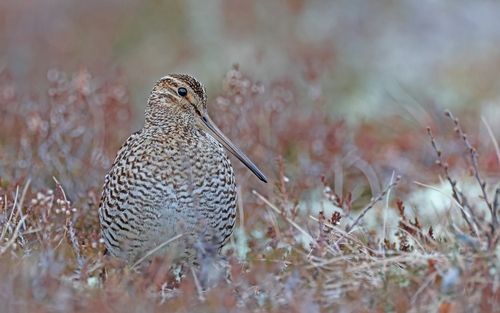
Great Snipe (Gallinago media) Great Snipe
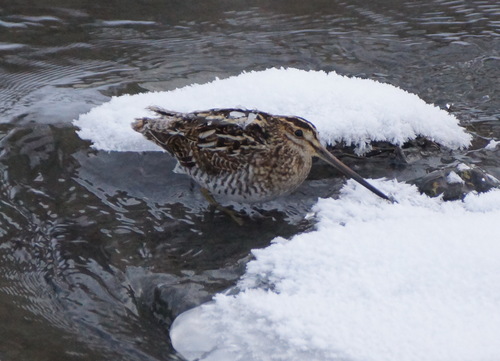
Common Snipe (Gallinago gallinago) Common Snipe

Media

Loading…

In short

The most reliable field mark between Great Snipe and Common Snipe is the combination of bulkier, broader-winged structure and a distinct pale wingbar in flight on Great Snipe, versus the slimmer, more pointed-winged Common Snipe which lacks a strong wingbar. Great Snipe also shows a shorter bill and a more obvious white in the tail when fanned, especially during display. Both species are well-camouflaged, but Great Snipe appears noticeably heavier and less agile in flight. Age-related wing pattern differences are not strongly highlighted in the sources, so focus on overall structure, wing shape, and flight style for separation.

Identification tips

  1. Bulk and Structure: Great Snipe is noticeably bulkier and heavier-bodied than Common Snipe, especially in flight. Look for a more woodcock-like impression versus the slimmer, more agile Common Snipe. This is reliable for adults and immatures.
  2. Wing Shape: Great Snipe has broad, rounded wings with a pale wingbar visible in flight. Common Snipe's wings are pointed and lack a strong wingbar. This is most apparent when birds flush or in strong side-light.
  3. Bill Length: Great Snipe's bill is shorter (6–7 cm) and stouter, while Common Snipe's is longer (5.5–7 cm) and thinner. Bill length is best judged at close range or in good profile views.
  4. Flight Style: Great Snipe flies straight and powerfully when flushed, often for a long distance before dropping. Common Snipe typically flushes at close range and flies off in a rapid, zig-zagging pattern. This difference is most obvious in disturbed birds.
  5. Tail Pattern: Great Snipe shows a brown-centered tail with conspicuous white sides, especially when fanned during display. Common Snipe's tail is less contrasting, and the white is not as obvious in flight.
  6. Upperparts and Head Stripes: Both are mottled brown above, but Common Snipe has straw-yellow stripes on the upperparts and a more distinct pattern of light stripes above and below the eye. Great Snipe's head pattern is plainer, with just a dark eye-stripe.
  7. Underparts: Great Snipe is barred below, while Common Snipe is paler underneath with less barring.
  8. Leg Color: Common Snipe has short greenish-grey legs; leg color is not diagnostic for Great Snipe in the sources.
  9. Display Behavior: Great Snipe males display at leks, standing upright with tail fanned and making a variety of mechanical sounds. Common Snipe males perform aerial 'winnowing' displays, producing a drumming sound with the tail.
  10. Vocalizations: Listen for Great Snipe's faint 'yeah' and mechanical display sounds versus Common Snipe's sharp 'scape' call and distinctive drumming display.
  11. Habitat Preferences: Both use marshes and wet meadows, but Great Snipe favors shorter vegetation and drier spots, while Common Snipe is more likely in bogs and wetter areas.
  12. Migration and Range: Great Snipe is a long-distance migrant between Europe and Africa; Common Snipe is more widespread and can be found in a broader range of wetland habitats across Eurasia.
  13. Pitfalls: Both are very well camouflaged and difficult to see on the ground. Flight views are often the best chance for identification—focus on structure, wing shape, and flight style.
  14. Age and Sex: No strong age- or sex-specific field marks are described for either species in the sources; rely on structural and flight differences for all ages.
  15. When in Doubt: If the bird looks especially bulky, shows a pale wingbar in flight, and flies straight and strong, suspect Great Snipe. If it is slimmer, with pointed wings, lacks a wingbar, and zig-zags when flushed, it is likely Common Snipe.

Size

Great Snipe is slightly larger in length (26–30 cm vs 25–27 cm) and wingspan (43–50 cm vs 44–47 cm), but the main difference is its noticeably bulkier build—especially apparent in flight, where it looks more like a woodcock than a Common Snipe. The Common Snipe is slimmer and lighter (body mass ~119.5 g), with a longer, thinner bill. The difference in bulk is often more useful than length or wingspan alone.

Plumage

No age-specific upperwing or juvenile pattern is described for either species in the sources, so focus on adult plumage and flight marks. Great Snipe adults have a broad, pale wingbar visible in flight, broad wings, and a tail with a brown center and conspicuous white sides (especially when fanned). The body is mottled brown above and barred below. Common Snipe adults have pointed wings, lack a strong wingbar, and show straw-yellow stripes on the upperparts with a paler underside. Both have a dark eye-stripe, but Common Snipe also shows light stripes above and below the eye. The tail pattern is less contrasting in Common Snipe, and the white in the tail is not as prominent in flight or display.

Behaviour

Great Snipe flies straight and powerfully when flushed, often covering a considerable distance before dropping back into cover, and is less prone to zig-zagging. It displays at leks, with males standing erect, chest puffed, and tail fanned, sometimes jumping and making a variety of rattles, clicks, and whistles. Common Snipe is shyer, flushes only when closely approached, and typically flies off in a rapid, erratic zig-zag pattern to evade predators. Its courtship display involves high circling flights and shallow dives, producing a distinctive 'drumming' sound with its tail feathers.

Habitat

Both species breed in marshes and wet meadows, but Great Snipe prefers areas with shorter vegetation and tends to use slightly drier habitats than Common Snipe. Common Snipe is more widespread and also occupies bogs and tundra. In migration, Great Snipe undertakes long, non-stop flights between Europe and Africa, while Common Snipe is more likely to be found in a variety of wetland habitats across the Old World.

Voice

Great Snipe's voice is described as a faint 'yeah', with display calls at leks that can be heard over long distances, sounding like a mix of firecracker, wind-up, and xylophone notes. Common Snipe gives a sharp 'scape, scape' call when flushed and produces a unique 'drumming' or 'winnowing' sound during display flights, made by vibrating its tail feathers. This sound is often compared to the bleating of a goat or sheep and is a key identification feature during the breeding season.

Submit a better description

Use the same sections as the comparison. Your text is published immediately.

The most reliable field mark between Great Snipe and Common Snipe is the combination of bulkier, broader-winged structure and a distinct pale wingbar in flight on Great Snipe, versus the slimmer, more pointed-winged Common Snipe which lacks a strong wingbar. Great Snipe also shows a shorter bill and a more obvious white in the tail when fanned, especially during display. Both species are well-camouflaged, but Great Snipe appears noticeably heavier and less agile in flight. Age-related wing pattern differences are not strongly highlighted in the sources, so focus on overall structure, wing shape, and flight style for separation.

  1. Bulk and Structure: Great Snipe is noticeably bulkier and heavier-bodied than Common Snipe, especially in flight. Look for a more woodcock-like impression versus the slimmer, more agile Common Snipe. This is reliable for adults and immatures.
  2. Wing Shape: Great Snipe has broad, rounded wings with a pale wingbar visible in flight. Common Snipe's wings are pointed and lack a strong wingbar. This is most apparent when birds flush or in strong side-light.
  3. Bill Length: Great Snipe's bill is shorter (6–7 cm) and stouter, while Common Snipe's is longer (5.5–7 cm) and thinner. Bill length is best judged at close range or in good profile views.
  4. Flight Style: Great Snipe flies straight and powerfully when flushed, often for a long distance before dropping. Common Snipe typically flushes at close range and flies off in a rapid, zig-zagging pattern. This difference is most obvious in disturbed birds.
  5. Tail Pattern: Great Snipe shows a brown-centered tail with conspicuous white sides, especially when fanned during display. Common Snipe's tail is less contrasting, and the white is not as obvious in flight.
  6. Upperparts and Head Stripes: Both are mottled brown above, but Common Snipe has straw-yellow stripes on the upperparts and a more distinct pattern of light stripes above and below the eye. Great Snipe's head pattern is plainer, with just a dark eye-stripe.
  7. Underparts: Great Snipe is barred below, while Common Snipe is paler underneath with less barring.
  8. Leg Color: Common Snipe has short greenish-grey legs; leg color is not diagnostic for Great Snipe in the sources.
  9. Display Behavior: Great Snipe males display at leks, standing upright with tail fanned and making a variety of mechanical sounds. Common Snipe males perform aerial 'winnowing' displays, producing a drumming sound with the tail.
  10. Vocalizations: Listen for Great Snipe's faint 'yeah' and mechanical display sounds versus Common Snipe's sharp 'scape' call and distinctive drumming display.
  11. Habitat Preferences: Both use marshes and wet meadows, but Great Snipe favors shorter vegetation and drier spots, while Common Snipe is more likely in bogs and wetter areas.
  12. Migration and Range: Great Snipe is a long-distance migrant between Europe and Africa; Common Snipe is more widespread and can be found in a broader range of wetland habitats across Eurasia.
  13. Pitfalls: Both are very well camouflaged and difficult to see on the ground. Flight views are often the best chance for identification—focus on structure, wing shape, and flight style.
  14. Age and Sex: No strong age- or sex-specific field marks are described for either species in the sources; rely on structural and flight differences for all ages.
  15. When in Doubt: If the bird looks especially bulky, shows a pale wingbar in flight, and flies straight and strong, suspect Great Snipe. If it is slimmer, with pointed wings, lacks a wingbar, and zig-zags when flushed, it is likely Common Snipe.

Great Snipe is slightly larger in length (26–30 cm vs 25–27 cm) and wingspan (43–50 cm vs 44–47 cm), but the main difference is its noticeably bulkier build—especially apparent in flight, where it looks more like a woodcock than a Common Snipe. The Common Snipe is slimmer and lighter (body mass ~119.5 g), with a longer, thinner bill. The difference in bulk is often more useful than length or wingspan alone.

No age-specific upperwing or juvenile pattern is described for either species in the sources, so focus on adult plumage and flight marks. Great Snipe adults have a broad, pale wingbar visible in flight, broad wings, and a tail with a brown center and conspicuous white sides (especially when fanned). The body is mottled brown above and barred below. Common Snipe adults have pointed wings, lack a strong wingbar, and show straw-yellow stripes on the upperparts with a paler underside. Both have a dark eye-stripe, but Common Snipe also shows light stripes above and below the eye. The tail pattern is less contrasting in Common Snipe, and the white in the tail is not as prominent in flight or display.

Great Snipe flies straight and powerfully when flushed, often covering a considerable distance before dropping back into cover, and is less prone to zig-zagging. It displays at leks, with males standing erect, chest puffed, and tail fanned, sometimes jumping and making a variety of rattles, clicks, and whistles. Common Snipe is shyer, flushes only when closely approached, and typically flies off in a rapid, erratic zig-zag pattern to evade predators. Its courtship display involves high circling flights and shallow dives, producing a distinctive 'drumming' sound with its tail feathers.

Both species breed in marshes and wet meadows, but Great Snipe prefers areas with shorter vegetation and tends to use slightly drier habitats than Common Snipe. Common Snipe is more widespread and also occupies bogs and tundra. In migration, Great Snipe undertakes long, non-stop flights between Europe and Africa, while Common Snipe is more likely to be found in a variety of wetland habitats across the Old World.

Great Snipe's voice is described as a faint 'yeah', with display calls at leks that can be heard over long distances, sounding like a mix of firecracker, wind-up, and xylophone notes. Common Snipe gives a sharp 'scape, scape' call when flushed and produces a unique 'drumming' or 'winnowing' sound during display flights, made by vibrating its tail feathers. This sound is often compared to the bleating of a goat or sheep and is a key identification feature during the breeding season.

Discard your changes?

You have unsaved edits. If you leave now, those changes will be lost.

Great Snipe · Common Snipe · My Tricky Birds