
Grey Plover vs Little Ringed Plover
Pluvialis squatarola versus Thinornis dubius
Play a quiz with Grey Plover and Little Ringed Plover
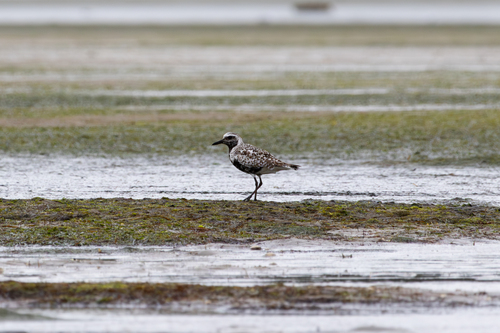 Grey Plover
 Little Ringed Plover
In short
The most reliable field mark to separate Grey Plover from Little Ringed Plover—especially in flight and for immatures—is the Grey Plover’s solid black axillaries (underwing 'armpit' feathers), which are always present and diagnostic at all ages and seasons. On the ground, Grey Plover is much larger and heavier-billed, with a chunkier jizz, while Little Ringed Plover is petite, fine-billed, and shows a distinctive yellow eye-ring. Juvenile and winter Grey Plovers can look plain grey above, but still show the black axillaries in flight, while Little Ringed Plover never does. Bill size, leg color, and head pattern further help in close views. Confusion is most likely with non-breeding or young Grey Plovers, so focus on underwing pattern and structure for a confident ID.
Identification tips
- Black axillaries in flight (all ages, all seasons): Grey Plover always shows solid black axillaries (armpit feathers) and inner flanks when flying—this is diagnostic and never shown by Little Ringed Plover.
- Size and structure: Grey Plover is much larger and bulkier, with a thick neck, broad chest, and a heavy, blunt-tipped bill. Little Ringed Plover is small, slim, and fine-billed.
- Bill size and shape: Grey Plover’s bill is noticeably longer and heavier (24–34 mm), while Little Ringed Plover has a short, fine, dark bill.
- Leg color: Little Ringed Plover has flesh-colored legs, while Grey Plover’s legs are black.
- Head pattern: Little Ringed Plover shows a clear yellow eye-ring and a black mask with white above the eye; Grey Plover lacks a yellow eye-ring and has a plainer face in non-breeding plumage.
- Breeding plumage (spring/summer): Grey Plover adults are boldly black and white below with a black face, neck, and belly bordered by white. Little Ringed Plover never shows this pattern, always having a single black neckband and white underparts.
- Non-breeding/winter plumage: Grey Plover becomes plain grey above with a speckled breast, but still shows black axillaries in flight. Little Ringed Plover remains brown above with a white belly and black neckband.
- Juvenile/first-winter confusion: Juvenile Grey Plover is similar to adults in winter but with more contrast on the back (black with creamy edges); still, the black axillaries in flight are present. Juvenile Little Ringed Plover lacks any black underwing and has a similar head pattern to adults.
- Habitat context: Away from the coast, a small plover is almost certainly Little Ringed Plover. On open tidal mudflats or sandy beaches, especially in large, chunky plovers, suspect Grey Plover.
- Flight style: Grey Plover is strong and direct in flight, while Little Ringed Plover is lighter and more flickering.
- Tail and rump pattern: Grey Plover has a white rump and tail with black barring; Little Ringed Plover has a less contrasting tail pattern.
- Feeding behavior: Grey Plover often stands upright and moves deliberately; Little Ringed Plover runs quickly in short bursts and stops abruptly.
- Voice: Not diagnostic from the provided notes.
- Seasonal context: If seen in spring or summer in full breeding plumage, Grey Plover is unmistakable with its black belly; otherwise, rely on underwing and structure.
- Webbed toes: Little Ringed Plover has all toes webbed, but this is rarely visible in the field and not a primary field mark.
Size
Grey Plover is a much larger bird: 27–30 cm in length, with a wingspan of 71–83 cm and weighing 190–280 g (sometimes up to 345 g before migration) [wikipedia][avonet]. In contrast, Little Ringed Plover is notably smaller and lighter, with a more delicate build and a short, fine bill. The size difference is obvious in direct comparison or with experience, but can be underestimated at a distance or without scale.
Plumage
- Juvenile and first-winter birds: Grey Plover juveniles resemble adults in non-breeding plumage but have blacker backs with creamy white edges. Crucially, in all ages and plumages, Grey Plover shows solid black axillaries and inner flanks in flight—a unique feature among Pluvialis plovers. Little Ringed Plover juveniles and adults never show black axillaries; their underwings are pale.
- Adult breeding plumage: Grey Plover adults in spring/summer are strikingly black-and-white with a black face, neck, breast, and belly, bordered by white, and a white rump. Little Ringed Plover adults never show this pattern; instead, they have a single black neckband, brown upperparts, and a white forehead and belly.
- Adult non-breeding/winter plumage: Grey Plover becomes plainer grey above with a speckled breast and white belly, but still retains the black axillaries in flight. Little Ringed Plover remains brown above with a white belly and breast, a black neckband, and a yellow eye-ring.
- Head pattern: Little Ringed Plover shows a black mask with a prominent yellow eye-ring and white above the eye, while Grey Plover lacks a yellow eye-ring and has a heavier, more plain face in non-breeding plumage.
Behaviour
Grey Plover often appears more robust and upright when standing, with a heavier, more purposeful gait and a tendency to feed in open, exposed coastal areas. In flight, it is strong and direct, with broad wings. Little Ringed Plover is more delicate, quick, and agile, often running in short bursts and making frequent stops. It feeds along the edges of freshwater or muddy habitats, and its flight is lighter and more flickering.
Habitat
Grey Plover is almost exclusively coastal outside the breeding season, favoring open mudflats, estuaries, and sandy beaches. Little Ringed Plover prefers inland habitats, especially gravel pits, riverbanks, and muddy margins of lakes and ponds. While some overlap can occur during migration, habitat is often a strong clue: a small plover away from the coast is much more likely to be Little Ringed Plover.