
Lesser Nighthawk vs Common Pauraque
Chordeiles acutipennis versus Nyctidromus albicollis
Play a quiz with Lesser Nighthawk and Common Pauraque
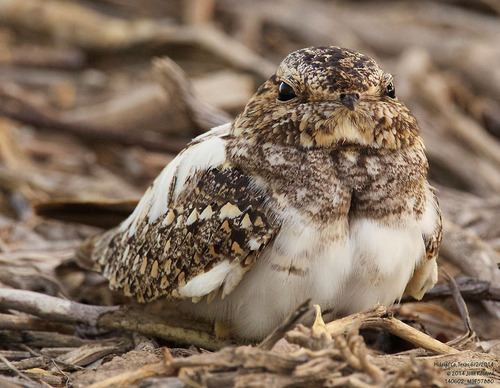 Lesser Nighthawk
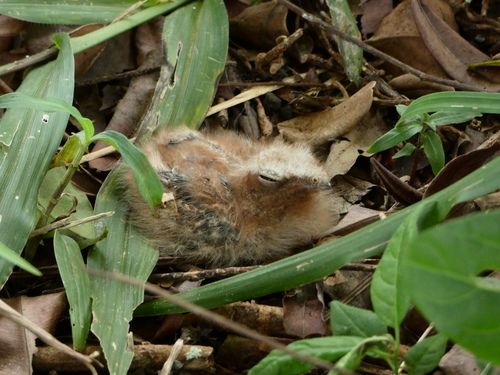 Common Pauraque
In short
The most reliable field mark to separate Lesser Nighthawk from Common Pauraque is overall structure and flight style: Lesser Nighthawk is smaller, slimmer, with long pointed wings and a less rounded tail, while Common Pauraque is bulkier, with broad rounded wings and a notably long, rounded tail. In flight, Lesser Nighthawk appears buoyant and often flies low in a shallow V, while Pauraque is more likely to run on the ground or flush with floppy, rounded wings. Plumage differences are subtle but important: Lesser Nighthawk is generally more buffy and cryptic, with males showing a white tail band and both sexes a white throat chevron; Pauraque shows a contrasting buff facial stripe and eye-ring, and males have white outer tail feathers and a white wing band. Habitat and behavior also help: Pauraque is more terrestrial, often seen on roads or running, while Lesser Nighthawk is more aerial. Size is a secondary but useful cue, with Pauraque being heavier and longer overall.
Identification tips
- Overall structure: Lesser Nighthawk is smaller, slimmer, and more pointed-winged; Pauraque is bulkier, with broad rounded wings and a long, rounded tail. Structure is most apparent in flight or when perched in the open.
- Flight style: Lesser Nighthawk flies low with buoyant, butterfly-like glides and flutters, often in a shallow V-wing posture. Pauraque is more likely to flush with floppy, rounded wings or run on the ground when disturbed.
- Tail shape: Lesser Nighthawk's tail is long but less deeply forked; Pauraque's tail is longer, more rounded, and in males, the outer feathers are mostly white (a strong mark in good light).
- Wing pattern (adult males): Lesser Nighthawk males have a white bar at the tail tip and white wing tips; Pauraque males have a white band near the wing tips and mostly white outer tail feathers. Females of both species have reduced or creamier white marks, but Pauraque females still show some white in the outer tail.
- Facial pattern: Pauraque has a distinctive buff eye-ring and facial stripe, with reddish sides to the face; Lesser Nighthawk lacks this facial contrast, appearing more uniformly buffy or grayish.
- Throat mark: Both sexes of Lesser Nighthawk show a white V-shaped throat chevron, which can be a subtle but useful mark at rest; Pauraque's throat is less distinctly marked.
- Plumage tone: Lesser Nighthawk is generally more buffy and cryptic, blending into sandy backgrounds; Pauraque is more variegated, with either greyish or rufous tones and more patterned plumage.
- Behavior on the ground: Pauraque is often seen resting on roads or tracks and will run when flushed; Lesser Nighthawk is rarely seen running and is more aerial.
- Habitat context: If seen in open desert or arid scrub, Lesser Nighthawk is more likely; Pauraque prefers mixed woodland, edges, or overgrown fields with some cover.
- Vocalizations: Pauraque's song is a variable whistled or 'whip' call, often heard at dusk or night; Lesser Nighthawk's call is a trilling sound, less distinctive and less likely to be heard except during courtship.
- Perched posture: Pauraque often sits lengthwise along a branch or on the ground, appearing chunky; Lesser Nighthawk perches more upright and appears slimmer.
- Legs: Pauraque has relatively long legs for a nightjar and bare tarsi, sometimes visible when running; Lesser Nighthawk has small feet and is less likely to show its legs.
- Color morphs: Pauraque may appear either greyish-brown or rufous-brown depending on morph; Lesser Nighthawk is more uniformly buffy or grayish.
- Sex differences: In both species, males have more extensive white in the tail and wings, but the pattern and extent differ as above; always check for the white tail band (nighthawk) vs. white outer tail feathers (pauraque).
- Seasonal context: Both species are nocturnal and crepuscular, but Lesser Nighthawk is more likely to be seen hawking insects at dusk in open areas; Pauraque is more likely to be encountered on roads at night or flushed from dense cover during the day.
Size
Common Pauraque is heavier (adult mass about 53 g [wikidata]) and longer (22–28 cm [wikipedia]) than Lesser Nighthawk, which is slightly smaller and lighter (exact mass not given, but described as smaller than Common Nighthawk). Pauraque appears bulkier and more robust, while Lesser Nighthawk is slimmer and more delicate in build. In the field, Pauraque's larger size and longer, more rounded tail are often apparent when the two are seen in similar contexts.
Plumage
- Juvenile/Immature flight marks: No specific juvenile/immature upperwing pattern is described for either species in the sources, so age-specific flight marks are not a primary separator here.
- Adults: Lesser Nighthawk is overall more buffy and cryptic, blending into sandy or arid backgrounds. Males have a prominent white bar at the end of the tail and white wing tips; females have a creamier wing band and lack the tail stripe. Both sexes show a white V-shaped throat mark. Pauraque comes in two color morphs (greyish-brown or rufous-brown), with a variegated, more patterned appearance. The face is distinctive: buff eye-ring and facial stripe contrast with reddish sides of the face. Male Pauraque has a white band near the wing tips and mostly white outer tail feathers; female's white marks are reduced. Pauraque's plumage is more patterned and the facial contrast is a strong field mark, especially at rest.
Behaviour
Lesser Nighthawk is highly aerial, often flying low to the ground in buoyant, butterfly-like glides and flutters, especially when hunting at dusk. It rarely spends time on the ground except for roosting or nesting. In contrast, Common Pauraque is much more terrestrial for a nightjar: it frequently rests on roads or tracks, and when disturbed, often runs rather than flies. Pauraque also uses low perches to sally for insects, but is less likely to be seen actively hawking in open air compared to the nighthawk.
Habitat
Lesser Nighthawk favors open, arid habitats such as deserts and scrub, often near artificial lights where insects gather. It is more likely to be seen flying in open areas at dusk or dawn. Common Pauraque prefers mixed habitats with dense cover for daytime roosting (forest edges, scrub, overgrown fields) and open areas or roads for nocturnal foraging. Pauraque adapts well to disturbed habitats with some cover, but avoids heavily urbanized or fully cleared areas.
Voice
Lesser Nighthawk males give a trilling call during aerial courtship displays, but detailed song description is lacking in the sources. Common Pauraque males have a variable song, including a whistled 'weeeow wheeooo' ("who-r-you"), soft 'puk puk', and a rapid 'whip' in courtship flights. The female gives a series of rapid 'whip' notes. Pauraque's vocalizations are more varied and distinctive, especially the whistled song, which is not matched by Lesser Nighthawk.