
Little Tern vs Common Tern
Sternula albifrons versus Sterna hirundo
Play a quiz with Little Tern and Common Tern
 Little Tern
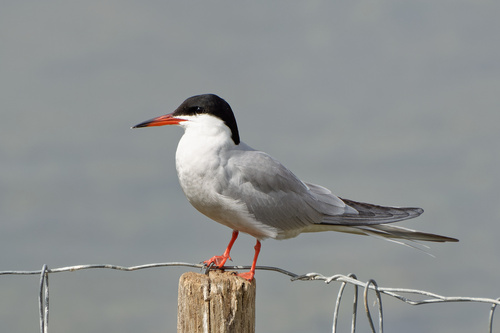 Common Tern
In short
The most reliable field mark between Little Tern and Common Tern is size: Little Tern is distinctly smaller and more delicate, with a tiny, sharp bill and short wings and tail, while Common Tern is much larger and more robust. In breeding plumage, Little Tern shows a striking white forehead and yellow bill with a black tip, whereas Common Tern has a full black cap and a longer, orange-red bill with a black tip. Juvenile and non-breeding birds can be trickier, but Little Tern always appears daintier, with shorter, more angular wings and yellowish legs. Watch for structure and bill color first, especially at a distance or in mixed flocks.
Identification tips
- Size is the first check: Little Tern is much smaller and more delicate than Common Tern. In mixed flocks, scan for the tiniest, most compact tern.
- Bill color and shape: In breeding plumage, Little Tern has a short, thin, yellow bill with a black tip; Common Tern's bill is longer, stouter, and orange-red with a black tip. In non-breeding, Little Tern's bill turns black, but remains short and fine.
- Leg color: Little Tern has yellow legs in breeding, duller in winter; Common Tern has bright red legs in breeding, darker but still reddish in non-breeding.
- Forehead pattern: Little Tern always shows a white forehead in breeding plumage, extending further back in non-breeding. Common Tern has a full black cap in breeding, losing it in winter but never shows the sharp white forehead contrast of Little Tern.
- Wing and tail structure: Little Tern has short, angular wings and a short tail, giving a compact look. Common Tern's wings are longer, more triangular, and the tail is longer and more deeply forked.
- Flight style: Little Tern is fluttery and buoyant, often hovering before diving. Common Tern is more direct and powerful, with stiffer wingbeats and longer glides.
- Perched posture: Little Tern sits low and compact, often looking 'neckless.' Common Tern stands taller, with a longer neck and legs.
- Plumage in non-breeding: Both species lose some facial contrast, but Little Tern keeps a white forehead and remains smaller and more delicate. Common Tern may show a greyish rump and lacks the sharp white forehead.
- Juvenile confusion: For immature birds, rely on size, bill shape, and structure, as detailed juvenile wing patterns are not described here.
- Habitat context: If seen on a small, sheltered lagoon or sandy spit, Little Tern is more likely. On large lakes or open coasts, Common Tern is more frequent.
- Group association: Little Tern often forages and nests in small, tight groups. Common Tern may be in larger, more dispersed colonies.
- Voice: Not described here, so do not rely on calls for separation with these notes.
- Seasonal changes: In winter, both species become duller, but Little Tern remains much smaller and keeps a proportionally shorter bill and legs.
- Bill and leg color in eclipse: In non-breeding, Little Tern's bill and legs darken, but the bill stays short and fine. Common Tern's bill and legs also darken, but the bill remains longer and heavier.
- When in doubt: Always check size and bill structure first, especially at a distance or when plumage is ambiguous.
Size
Little Tern is much smaller, with a body mass of about 57g [wikidata], compared to the Common Tern, which is substantially heavier (no precise figure in the notes, but visibly larger in the field). Little Tern is only 21–25 cm long with a 41–47 cm wingspan [wikipedia], making it noticeably more petite and compact than Common Tern. Common Tern has a larger head, thicker neck, longer legs, and longer, more triangular wings, giving it a more powerful and direct flight profile.
Plumage
- Juvenile/immature birds: The notes do not provide detailed upperwing or flight pattern differences for Little Tern juveniles, but Common Tern juveniles are said to be easily separated from similar-aged birds of other species (details not specified here). For both, look for overall structure and bill color as primary clues in young birds.
- Breeding adults: Little Tern in breeding plumage shows a white forehead, yellow bill with black tip, and yellow legs. Common Tern has a full black cap, orange-red bill with a black tip, and bright red legs. The white forehead is a key mark for Little Tern in breeding season.
- Non-breeding adults: Little Tern develops a more extensively white forehead, the bill turns black, and legs become duller. Common Tern in non-breeding plumage may show a greyish rump and loses the full black cap, but retains a longer, more robust bill and overall larger size. Both species lose some facial contrast, but Little Tern remains much smaller and more delicate.
- Flight: Little Tern's wings are short and angular, matching its small size, while Common Tern's wings are longer, more triangular, and stiffer in flight.
Behaviour
Little Tern typically appears more fluttery and buoyant in flight, reflecting its smaller size and lighter build. It often hovers over water before diving. Common Tern has a more powerful, direct flight with stiffer wingbeats and a longer glide phase. When perched, Common Tern stands taller on longer legs, while Little Tern appears squat and compact.
Habitat
Little Tern breeds on sandy or gravelly coasts and inland waterways, often in small colonies, and is more likely to be found in sheltered estuaries or lagoons. Common Tern has a broader range, breeding along temperate and subarctic coasts and large inland lakes and rivers. Both can occur together, but Common Tern is more likely on larger bodies of water and in a wider range of habitats.