
Little Tern vs Whiskered Tern
Sternula albifrons versus Chlidonias hybrida
Play a quiz with Little Tern and Whiskered Tern
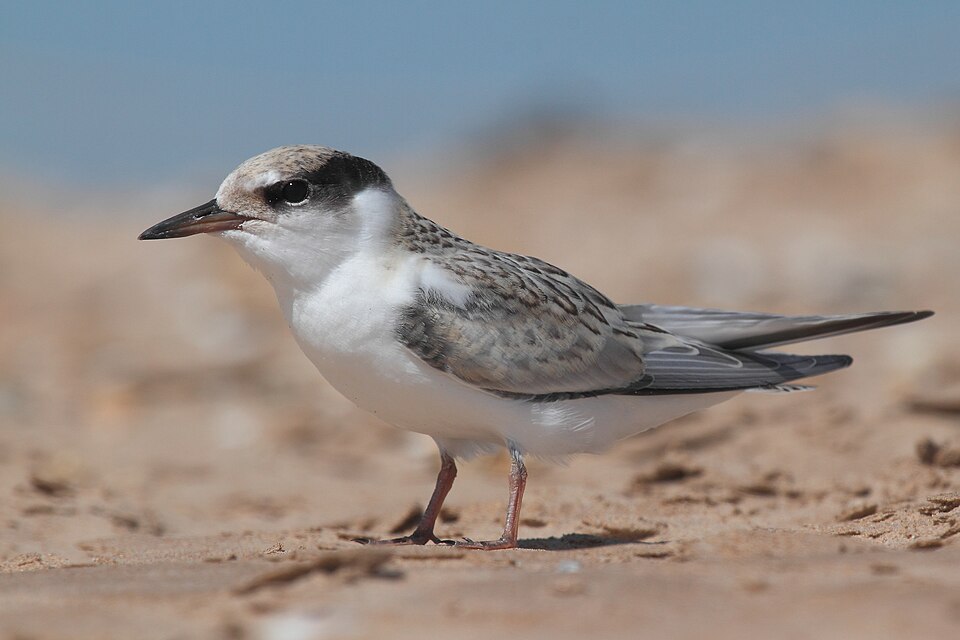 Little Tern
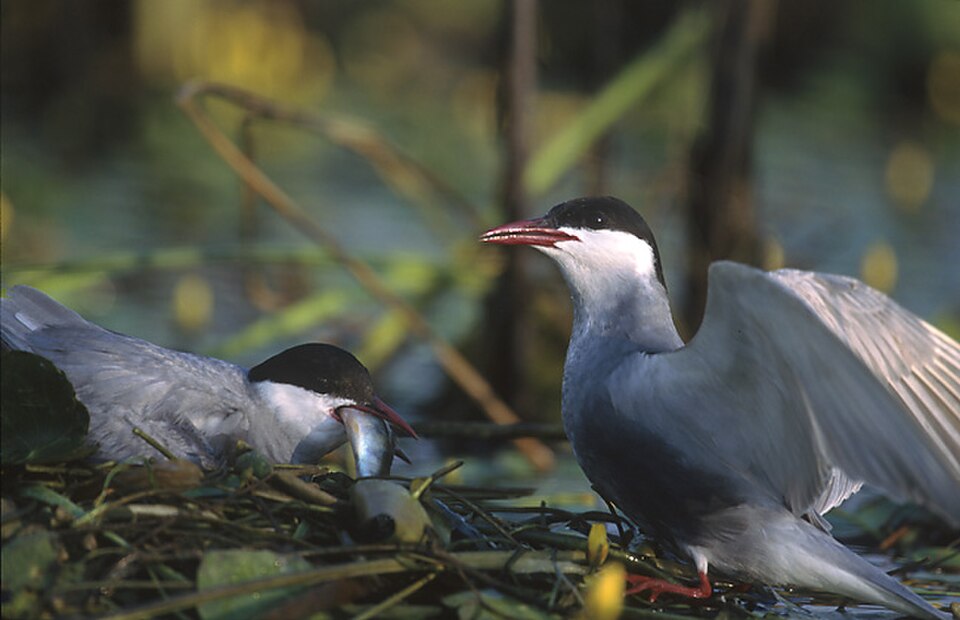 Whiskered Tern
In short
The most reliable field mark between Little Tern and Whiskered Tern is overall structure and plumage tone: Little Tern is much smaller, with a delicate, sharp yellow bill (black-tipped in breeding), yellow legs, and a crisp white forehead in breeding plumage, while Whiskered Tern is larger, heavier-bodied, with a stouter red bill and legs, and a dark, smudgy look in breeding plumage. Juvenile and non-breeding birds are most easily separated by size, bill color, and the Whiskered Tern's darker, more mottled upperparts and less sharply defined head pattern. In flight, Little Tern looks dainty and buoyant, with a longer, more deeply forked tail, whereas Whiskered Tern has a shorter, more swallow-like tail and broader wings. Watch for the strong contrast in bill and leg color, and the Whiskered Tern's distinctive dark underparts and C-shaped head pattern in breeding plumage.
Identification tips
- Size and structure: Little Tern is much smaller and more delicate, with a fine, sharp bill and longer, more deeply forked tail. Whiskered Tern is bulkier, with a stouter bill and shorter, swallow-like tail. This is often the quickest field clue.
- Bill color: In breeding, Little Tern has a yellow bill with a black tip; in winter, the bill turns black. Whiskered Tern always has a red bill (duller in winter), never yellow. Bill color is visible at close range or in good light.
- Leg color: Little Tern's legs are yellow in breeding plumage, duller in winter. Whiskered Tern's legs are red, becoming duller but never yellow. Leg color is a good check on perched birds.
- Head pattern (breeding): Little Tern has a crisp white forehead contrasting with a black crown. Whiskered Tern has a black cap, but the white on the face is less sharply defined, with a dark C-shaped band through the ear-coverts and a less distinct collar.
- Head pattern (non-breeding/juvenile): Both species show more white on the forehead in winter, but Little Tern's is cleaner and more extensive. Whiskered Tern's head is mottled, with the dark ear-covert band and messy crown flecking, especially in juveniles.
- Upperparts (juvenile): Whiskered Tern juveniles have a ginger, scaly back with broad buff edgings and bars, giving a mottled look. Little Tern juveniles are plainer above, lacking this strong scaly effect.
- Body color: Little Tern is pale above and below, always looking clean and white. Whiskered Tern in breeding is dark grey above and below, giving a much duskier impression. In winter, it becomes paler but still greyer than Little Tern.
- Tail shape: Little Tern's tail is longer and more deeply forked, often projecting well beyond the wingtips when perched. Whiskered Tern's tail is shorter and less deeply forked, more like a swallow's.
- Flight style: Little Tern is agile, often hovering and plunge-diving. Whiskered Tern has a more direct, gliding flight, often patrolling low over marshes.
- Habitat: Little Tern is coastal or on open lakes/rivers; Whiskered Tern is a marsh specialist, rarely on open coasts. If you see a tern over a reedbed or marsh, Whiskered is more likely.
- Voice: Little Tern gives sharp, high 'kit' calls; Whiskered Tern gives a lower, grating 'krekk'. Useful if heard well.
- Perched posture: Little Tern looks upright and dainty; Whiskered Tern is heavier and more hunched.
- Seasonal context: In breeding season, look for Little Tern on sandy beaches or riverbanks, Whiskered Tern in marshes. In migration, both can occur inland, but habitat and structure remain key.
- Pitfalls: Immature Whiskered Terns can look pale below and messy above, but always check for the ginger scaly back and dark ear-covert band. Little Tern juveniles never show this pattern.
- When in doubt: Size, bill and leg color, and overall darkness are the safest clues. If you have a clear view of the bill and legs, and the bird is not strikingly small and white, it's likely a Whiskered Tern.
Size
Little Tern is significantly smaller, weighing about 57g, compared to Whiskered Tern's 84g. In the field, Little Tern appears notably daintier, with a shorter body and finer build. Whiskered Tern is bulkier, with a heavier head and chest, and a more robust bill. The difference is usually obvious when seen side by side or when familiar with both species. Little Tern's wingspan (41–47 cm) is also shorter than Whiskered Tern's, and its flight is more fluttery and agile.
Plumage
-
Juvenile/First-winter: Whiskered Tern juveniles show a ginger 'scaly' back, with dark brown feathers edged and barred with buff, and a mottled, less clean appearance overall. Their head pattern is messy, with a flecked black crown and a C-shaped dark band through the ear-coverts. Little Tern juveniles are much plainer, lacking the strong ginger or scaly effect, and retain a cleaner, more contrasting head pattern. In both species, the bill and leg color are less bright than in adults, but Whiskered Tern's are never yellow.
-
Adult breeding: Little Tern has a white forehead sharply set off from a black crown, a yellow bill with a black tip, and yellow legs. The body is pale above and below. Whiskered Tern adults have a black cap, white cheeks, a dark grey body above and below, and a red bill and legs. Their head pattern is less sharply defined, with a dark C-shaped band through the ear-coverts and a less distinct collar.
-
Adult non-breeding/winter: Both species develop more white on the forehead, but Little Tern's bill turns black and legs duller, while Whiskered Tern's bill and legs become less red but never yellow. Whiskered Tern's body becomes paler grey, but still darker than Little Tern, and the head retains a messy, mottled look rather than a crisp white forehead.
Behaviour
Little Tern is agile and buoyant in flight, often hovering before plunge-diving for fish. It typically forages over open water or along coasts and rivers. Whiskered Tern has a more direct, swallow-like flight, with broader wings and a shorter, less forked tail. It often patrols low over marshes and wetlands, picking prey from the surface or in shallow dives. Perched, Little Tern looks petite and upright, while Whiskered Tern appears heavier and more hunched.
Habitat
Little Tern breeds on sandy or gravelly coasts, riverbanks, and lakeshores, and is most often seen around open water or beaches. Whiskered Tern prefers inland marshes, reedbeds, and wetlands, rarely found on open coasts. In migration, Whiskered Tern may appear at lakes and reservoirs, but is still more likely in marshy, vegetated habitats. Habitat can be a strong clue, especially in breeding season.
Voice
Little Tern gives sharp, high-pitched calls, often described as 'kit' or 'kik'. Whiskered Tern's call is a characteristic 'krekk', lower and more grating. Voice is useful if you know the sounds, but less reliable than visual marks for most observers.