
Motmot

Marsh Tit vs Black-bibbed Tit

Poecile palustris versus Poecile hypermelaenus

Play a quiz with Marsh Tit and Black-bibbed Tit
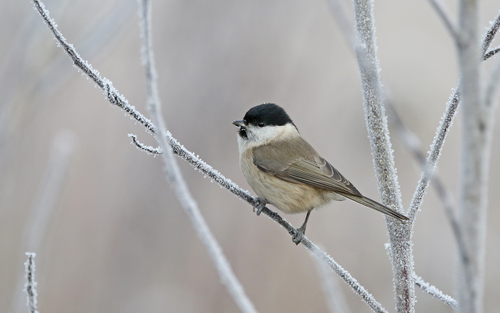
Marsh Tit (Poecile palustris) Marsh Tit
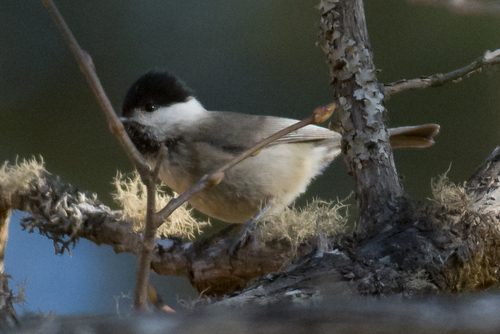
Black-bibbed Tit (Poecile hypermelaenus) Black-bibbed Tit

Media

Loading…

In short

Marsh Tit and Black-bibbed Tit are closely related and extremely similar in structure and general coloration, making field separation very challenging. The most reliable field mark for Marsh Tit is the absence of a pale wing panel in adults, while Black-bibbed Tit's field marks are not detailed in the sources, so caution is needed. Marsh Tit shows a glossy black cap, small bib, and neat, proportional head shape, but these marks can overlap with Black-bibbed Tit. Voice is a key separator for Marsh Tit, which has a varied song and distinctive explosive calls. In the absence of clear wing pattern or vocal clues, identification may remain uncertain, especially for juveniles.

Identification tips

  1. Pale wing panel: Adult Marsh Tits lack a pale wing panel, while juveniles can sometimes show a faint one. If you see a strong pale panel on the wing, be cautious—juvenile Marsh Tits can show this, but it is not typical for adults. There is no information on Black-bibbed Tit's wing panel, so this mark is only partially reliable.
  2. Glossy black cap: Marsh Tit adults have a glossy black cap with a blue sheen in good light. If you see a duller cap, consider age (juvenile Marsh Tit) or be cautious about species.
  3. Bib size: Marsh Tit has a small, neat black bib. Bib size can be variable and is not fully reliable, but a very large, messy bib would be unusual for Marsh Tit.
  4. Cheek and ear covert color: Marsh Tit shows white cheeks with dusky brown on the ear coverts. Look for this subtle contrast, but remember that lighting and feather wear can obscure it.
  5. Head shape and proportions: Marsh Tit has a proportionate, neat head (not bull-necked). If the bird appears thick-necked or the head seems large for the body, reconsider Marsh Tit.
  6. Bill cutting edge: In-hand or in excellent photos, Marsh Tit shows a pale cutting edge to the bill. This is not visible in most field views.
  7. Vocalizations: Marsh Tit's explosive "pitchou" call and varied song types are distinctive. If you hear these, you can confidently identify Marsh Tit. Lack of vocal information for Black-bibbed Tit means silence is not diagnostic.
  8. Geographic range: Marsh Tit is widespread in Eurasia; Black-bibbed Tit is restricted to China, Tibet, and Myanmar. Use range as a strong clue unless you are in an area of overlap or dealing with captive birds.
  9. Habitat: Both species use woodland, but Marsh Tit favors dense undergrowth in temperate forests. Habitat is only helpful in combination with range.
  10. Juvenile confusion: Be especially cautious with juveniles, as Marsh Tit can show a pale wing panel and duller plumage, reducing reliability of adult marks.
  11. Size and structure: Both species are similar in size (about 12 cm, 12 g), so do not use size as a separator.
  12. Plumage neatness: Marsh Tit is described as having crisp, neat markings. If the bird looks messy or poorly marked, be cautious.
  13. Sex and season: There are no strong seasonal or sexual differences in Marsh Tit; assume similar for Black-bibbed Tit unless otherwise noted.
  14. Photographic review: If possible, review photos for the pale bill cutting edge and bib size, but expect overlap and uncertainty.
  15. Uncertainty: When in doubt, especially with silent or juvenile birds, acknowledge the limitations—these species are among the most challenging Poecile tits to separate visually.

Size

Both species are small tits, with Marsh Tit measured at about 12 cm in length and weighing around 12 g. There is no direct measurement available for Black-bibbed Tit, but as a close relative in the same genus, it is likely very similar in size and structure. In the field, size alone is not a reliable separator between these two species.

Plumage

For Marsh Tit, adults have a glossy black cap and nape, small black bib, white cheeks (with dusky brown ear coverts), and greyish-brown upperparts. The wings and tail are greyish-brown, and the tertials have slightly paler fringes. Juvenile Marsh Tits are duller overall, with a less glossy cap and bib, greyer upperparts, and paler underparts, but they quickly moult into adult plumage by September. Critically, Marsh Tit adults lack a pale wing panel, but juveniles can sometimes show a faint one, which can cause confusion. There is no detailed plumage description for Black-bibbed Tit in the sources, but as a Poecile tit, it is likely to share the general pattern of black cap and bib, pale cheeks, and brownish upperparts. Without specific notes on Black-bibbed Tit's wing pattern or juvenile plumage, any pale wing panel or bib size should be interpreted with caution.

Behaviour

Both species are typical Poecile tits in behavior, foraging actively in woodland and shrubby habitats. There are no behavioral differences described in the sources that would help separate them in the field. Both are likely to be seen foraging in pairs or small groups, moving methodically through vegetation.

Habitat

Marsh Tit is found across Eurasia, favoring deciduous or mixed woodland, often with dense undergrowth. Black-bibbed Tit is restricted to central and eastern China, southeast Tibet, and western Myanmar. If you are outside the range of Black-bibbed Tit (i.e., in Europe or western Russia), you are almost certainly looking at Marsh Tit. In areas of range overlap or in captivity, habitat alone is not diagnostic, but geographic context is a strong clue.

Voice

Marsh Tit has a distinctive and varied vocal repertoire. Its most typical call is an explosive "pitchou," often followed by "pitchou-bee-bee-bee," which can sound like Willow Tit. It also has several song types, including a ringing "schip-schip-schip-schip-ship" and a liquid "tu-tu-tu-tu-tu." Voice is often the best way to separate Marsh Tit from similar species. There is no vocal description for Black-bibbed Tit in the sources, so vocalization is only diagnostic for Marsh Tit when heard.

Submit a better description

Use the same sections as the comparison. Your text is published immediately.

Marsh Tit and Black-bibbed Tit are closely related and extremely similar in structure and general coloration, making field separation very challenging. The most reliable field mark for Marsh Tit is the absence of a pale wing panel in adults, while Black-bibbed Tit's field marks are not detailed in the sources, so caution is needed. Marsh Tit shows a glossy black cap, small bib, and neat, proportional head shape, but these marks can overlap with Black-bibbed Tit. Voice is a key separator for Marsh Tit, which has a varied song and distinctive explosive calls. In the absence of clear wing pattern or vocal clues, identification may remain uncertain, especially for juveniles.

  1. Pale wing panel: Adult Marsh Tits lack a pale wing panel, while juveniles can sometimes show a faint one. If you see a strong pale panel on the wing, be cautious—juvenile Marsh Tits can show this, but it is not typical for adults. There is no information on Black-bibbed Tit's wing panel, so this mark is only partially reliable.
  2. Glossy black cap: Marsh Tit adults have a glossy black cap with a blue sheen in good light. If you see a duller cap, consider age (juvenile Marsh Tit) or be cautious about species.
  3. Bib size: Marsh Tit has a small, neat black bib. Bib size can be variable and is not fully reliable, but a very large, messy bib would be unusual for Marsh Tit.
  4. Cheek and ear covert color: Marsh Tit shows white cheeks with dusky brown on the ear coverts. Look for this subtle contrast, but remember that lighting and feather wear can obscure it.
  5. Head shape and proportions: Marsh Tit has a proportionate, neat head (not bull-necked). If the bird appears thick-necked or the head seems large for the body, reconsider Marsh Tit.
  6. Bill cutting edge: In-hand or in excellent photos, Marsh Tit shows a pale cutting edge to the bill. This is not visible in most field views.
  7. Vocalizations: Marsh Tit's explosive "pitchou" call and varied song types are distinctive. If you hear these, you can confidently identify Marsh Tit. Lack of vocal information for Black-bibbed Tit means silence is not diagnostic.
  8. Geographic range: Marsh Tit is widespread in Eurasia; Black-bibbed Tit is restricted to China, Tibet, and Myanmar. Use range as a strong clue unless you are in an area of overlap or dealing with captive birds.
  9. Habitat: Both species use woodland, but Marsh Tit favors dense undergrowth in temperate forests. Habitat is only helpful in combination with range.
  10. Juvenile confusion: Be especially cautious with juveniles, as Marsh Tit can show a pale wing panel and duller plumage, reducing reliability of adult marks.
  11. Size and structure: Both species are similar in size (about 12 cm, 12 g), so do not use size as a separator.
  12. Plumage neatness: Marsh Tit is described as having crisp, neat markings. If the bird looks messy or poorly marked, be cautious.
  13. Sex and season: There are no strong seasonal or sexual differences in Marsh Tit; assume similar for Black-bibbed Tit unless otherwise noted.
  14. Photographic review: If possible, review photos for the pale bill cutting edge and bib size, but expect overlap and uncertainty.
  15. Uncertainty: When in doubt, especially with silent or juvenile birds, acknowledge the limitations—these species are among the most challenging Poecile tits to separate visually.

Both species are small tits, with Marsh Tit measured at about 12 cm in length and weighing around 12 g. There is no direct measurement available for Black-bibbed Tit, but as a close relative in the same genus, it is likely very similar in size and structure. In the field, size alone is not a reliable separator between these two species.

For Marsh Tit, adults have a glossy black cap and nape, small black bib, white cheeks (with dusky brown ear coverts), and greyish-brown upperparts. The wings and tail are greyish-brown, and the tertials have slightly paler fringes. Juvenile Marsh Tits are duller overall, with a less glossy cap and bib, greyer upperparts, and paler underparts, but they quickly moult into adult plumage by September. Critically, Marsh Tit adults lack a pale wing panel, but juveniles can sometimes show a faint one, which can cause confusion. There is no detailed plumage description for Black-bibbed Tit in the sources, but as a Poecile tit, it is likely to share the general pattern of black cap and bib, pale cheeks, and brownish upperparts. Without specific notes on Black-bibbed Tit's wing pattern or juvenile plumage, any pale wing panel or bib size should be interpreted with caution.

Both species are typical Poecile tits in behavior, foraging actively in woodland and shrubby habitats. There are no behavioral differences described in the sources that would help separate them in the field. Both are likely to be seen foraging in pairs or small groups, moving methodically through vegetation.

Marsh Tit is found across Eurasia, favoring deciduous or mixed woodland, often with dense undergrowth. Black-bibbed Tit is restricted to central and eastern China, southeast Tibet, and western Myanmar. If you are outside the range of Black-bibbed Tit (i.e., in Europe or western Russia), you are almost certainly looking at Marsh Tit. In areas of range overlap or in captivity, habitat alone is not diagnostic, but geographic context is a strong clue.

Marsh Tit has a distinctive and varied vocal repertoire. Its most typical call is an explosive "pitchou," often followed by "pitchou-bee-bee-bee," which can sound like Willow Tit. It also has several song types, including a ringing "schip-schip-schip-schip-ship" and a liquid "tu-tu-tu-tu-tu." Voice is often the best way to separate Marsh Tit from similar species. There is no vocal description for Black-bibbed Tit in the sources, so vocalization is only diagnostic for Marsh Tit when heard.

Discard your changes?

You have unsaved edits. If you leave now, those changes will be lost.

Marsh Tit · Black-bibbed Tit · My Tricky Birds