

Motmot

Marsh Tit vs Great Tit

Poecile palustris versus Parus major

Play a quiz with Marsh Tit and Great Tit
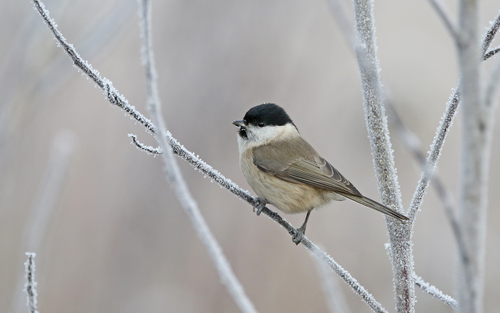
Marsh Tit (Poecile palustris) Marsh Tit
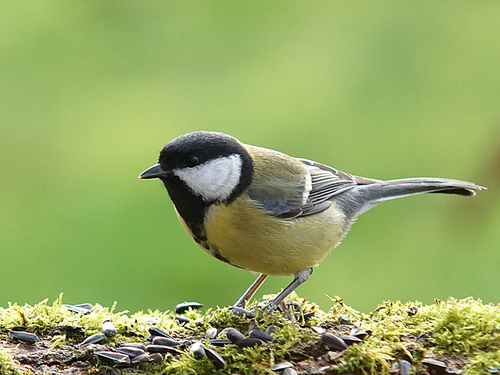
Great Tit (Parus major) Great Tit

Media

Loading…

In short

The most reliable field mark to separate Marsh Tit from Great Tit is the presence of a bold black mid-line stripe running down the yellow underparts in Great Tit, which Marsh Tit entirely lacks. Juvenile Marsh Tits can sometimes show a pale wing panel, but Great Tits always have a noticeable white wing-bar and a much brighter, more contrasting plumage overall. Structurally, Great Tit is larger and bulkier, with a more robust bill and a broader head, while Marsh Tit is neater and more compact. Voice is also a strong separator: Marsh Tit gives a sharp 'pitchou' call and varied songs, while Great Tit is famous for its clear, ringing 'teacher-teacher' song. Both species can occur in similar woodland habitats, so careful attention to these features is essential.

Identification tips

  1. Underparts color and pattern: Great Tit always shows bright yellow underparts with a bold black mid-line stripe from bib to vent (all ages except some dull juveniles); Marsh Tit has off-white underparts with a buff or brown tinge, never yellow, and never a black belly stripe.
  2. Head and bib: Marsh Tit has a glossy black cap and nape, small black bib, and white cheeks; Great Tit has a blue-black crown and bib, with white cheeks and ear coverts, but the bib is larger and merges with the belly stripe.
  3. Wing pattern (all ages): Great Tit shows a distinct white wing-bar formed by the coverts; Marsh Tit lacks a wing-bar, though juveniles can sometimes show a pale panel (usually not as crisp or white as Great Tit’s wing-bar).
  4. Back and upperparts: Marsh Tit is greyish-brown above, neat and subdued; Great Tit is green-olive on the back, often brighter and more contrasting, especially in males.
  5. Tail: Great Tit’s tail is bluish-grey with white outer tips; Marsh Tit’s tail is greyish-brown, lacking strong contrast.
  6. Bill and head shape: Great Tit has a stouter, more powerful bill and a broader, heavier head and neck, giving a 'bull-necked' look; Marsh Tit is neater, with a smaller, more proportional head and finer bill.
  7. Size: Great Tit is noticeably larger and heavier (18.5 g vs 11.9 g), often obvious when both species are together, but less so singly.
  8. Voice: Marsh Tit’s sharp 'pitchou' call and varied, complex song are distinctive; Great Tit’s calls are louder, more varied, and its song is a clear, ringing phrase. Voice is often the best separator in dense cover or poor light.
  9. Behavior: Great Tit is bolder, more dominant at feeders, and often forages higher in trees; Marsh Tit is quieter, more retiring, and often forages lower or in denser cover.
  10. Habitat: Both occur in woodland, but Marsh Tit favors mature, damp woods with dense undergrowth; Great Tit is more adaptable and common in a wider range of habitats, including urban parks and gardens.
  11. Sex and age variation: Female and juvenile Great Tits are duller, with a narrower or broken belly stripe, but still show yellow underparts and a wing-bar; Marsh Tit juveniles are duller than adults, with a less glossy cap and bib, but never show yellow underparts or a strong belly stripe.
  12. Plumage pitfalls: Juvenile Marsh Tits can show a pale wing panel, but this is usually less crisp than Great Tit’s wing-bar; always check for the yellow underparts and belly stripe in Great Tit.
  13. Cheek color: Both have white cheeks, but Great Tit’s are larger and more sharply defined, sometimes extending onto the ear coverts; Marsh Tit’s cheeks can turn dusky brown on the ear coverts.
  14. General impression ('jizz'): Great Tit looks bulkier, more powerful, and more contrasting; Marsh Tit is neat, compact, and subtly marked.
  15. When in doubt: Use a combination of underparts color, belly stripe, wing-bar, size, and voice for the most reliable identification, especially in mixed flocks or poor viewing conditions.

Size

Great Tit is noticeably larger and heavier than Marsh Tit. Adult Great Tit averages 18.5 g in mass and measures 12.5–14 cm in length, compared to Marsh Tit's 11.9 g and 11.5–12 cm. In the field, Great Tit appears bulkier, with a stouter bill and a broader, more powerful head and neck, while Marsh Tit is more delicate and proportionate. The difference is often obvious when both species are seen together, but can be subtle when seen singly or at a distance.

Plumage

Juvenile Marsh Tits can show a pale wing panel, potentially confusing them with Willow Tit, but Great Tit always shows a distinct white wing-bar (all ages). Marsh Tit adults and juveniles have a glossy black cap and nape, small black bib, white cheeks, and neat greyish-brown upperparts with off-white underparts tinged buff on the flanks. Great Tit adults (and most juveniles) are much brighter: a blue-black crown and bib, white cheeks and ear coverts, bright yellow underparts with a bold black stripe down the center, green-olive back, and a bluish-grey tail with white outer tips. Females and juveniles of Great Tit are duller, with a narrower and sometimes broken belly stripe, but still show the strong contrast of yellow underparts and white wing-bar. Marsh Tit never shows the yellow underparts or the black belly stripe of Great Tit. The Marsh Tit's head is smaller and more proportional, while Great Tit often looks 'bull-necked' and heavy-headed.

Behaviour

Both species are active and agile in woodland, but Great Tit is more dominant and often bolder at feeders or in mixed flocks. Marsh Tit tends to be quieter and more retiring, often foraging lower in the undergrowth or among tangled branches, while Great Tit is more likely to be seen in open areas, higher in trees, or making short, direct flights. Great Tit’s larger size and assertive behavior can be apparent when both species interact.

Habitat

Both species overlap in woodland habitats, including deciduous and mixed forests, and can be found in parks and gardens. Marsh Tit prefers damper, mature woodlands with dense undergrowth and is less likely to be seen in open or urban areas compared to Great Tit, which is highly adaptable and common in a wide range of wooded and semi-open habitats, including city parks and gardens.

Voice

Marsh Tit is best identified by its sharp, explosive 'pitchou' call, often followed by a rapid 'pitchou-bee-bee-bee', and a varied song repertoire including 'schip-schip-schip' and 'tu-tu-tu-tu'. Great Tit’s song is a clear, ringing 'teacher-teacher' (not quoted in the sources, but widely known), and its calls are louder, more varied, and more strident. Marsh Tit’s calls are softer and less varied, and its song is more complex and less repetitive than Great Tit’s. Voice is often the most reliable separator, especially in dense cover.

Submit a better description

Use the same sections as the comparison. Your text is published immediately.

The most reliable field mark to separate Marsh Tit from Great Tit is the presence of a bold black mid-line stripe running down the yellow underparts in Great Tit, which Marsh Tit entirely lacks. Juvenile Marsh Tits can sometimes show a pale wing panel, but Great Tits always have a noticeable white wing-bar and a much brighter, more contrasting plumage overall. Structurally, Great Tit is larger and bulkier, with a more robust bill and a broader head, while Marsh Tit is neater and more compact. Voice is also a strong separator: Marsh Tit gives a sharp 'pitchou' call and varied songs, while Great Tit is famous for its clear, ringing 'teacher-teacher' song. Both species can occur in similar woodland habitats, so careful attention to these features is essential.

  1. Underparts color and pattern: Great Tit always shows bright yellow underparts with a bold black mid-line stripe from bib to vent (all ages except some dull juveniles); Marsh Tit has off-white underparts with a buff or brown tinge, never yellow, and never a black belly stripe.
  2. Head and bib: Marsh Tit has a glossy black cap and nape, small black bib, and white cheeks; Great Tit has a blue-black crown and bib, with white cheeks and ear coverts, but the bib is larger and merges with the belly stripe.
  3. Wing pattern (all ages): Great Tit shows a distinct white wing-bar formed by the coverts; Marsh Tit lacks a wing-bar, though juveniles can sometimes show a pale panel (usually not as crisp or white as Great Tit’s wing-bar).
  4. Back and upperparts: Marsh Tit is greyish-brown above, neat and subdued; Great Tit is green-olive on the back, often brighter and more contrasting, especially in males.
  5. Tail: Great Tit’s tail is bluish-grey with white outer tips; Marsh Tit’s tail is greyish-brown, lacking strong contrast.
  6. Bill and head shape: Great Tit has a stouter, more powerful bill and a broader, heavier head and neck, giving a 'bull-necked' look; Marsh Tit is neater, with a smaller, more proportional head and finer bill.
  7. Size: Great Tit is noticeably larger and heavier (18.5 g vs 11.9 g), often obvious when both species are together, but less so singly.
  8. Voice: Marsh Tit’s sharp 'pitchou' call and varied, complex song are distinctive; Great Tit’s calls are louder, more varied, and its song is a clear, ringing phrase. Voice is often the best separator in dense cover or poor light.
  9. Behavior: Great Tit is bolder, more dominant at feeders, and often forages higher in trees; Marsh Tit is quieter, more retiring, and often forages lower or in denser cover.
  10. Habitat: Both occur in woodland, but Marsh Tit favors mature, damp woods with dense undergrowth; Great Tit is more adaptable and common in a wider range of habitats, including urban parks and gardens.
  11. Sex and age variation: Female and juvenile Great Tits are duller, with a narrower or broken belly stripe, but still show yellow underparts and a wing-bar; Marsh Tit juveniles are duller than adults, with a less glossy cap and bib, but never show yellow underparts or a strong belly stripe.
  12. Plumage pitfalls: Juvenile Marsh Tits can show a pale wing panel, but this is usually less crisp than Great Tit’s wing-bar; always check for the yellow underparts and belly stripe in Great Tit.
  13. Cheek color: Both have white cheeks, but Great Tit’s are larger and more sharply defined, sometimes extending onto the ear coverts; Marsh Tit’s cheeks can turn dusky brown on the ear coverts.
  14. General impression ('jizz'): Great Tit looks bulkier, more powerful, and more contrasting; Marsh Tit is neat, compact, and subtly marked.
  15. When in doubt: Use a combination of underparts color, belly stripe, wing-bar, size, and voice for the most reliable identification, especially in mixed flocks or poor viewing conditions.

Great Tit is noticeably larger and heavier than Marsh Tit. Adult Great Tit averages 18.5 g in mass and measures 12.5–14 cm in length, compared to Marsh Tit's 11.9 g and 11.5–12 cm. In the field, Great Tit appears bulkier, with a stouter bill and a broader, more powerful head and neck, while Marsh Tit is more delicate and proportionate. The difference is often obvious when both species are seen together, but can be subtle when seen singly or at a distance.

Juvenile Marsh Tits can show a pale wing panel, potentially confusing them with Willow Tit, but Great Tit always shows a distinct white wing-bar (all ages). Marsh Tit adults and juveniles have a glossy black cap and nape, small black bib, white cheeks, and neat greyish-brown upperparts with off-white underparts tinged buff on the flanks. Great Tit adults (and most juveniles) are much brighter: a blue-black crown and bib, white cheeks and ear coverts, bright yellow underparts with a bold black stripe down the center, green-olive back, and a bluish-grey tail with white outer tips. Females and juveniles of Great Tit are duller, with a narrower and sometimes broken belly stripe, but still show the strong contrast of yellow underparts and white wing-bar. Marsh Tit never shows the yellow underparts or the black belly stripe of Great Tit. The Marsh Tit's head is smaller and more proportional, while Great Tit often looks 'bull-necked' and heavy-headed.

Both species are active and agile in woodland, but Great Tit is more dominant and often bolder at feeders or in mixed flocks. Marsh Tit tends to be quieter and more retiring, often foraging lower in the undergrowth or among tangled branches, while Great Tit is more likely to be seen in open areas, higher in trees, or making short, direct flights. Great Tit’s larger size and assertive behavior can be apparent when both species interact.

Both species overlap in woodland habitats, including deciduous and mixed forests, and can be found in parks and gardens. Marsh Tit prefers damper, mature woodlands with dense undergrowth and is less likely to be seen in open or urban areas compared to Great Tit, which is highly adaptable and common in a wide range of wooded and semi-open habitats, including city parks and gardens.

Marsh Tit is best identified by its sharp, explosive 'pitchou' call, often followed by a rapid 'pitchou-bee-bee-bee', and a varied song repertoire including 'schip-schip-schip' and 'tu-tu-tu-tu'. Great Tit’s song is a clear, ringing 'teacher-teacher' (not quoted in the sources, but widely known), and its calls are louder, more varied, and more strident. Marsh Tit’s calls are softer and less varied, and its song is more complex and less repetitive than Great Tit’s. Voice is often the most reliable separator, especially in dense cover.

Discard your changes?

You have unsaved edits. If you leave now, those changes will be lost.

Marsh Tit · Great Tit · My Tricky Birds