
Motmot

Melodious Warbler vs Marsh Warbler

Hippolais polyglotta versus Acrocephalus palustris

Play a quiz with Melodious Warbler and Marsh Warbler
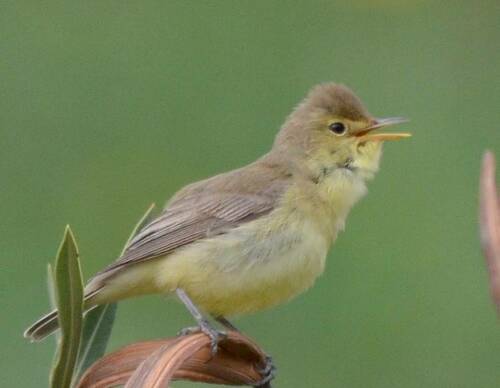
Melodious Warbler (Hippolais polyglotta) Melodious Warbler
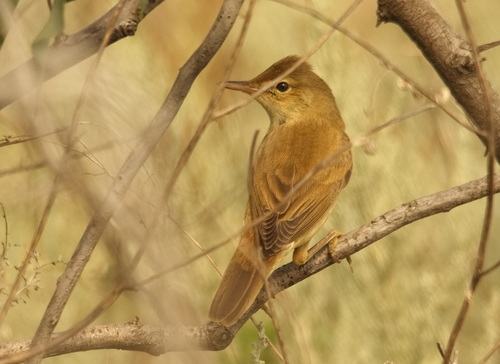
Marsh Warbler (Acrocephalus palustris) Marsh Warbler

Media

Loading…

In short

The most reliable field mark between Melodious Warbler and Marsh Warbler is their vocalization: Melodious Warbler gives a fluent, pleasant babbling song that lacks mimicry, while Marsh Warbler’s song is a remarkable, highly imitative medley of other birds’ calls. In terms of plumage, Melodious Warbler is generally browner above and yellower below, whereas Marsh Warbler is plainer and less colorful. Both species are medium-sized warblers with similar structure, but Melodious Warbler has a stronger, more pointed bill and brown legs, while Marsh Warbler’s bill and legs are not as distinctive. Habitat can help: Melodious Warbler favors drier, shrubby areas in southwest Europe, while Marsh Warbler prefers lush, damp vegetation in temperate Europe. If you hear a warbler mimicking many species, it’s Marsh; if the song is more uniform and sweet, it’s Melodious.

Identification tips

  1. Song is the single best field mark: If the song is a long, rambling mix of other birds’ calls (including odd African species), it is Marsh Warbler. If the song is a pleasant, fluent babbling without mimicry, it is Melodious Warbler. This works for singing males in spring and summer.
  2. Plumage tone: Melodious Warbler is browner above and yellower below, especially on the underparts, compared to the more neutral, greyish-brown and less colorful Marsh Warbler. This is visible in good light and applies to adults and juveniles (with young Melodious being paler but still warmer than Marsh).
  3. Bill and legs: Melodious Warbler has a strong, pointed bill and brown legs. Marsh Warbler’s bill and legs are less robust and less distinctly colored. Use this when you have close, unobstructed views.
  4. Habitat context: In dry, shrubby, or open woodland edge habitats in southwest Europe, Melodious is more likely. In lush, tall, damp, weedy vegetation (nettle beds, meadowsweet, willowherbs) in temperate Europe, Marsh is more likely. This is not absolute but helps narrow down options.
  5. Flight and wing pattern: No distinctive age-specific upperwing or flight marks are described for either species, so do not rely on wing panels, trailing edges, or primary projection for separation.
  6. Juvenile plumage: Young Melodious Warblers are paler on the belly but still show a yellowish tone compared to Marsh Warbler juveniles, which remain drabber and less colorful.
  7. Perched jizz: Both species are medium-sized and similar in overall structure, so do not rely on size or shape alone.
  8. Seasonal context: Melodious Warbler breeds in southwest Europe and northwest Africa, so outside this range, especially in central and eastern Europe, Marsh Warbler is more likely.
  9. Calls: Melodious Warbler gives a rattling "trrrr" (like House Sparrow), a quiet "tuk", and a chattering "chret-chet". Marsh Warbler’s calls are less described but are not as diagnostic as the song.
  10. Sex differences: Both species are sexually monomorphic, so do not expect to separate them by sex in the field.
  11. Hybrid confusion: Marsh Warbler can hybridize with Reed Warbler and Blyth’s Reed Warbler, but not with Melodious, so hybrids are not a concern in this pair.
  12. Urban and arable sites: Marsh Warbler can breed in urban brownfields and arable crops if tall, damp vegetation is present. Melodious Warbler is less likely in these settings.
  13. Leg color in the field: If you see brown legs clearly, this supports Melodious Warbler, but beware of lighting effects.
  14. Song timing: Both species sing in spring and early summer, but Marsh Warbler’s song is longer and more complex, often continuing for extended periods.
  15. Pitfall: Do not confuse Melodious Warbler’s song with Icterine Warbler (which is more varied and includes mimicry); Melodious’s song is more uniform and lacks imitations, unlike Marsh Warbler.

Size

Both species are medium-sized warblers. Melodious Warbler has a measured body mass of about 13.2 g [wikidata], while no direct mass is given for Marsh Warbler, but they are similar in size. Length for Melodious Warbler is 12–13 cm [wikipedia], and Marsh Warbler is described as medium-sized as well. In the field, size is not a reliable separator between these two.

Plumage

There are no age-specific upperwing or flight pattern marks described for either species in the sources, so focus is on overall coloration. Adult Melodious Warbler is browner above and distinctly yellower below than Marsh Warbler, which is plainer and lacks strong yellow tones. Both sexes are alike in both species. Juvenile Melodious Warblers are paler on the belly, but still show a warmer, yellower tone compared to Marsh. Marsh Warbler is generally drabber, with less contrast between upper and underparts. No distinctive wing panels, edges, or flight marks are noted for either species at any age.

Behaviour

Both species are active and often sing from exposed perches. Melodious Warbler may be more likely to be seen in drier, shrubby vegetation, while Marsh Warbler is often found in dense, tall, damp herbaceous cover. Marsh Warbler’s song behavior is more conspicuous, with males singing long, imitative sequences. Both can be skulky, but Marsh Warbler is more closely tied to lush, weedy growth.

Habitat

Melodious Warbler breeds in southwest Europe and northwest Africa, favoring dry, shrubby habitats and woodland edges. Marsh Warbler breeds across temperate Europe and the western Palearctic, usually in lowland areas with tall, damp herbaceous vegetation—such as nettle beds, meadowsweet, and willowherbs—and sometimes in urban brownfields or arable crops. Marsh Warbler avoids pure reedbeds (favored by Reed Warbler) and is less likely in dry, open scrub. If the habitat is lush, damp, and full of tall weeds, Marsh Warbler is more likely; in drier, bushier areas, Melodious is favored.

Voice

This is the most diagnostic difference. Melodious Warbler’s song is a pleasant, fluent babbling, more sustained but less varied than Icterine Warbler, and crucially, it does not include mimicry. Calls include a rattling "trrrr" (like House Sparrow), a quiet "tuk", and a chattering "chret-chet". Marsh Warbler’s song is a continuous, highly imitative medley, incorporating phrases from up to 75 other bird species, including many African birds. If you hear extensive mimicry, it is Marsh Warbler; if the song is sweet, fluent, and uniform, it is Melodious.

Submit a better description

Use the same sections as the comparison. Your text is published immediately.

The most reliable field mark between Melodious Warbler and Marsh Warbler is their vocalization: Melodious Warbler gives a fluent, pleasant babbling song that lacks mimicry, while Marsh Warbler’s song is a remarkable, highly imitative medley of other birds’ calls. In terms of plumage, Melodious Warbler is generally browner above and yellower below, whereas Marsh Warbler is plainer and less colorful. Both species are medium-sized warblers with similar structure, but Melodious Warbler has a stronger, more pointed bill and brown legs, while Marsh Warbler’s bill and legs are not as distinctive. Habitat can help: Melodious Warbler favors drier, shrubby areas in southwest Europe, while Marsh Warbler prefers lush, damp vegetation in temperate Europe. If you hear a warbler mimicking many species, it’s Marsh; if the song is more uniform and sweet, it’s Melodious.

  1. Song is the single best field mark: If the song is a long, rambling mix of other birds’ calls (including odd African species), it is Marsh Warbler. If the song is a pleasant, fluent babbling without mimicry, it is Melodious Warbler. This works for singing males in spring and summer.
  2. Plumage tone: Melodious Warbler is browner above and yellower below, especially on the underparts, compared to the more neutral, greyish-brown and less colorful Marsh Warbler. This is visible in good light and applies to adults and juveniles (with young Melodious being paler but still warmer than Marsh).
  3. Bill and legs: Melodious Warbler has a strong, pointed bill and brown legs. Marsh Warbler’s bill and legs are less robust and less distinctly colored. Use this when you have close, unobstructed views.
  4. Habitat context: In dry, shrubby, or open woodland edge habitats in southwest Europe, Melodious is more likely. In lush, tall, damp, weedy vegetation (nettle beds, meadowsweet, willowherbs) in temperate Europe, Marsh is more likely. This is not absolute but helps narrow down options.
  5. Flight and wing pattern: No distinctive age-specific upperwing or flight marks are described for either species, so do not rely on wing panels, trailing edges, or primary projection for separation.
  6. Juvenile plumage: Young Melodious Warblers are paler on the belly but still show a yellowish tone compared to Marsh Warbler juveniles, which remain drabber and less colorful.
  7. Perched jizz: Both species are medium-sized and similar in overall structure, so do not rely on size or shape alone.
  8. Seasonal context: Melodious Warbler breeds in southwest Europe and northwest Africa, so outside this range, especially in central and eastern Europe, Marsh Warbler is more likely.
  9. Calls: Melodious Warbler gives a rattling "trrrr" (like House Sparrow), a quiet "tuk", and a chattering "chret-chet". Marsh Warbler’s calls are less described but are not as diagnostic as the song.
  10. Sex differences: Both species are sexually monomorphic, so do not expect to separate them by sex in the field.
  11. Hybrid confusion: Marsh Warbler can hybridize with Reed Warbler and Blyth’s Reed Warbler, but not with Melodious, so hybrids are not a concern in this pair.
  12. Urban and arable sites: Marsh Warbler can breed in urban brownfields and arable crops if tall, damp vegetation is present. Melodious Warbler is less likely in these settings.
  13. Leg color in the field: If you see brown legs clearly, this supports Melodious Warbler, but beware of lighting effects.
  14. Song timing: Both species sing in spring and early summer, but Marsh Warbler’s song is longer and more complex, often continuing for extended periods.
  15. Pitfall: Do not confuse Melodious Warbler’s song with Icterine Warbler (which is more varied and includes mimicry); Melodious’s song is more uniform and lacks imitations, unlike Marsh Warbler.

Both species are medium-sized warblers. Melodious Warbler has a measured body mass of about 13.2 g [wikidata], while no direct mass is given for Marsh Warbler, but they are similar in size. Length for Melodious Warbler is 12–13 cm [wikipedia], and Marsh Warbler is described as medium-sized as well. In the field, size is not a reliable separator between these two.

There are no age-specific upperwing or flight pattern marks described for either species in the sources, so focus is on overall coloration. Adult Melodious Warbler is browner above and distinctly yellower below than Marsh Warbler, which is plainer and lacks strong yellow tones. Both sexes are alike in both species. Juvenile Melodious Warblers are paler on the belly, but still show a warmer, yellower tone compared to Marsh. Marsh Warbler is generally drabber, with less contrast between upper and underparts. No distinctive wing panels, edges, or flight marks are noted for either species at any age.

Both species are active and often sing from exposed perches. Melodious Warbler may be more likely to be seen in drier, shrubby vegetation, while Marsh Warbler is often found in dense, tall, damp herbaceous cover. Marsh Warbler’s song behavior is more conspicuous, with males singing long, imitative sequences. Both can be skulky, but Marsh Warbler is more closely tied to lush, weedy growth.

Melodious Warbler breeds in southwest Europe and northwest Africa, favoring dry, shrubby habitats and woodland edges. Marsh Warbler breeds across temperate Europe and the western Palearctic, usually in lowland areas with tall, damp herbaceous vegetation—such as nettle beds, meadowsweet, and willowherbs—and sometimes in urban brownfields or arable crops. Marsh Warbler avoids pure reedbeds (favored by Reed Warbler) and is less likely in dry, open scrub. If the habitat is lush, damp, and full of tall weeds, Marsh Warbler is more likely; in drier, bushier areas, Melodious is favored.

This is the most diagnostic difference. Melodious Warbler’s song is a pleasant, fluent babbling, more sustained but less varied than Icterine Warbler, and crucially, it does not include mimicry. Calls include a rattling "trrrr" (like House Sparrow), a quiet "tuk", and a chattering "chret-chet". Marsh Warbler’s song is a continuous, highly imitative medley, incorporating phrases from up to 75 other bird species, including many African birds. If you hear extensive mimicry, it is Marsh Warbler; if the song is sweet, fluent, and uniform, it is Melodious.

Discard your changes?

You have unsaved edits. If you leave now, those changes will be lost.

Melodious Warbler · Marsh Warbler · My Tricky Birds