
Motmot

Sharp-tailed Sandpiper vs Stilt Sandpiper

Calidris acuminata versus Calidris himantopus

Play a quiz with Sharp-tailed Sandpiper and Stilt Sandpiper
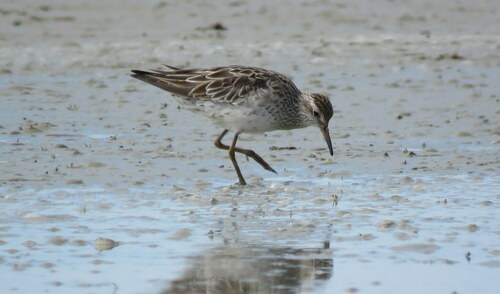
Sharp-tailed Sandpiper (Calidris acuminata) Sharp-tailed Sandpiper
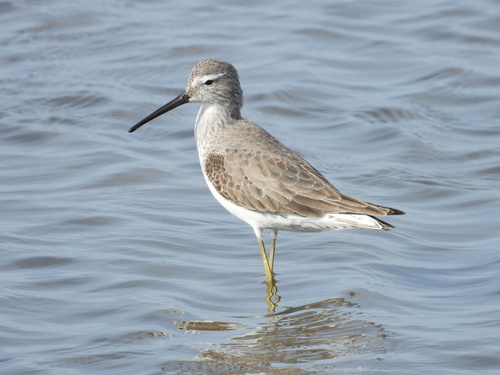
Stilt Sandpiper (Calidris himantopus) Stilt Sandpiper

Media

Loading…

In short

Juvenile Sharp-tailed Sandpiper is brighter and more crisply marked than juvenile Stilt Sandpiper, especially with a sharp chestnut crown and bold supercilium, while Stilt Sandpiper juveniles are duller below and lack the strong chestnut tones. In flight, both species lack an obvious wingbar, but Stilt Sandpiper shows a white rump, unlike Sharp-tailed. Structurally, Stilt Sandpiper is longer-legged and longer-necked, with a slightly decurved bill, while Sharp-tailed is more pot-bellied with a flat back and straight, dark bill. Breeding adults are best separated by underpart pattern: Stilt Sandpiper is heavily barred below, while Sharp-tailed shows more diffuse mottling and '>'-shaped flank marks. Both species can appear similar in non-breeding plumage, so focus on structure and head pattern for separation.

Identification tips

  1. Juvenile plumage: Sharp-tailed Sandpiper juveniles are brighter, with a rich chestnut crown, bold white supercilium, and sharp, buffy chest markings. Stilt Sandpiper juveniles are duller below, lack the chestnut crown, and have a strong head pattern but plainer underparts.
  2. Flight pattern: Both lack a strong wingbar, but Stilt Sandpiper shows a white rump in flight, which Sharp-tailed lacks. Use this when birds flush or fly past.
  3. Bill shape: Stilt Sandpiper has a slightly decurved, medium-length bill; Sharp-tailed's bill is straight and dark. This is subtle but visible at close range.
  4. Leg color and length: Stilt Sandpiper has longer, greenish-yellow legs, giving it a taller, more stilted look. Sharp-tailed's legs are olive to yellow but appear shorter and more compact.
  5. Body shape: Sharp-tailed Sandpiper is pot-bellied with a flat back and drawn-out rear end, often looking more compact and horizontal. Stilt Sandpiper is longer-necked and more upright.
  6. Head pattern: Sharp-tailed shows a strong, broad supercilium and chestnut crown (especially in juveniles and breeding adults). Stilt Sandpiper has a pale supercilium but lacks the rich chestnut crown.
  7. Breast and flank markings: Breeding Stilt Sandpiper is heavily barred black-and-white below; Sharp-tailed is more mottled with '>'-shaped marks on the flanks and lacks a sharply defined breast band.
  8. Back pattern: Juvenile Sharp-tailed has white mantle stripes; Stilt Sandpiper juvenile has white feather fringes but not the same crisp striping.
  9. Feeding behavior: Stilt Sandpiper often feeds in deeper water with a sewing-machine motion; Sharp-tailed prefers shallower water and moves more steadily.
  10. Posture: Stilt Sandpiper stands taller and more upright; Sharp-tailed appears lower to the ground and more horizontal.
  11. Non-breeding adults: Both become grayer above and white below, but Sharp-tailed retains a stronger supercilium and chestnut crown, while Stilt Sandpiper is plainer-headed.
  12. Habitat: If seen in grassy, sedgy wetlands, especially in Australasia, favor Sharp-tailed; in open, shallowly flooded fields in the Americas, Stilt Sandpiper is more likely.
  13. Geographic context: Sharp-tailed is rare in North America and regular in Australasia; Stilt Sandpiper is common in the Americas, rare elsewhere.
  14. Association with other species: Stilt Sandpiper often feeds with yellowlegs; Sharp-tailed is more likely to be with other Calidris sandpipers.
  15. Voice: Not diagnostic with current notes; rely on visual marks.

Size

Both species are similar in overall size, but Sharp-tailed Sandpiper is typically a little heavier (body mass about 66.9g [wikidata]). Stilt Sandpiper is slightly smaller in mass (50–70g) but has longer legs, which can make it appear taller and more elongated, especially when wading. Length and wingspan overlap, but Stilt Sandpiper's longer legs and neck are more apparent in the field.

Plumage

Juvenile Sharp-tailed Sandpipers are notably brighter than juvenile Stilt Sandpipers, with a rich chestnut crown, bold white supercilium, and bright buffy chest with sharp markings; the back shows white mantle stripes and the overall effect is crisply patterned. Juvenile Stilt Sandpipers have a strong head pattern and brownish back with white feather fringes, but lack the chestnut crown and are not barred below—underparts are plainer. In flight, both species lack a strong wingbar, but Stilt Sandpiper shows a white rump, while Sharp-tailed does not. Breeding adult Stilt Sandpipers are heavily barred black-and-white below with reddish-orange above and below the supercilium, while Sharp-tailed adults have a more mottled breast and flanks with distinctive '>'-shaped marks and a chestnut cap. Non-breeding (winter) adults of both species become grayer above and white below, but Sharp-tailed retains a stronger supercilium and chestnut crown, while Stilt Sandpiper keeps a pale supercilium and gray upperparts. Bill color is dark in both, but Stilt Sandpiper's is slightly decurved, while Sharp-tailed's is straight.

Behaviour

Stilt Sandpiper often feeds in deeper water, using its longer legs to wade and probe with a sewing-machine motion, sometimes alongside yellowlegs. Sharp-tailed Sandpiper is more likely to feed on mudflats or shallow water, moving steadily with a more horizontal posture. In mixed flocks, Stilt Sandpiper stands out by its taller, more upright stance and longer legs, while Sharp-tailed appears more compact and pot-bellied.

Habitat

Sharp-tailed Sandpiper is most often found in grassy or sedgy wetlands, flooded meadows, and shallow freshwater or brackish marshes, especially during migration and winter in Australasia. Stilt Sandpiper prefers shallow freshwater pools, marshes, and flooded fields, often feeding in deeper water than most Calidris sandpipers. Both may occur together on migration in North America, but Sharp-tailed is rare there and more likely to be found in grassy or vegetated edges, while Stilt Sandpiper is regular in open muddy or shallowly flooded habitats.

Submit a better description

Use the same sections as the comparison. Your text is published immediately.

Juvenile Sharp-tailed Sandpiper is brighter and more crisply marked than juvenile Stilt Sandpiper, especially with a sharp chestnut crown and bold supercilium, while Stilt Sandpiper juveniles are duller below and lack the strong chestnut tones. In flight, both species lack an obvious wingbar, but Stilt Sandpiper shows a white rump, unlike Sharp-tailed. Structurally, Stilt Sandpiper is longer-legged and longer-necked, with a slightly decurved bill, while Sharp-tailed is more pot-bellied with a flat back and straight, dark bill. Breeding adults are best separated by underpart pattern: Stilt Sandpiper is heavily barred below, while Sharp-tailed shows more diffuse mottling and '>'-shaped flank marks. Both species can appear similar in non-breeding plumage, so focus on structure and head pattern for separation.

  1. Juvenile plumage: Sharp-tailed Sandpiper juveniles are brighter, with a rich chestnut crown, bold white supercilium, and sharp, buffy chest markings. Stilt Sandpiper juveniles are duller below, lack the chestnut crown, and have a strong head pattern but plainer underparts.
  2. Flight pattern: Both lack a strong wingbar, but Stilt Sandpiper shows a white rump in flight, which Sharp-tailed lacks. Use this when birds flush or fly past.
  3. Bill shape: Stilt Sandpiper has a slightly decurved, medium-length bill; Sharp-tailed's bill is straight and dark. This is subtle but visible at close range.
  4. Leg color and length: Stilt Sandpiper has longer, greenish-yellow legs, giving it a taller, more stilted look. Sharp-tailed's legs are olive to yellow but appear shorter and more compact.
  5. Body shape: Sharp-tailed Sandpiper is pot-bellied with a flat back and drawn-out rear end, often looking more compact and horizontal. Stilt Sandpiper is longer-necked and more upright.
  6. Head pattern: Sharp-tailed shows a strong, broad supercilium and chestnut crown (especially in juveniles and breeding adults). Stilt Sandpiper has a pale supercilium but lacks the rich chestnut crown.
  7. Breast and flank markings: Breeding Stilt Sandpiper is heavily barred black-and-white below; Sharp-tailed is more mottled with '>'-shaped marks on the flanks and lacks a sharply defined breast band.
  8. Back pattern: Juvenile Sharp-tailed has white mantle stripes; Stilt Sandpiper juvenile has white feather fringes but not the same crisp striping.
  9. Feeding behavior: Stilt Sandpiper often feeds in deeper water with a sewing-machine motion; Sharp-tailed prefers shallower water and moves more steadily.
  10. Posture: Stilt Sandpiper stands taller and more upright; Sharp-tailed appears lower to the ground and more horizontal.
  11. Non-breeding adults: Both become grayer above and white below, but Sharp-tailed retains a stronger supercilium and chestnut crown, while Stilt Sandpiper is plainer-headed.
  12. Habitat: If seen in grassy, sedgy wetlands, especially in Australasia, favor Sharp-tailed; in open, shallowly flooded fields in the Americas, Stilt Sandpiper is more likely.
  13. Geographic context: Sharp-tailed is rare in North America and regular in Australasia; Stilt Sandpiper is common in the Americas, rare elsewhere.
  14. Association with other species: Stilt Sandpiper often feeds with yellowlegs; Sharp-tailed is more likely to be with other Calidris sandpipers.
  15. Voice: Not diagnostic with current notes; rely on visual marks.

Both species are similar in overall size, but Sharp-tailed Sandpiper is typically a little heavier (body mass about 66.9g [wikidata]). Stilt Sandpiper is slightly smaller in mass (50–70g) but has longer legs, which can make it appear taller and more elongated, especially when wading. Length and wingspan overlap, but Stilt Sandpiper's longer legs and neck are more apparent in the field.

Juvenile Sharp-tailed Sandpipers are notably brighter than juvenile Stilt Sandpipers, with a rich chestnut crown, bold white supercilium, and bright buffy chest with sharp markings; the back shows white mantle stripes and the overall effect is crisply patterned. Juvenile Stilt Sandpipers have a strong head pattern and brownish back with white feather fringes, but lack the chestnut crown and are not barred below—underparts are plainer. In flight, both species lack a strong wingbar, but Stilt Sandpiper shows a white rump, while Sharp-tailed does not. Breeding adult Stilt Sandpipers are heavily barred black-and-white below with reddish-orange above and below the supercilium, while Sharp-tailed adults have a more mottled breast and flanks with distinctive '>'-shaped marks and a chestnut cap. Non-breeding (winter) adults of both species become grayer above and white below, but Sharp-tailed retains a stronger supercilium and chestnut crown, while Stilt Sandpiper keeps a pale supercilium and gray upperparts. Bill color is dark in both, but Stilt Sandpiper's is slightly decurved, while Sharp-tailed's is straight.

Stilt Sandpiper often feeds in deeper water, using its longer legs to wade and probe with a sewing-machine motion, sometimes alongside yellowlegs. Sharp-tailed Sandpiper is more likely to feed on mudflats or shallow water, moving steadily with a more horizontal posture. In mixed flocks, Stilt Sandpiper stands out by its taller, more upright stance and longer legs, while Sharp-tailed appears more compact and pot-bellied.

Sharp-tailed Sandpiper is most often found in grassy or sedgy wetlands, flooded meadows, and shallow freshwater or brackish marshes, especially during migration and winter in Australasia. Stilt Sandpiper prefers shallow freshwater pools, marshes, and flooded fields, often feeding in deeper water than most Calidris sandpipers. Both may occur together on migration in North America, but Sharp-tailed is rare there and more likely to be found in grassy or vegetated edges, while Stilt Sandpiper is regular in open muddy or shallowly flooded habitats.

Discard your changes?

You have unsaved edits. If you leave now, those changes will be lost.

Sharp-tailed Sandpiper · Stilt Sandpiper · My Tricky Birds