Twite vs Common Linnet
Linaria flavirostris versus Linaria cannabina
Play a quiz with Twite and Common Linnet
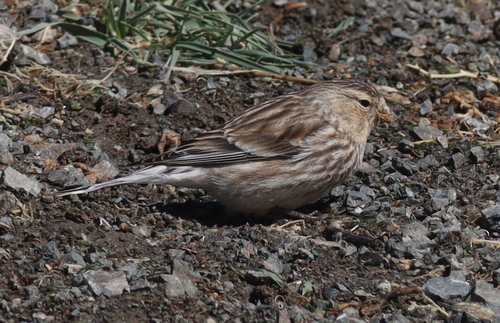 Twite
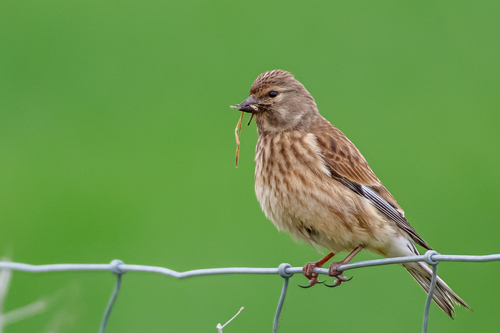 Common Linnet
In short
Twite and Common Linnet are both small brown finches, but the most reliable field mark is the presence of red on the male Linnet’s head and breast in spring and summer, which Twite never shows. For all ages and seasons, Twite is more heavily streaked below and above, and adult male Twite shows a pink rump in flight, while Linnet never does. Female and immature Linnets lack red but still have a cleaner, paler belly and less streaking than Twite. Bill color also helps: Twite’s bill is yellow in winter, while Linnet’s is always grey. Both species can be seen in flocks, but habitat and voice provide further clues.
Identification tips
- Red on head/breast (males, spring/summer): Only male Linnet shows a red forehead and breast. If you see red here, it is not a Twite.
- Pink rump (adult male Twite): In flight, look for a pink rump on adult male Twite, never shown by Linnet of any age or sex.
- Streaking below: Twite is always more heavily streaked on the underparts, especially on the flanks and belly, in all ages and sexes. Linnet is cleaner and paler below, with finer, less extensive streaks.
- Streaking above: Twite is more streaked on the upperparts, giving a dingier, more camouflaged look. Linnet is plainer above, especially in females and immatures.
- Bill color: Twite’s bill is yellow in winter and grey in summer; Linnet’s bill is always grey. In winter, a yellow bill is a strong Twite clue.
- Rump color (non-breeding/immature): Female and immature Twite have a brown rump; Linnet has a plain back and rump with no pink or brown contrast.
- Underpart color: Twite’s underparts are buff to whitish and streaked; Linnet’s are whiter and less streaked, especially on the belly.
- Voice: Listen for the nasal 'twaa-it' call of Twite. Linnet’s calls are softer and more melodic.
- Habitat: Twite prefers upland grassland, coastal machair, and salt marshes, especially in winter. Linnet is more likely in farmland, hedgerows, and open lowland country.
- Flock behavior: Both can be in flocks, but Twite flocks are often tighter and more numerous on coasts and salt marshes in winter.
- Sex/age confusion: Female and immature Linnets lack red and can look similar to Twite, but always check for heavier streaking (Twite) and bill color (yellow in winter for Twite).
- Seasonal context: If you see a small brown finch with a yellow bill in winter, especially in coastal or upland habitat, Twite is more likely. In spring/summer, red on the head or breast means Linnet.
- Tail and jizz: Both are slim with long tails, so tail shape is not diagnostic.
- Size: Linnet is slightly heavier but size is not reliable in the field.
- Plumage variation: Twite subspecies can be darker or paler depending on region, but always more streaked than Linnet.
Size
Both species are similar in length (Twite: 13–13.5 cm; Linnet: not specified but similar), but the Linnet is slightly heavier (19 g for Linnet; no mass given for Twite, but it is generally lighter). Both are slim finches with long tails, so size alone is rarely diagnostic in the field.
Plumage
- Juvenile/immature birds: Both lack bright colors, but Twite is always more heavily streaked on the underparts and upperparts, with a buff to whitish background and brown streaks. Female and immature Linnets have white underparts with buff streaking, but the streaks are finer and less extensive than Twite. Twite immatures have a brown rump, while Linnet immatures have a plain back and rump.
- Adult males (breeding): Male Linnet shows a red forehead and breast, a unique mark not found on Twite. Male Twite has a pink rump, especially visible in flight, but no red on the head or breast. Both have brown upperparts, but Twite is more streaked.
- Adult females: Both lack red, but Twite females are more streaked below and above, and have a brown rump. Linnet females have a cleaner, paler belly and less streaking.
- Bill color: Twite’s bill is yellow in winter and grey in summer; Linnet’s bill is always grey.
- Overall: Twite always appears streakier and dingier, with a yellowish or grey bill depending on season, and males have a pink rump. Linnet is cleaner, with males showing red in season.
Behaviour
Both species often form flocks outside the breeding season, sometimes mixing with other finches. Twite flocks are especially common on coasts and salt marshes in winter. Both feed mainly on seeds, but Twite is more likely to be seen in large, tight flocks in open, grassy or weedy habitats, while Linnet flocks are more often found in farmland, hedgerows, and scrub.
Habitat
Twite breeds in upland grassland, coastal machair, and mountain habitats, especially in northern and western Britain, Scandinavia, and high-altitude Asian regions. In winter, it moves to coasts and salt marshes. Linnet is more widespread in lowland farmland, hedgerows, and open country, and is less tied to uplands or coasts. If you find a small brown finch in upland or coastal grassland, especially in winter, Twite is more likely; in farmland and hedgerows, Linnet is more likely.
Voice
Twite has a very distinctive nasal call, described as 'twaa-it', and its song includes fast trills and twitters. Linnet’s call and song are less nasal and more melodic, lacking the harsh quality of Twite. If you hear a sharp, nasal call, suspect Twite; if the call is softer or more musical, suspect Linnet.