

Motmot

Wahlberg's Eagle vs Ayres's Hawk-Eagle

Hieraaetus wahlbergi versus Hieraaetus ayresii

Play a quiz with Wahlberg's Eagle and Ayres's Hawk-Eagle
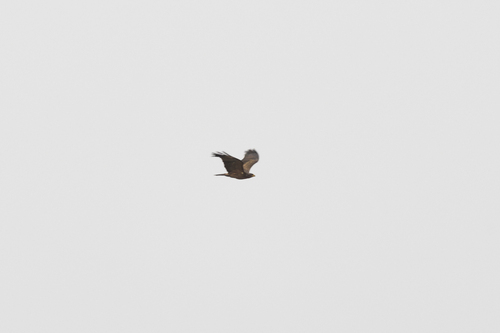
Wahlberg's Eagle (Hieraaetus wahlbergi) Wahlberg's Eagle
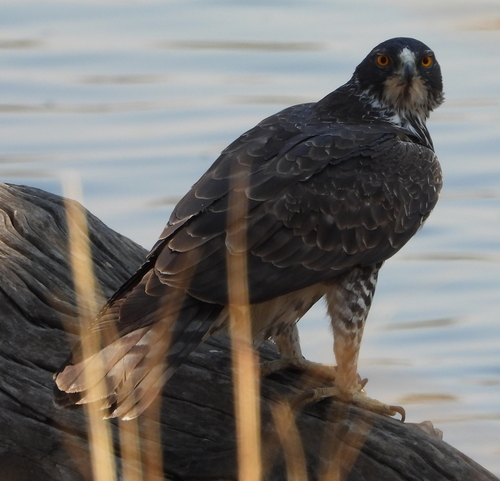
Ayres's Hawk-Eagle (Hieraaetus ayresii) Ayres's Hawk-Eagle

Media

Loading…

In short

The most reliable field mark between Wahlberg's Eagle and Ayres's Hawk-Eagle is the underwing and underpart pattern in flight, especially in juveniles and adults: Ayres's Hawk-Eagle always shows a strikingly white underside with bold dark spots and heavily barred, dark underwing flight feathers, while Wahlberg's Eagle is much plainer below, with variable brown tones and less contrast, and often shows a greyish or whitish panel on the underwing and undertail (especially in pale morphs). Ayres's Hawk-Eagle is also more compact, with a shorter tail and a more hawk-like, agile jizz, compared to the longer-winged, more eagle-like Wahlberg's. Both can show a small crest, but Wahlberg's is more likely to appear plain brown overall, while Ayres's is always boldly patterned below. Juvenile Ayres's is white below with sparse dark markings, while Wahlberg's juveniles are browner and less contrasting. Use the underpart and underwing pattern first, then check structure and tail pattern.

Identification tips

  1. Underwing pattern in flight (all ages): Ayres's Hawk-Eagle always shows a bold, dark, and heavily barred underwing with no pale panel; Wahlberg's Eagle is much plainer below, often with a greyish or whitish panel on the underwing and undertail, especially in pale morphs.
  2. Underpart contrast (adults and immatures): Ayres's is strikingly white below with heavy dark spots and blotches, especially on the breast and belly; Wahlberg's is uniformly brown or dark, sometimes with a paler underside but never with bold spots.
  3. Juvenile plumage: Juvenile Ayres's is white below with sparse dark markings and dark above; Wahlberg's juveniles are more uniformly brown with less contrast.
  4. Tail pattern: Ayres's has an ashy grey tail with a broad black tip and several narrow dark bars; Wahlberg's tail is barred grey but less sharply marked and often appears plainer.
  5. Legs: Ayres's has pure white, well-feathered legs; Wahlberg's legs are yellow and less conspicuous.
  6. Crest: Both can show a small crest, but this is not reliable for separation.
  7. Size and structure: Ayres's is more compact and hawk-like, with a shorter tail and more agile flight; Wahlberg's is bulkier, longer-winged, and more eagle-like in jizz.
  8. Flight style: Ayres's performs quick, agile, hawk-like maneuvers; Wahlberg's soars on flat wings and is steadier in flight.
  9. Habitat: Ayres's is more often in dense woodland or forest edge; Wahlberg's is more likely over open country and is more migratory.
  10. Plumage morphs: Wahlberg's can be very dark or pale brown, but never shows the bold black-and-white pattern of Ayres's; pale Wahlberg's may be confusing but lack the heavy underpart spotting.
  11. Sexual dimorphism: Both species show females larger than males, but this is not useful in the field unless birds are side by side.
  12. Perched birds: Ayres's appears more upright and alert, with a bold white belly and spotted breast; Wahlberg's is more uniformly brown and bulkier.
  13. Bill and feet: Ayres's has a bluish horn bill with a black tip and yellow cere; Wahlberg's bill is less contrasting, but this is rarely diagnostic at a distance.
  14. Context: If seen in southern Africa during the wet season, both are possible, but Wahlberg's is more likely in open country, Ayres's in woodland.
  15. Pitfalls: Beware pale Wahlberg's Eagles, which can appear lighter below but never show the bold, spotted underparts and barred underwing of Ayres's. Always check for underwing pattern and underpart spotting first.

Size

Ayres's Hawk-Eagle is slightly smaller and more compact than Wahlberg's Eagle, though both are medium-sized raptors. Ayres's averages about 839.5 g in mass [wikidata], with males as light as 615 g and females up to 1,150 g. Wahlberg's Eagle is similar in length (53–61 cm vs. 44–57 cm for Ayres's), but has a longer wingspan (130–146 cm vs. 106–137 cm) and females can be heavier (up to 1,400 g). In the field, Ayres's appears more hawk-like and agile, while Wahlberg's is bulkier and longer-winged.

Plumage

Juvenile and immature Ayres's Hawk-Eagle is white below with sparse dark brown markings on the chest, belly, and flanks, and dark brown above; as it matures, it becomes duskier and browner below before attaining the bold adult pattern. The adult Ayres's is always strikingly white below with heavy dark spots and blotches, especially on the breast and belly, and has heavily barred, dark underwing flight feathers with no pale panel. The tail is ashy grey with a broad black tip and several narrow dark bars. Wahlberg's Eagle, in contrast, is much plainer: adults and juveniles are usually dark brown overall, sometimes with a small crest, and the underwing and undertail are greyish or whitish with dark barring, especially in pale morphs. Wahlberg's shows much less contrast below, and the pale morph can appear much lighter brown but never shows the bold white and black pattern of Ayres's. Both species have yellow legs, but Ayres's has pure white feathered legs, while Wahlberg's are yellow and less striking. In flight, Ayres's always shows a dark, heavily barred underwing, while Wahlberg's is more uniform and may show a pale panel.

Behaviour

Ayres's Hawk-Eagle is more agile and hawk-like in flight, often performing rapid, acrobatic maneuvers and quick stoops. Wahlberg's Eagle is more eagle-like, soaring on flat wings with slower, steadier flight. Both can be seen alone or in pairs, but Wahlberg's is more likely to soar high and cover large distances, while Ayres's is often seen hunting in woodland edges or performing display flights. Both species can show a small crest, but Ayres's is more likely to look alert and active, while Wahlberg's may perch more upright and appear bulkier.

Habitat

Both species inhabit African woodlands and savannas, but Wahlberg's Eagle is more widespread and migratory, often seen soaring over open country or woodland edges. Ayres's Hawk-Eagle is more tied to dense woodland and forest edges, and is less likely to be seen in very open savanna. If seen in deep woodland or forest edge, Ayres's is more likely; if soaring high over open country, Wahlberg's is more probable.

Submit a better description

Use the same sections as the comparison. Your text is published immediately.

The most reliable field mark between Wahlberg's Eagle and Ayres's Hawk-Eagle is the underwing and underpart pattern in flight, especially in juveniles and adults: Ayres's Hawk-Eagle always shows a strikingly white underside with bold dark spots and heavily barred, dark underwing flight feathers, while Wahlberg's Eagle is much plainer below, with variable brown tones and less contrast, and often shows a greyish or whitish panel on the underwing and undertail (especially in pale morphs). Ayres's Hawk-Eagle is also more compact, with a shorter tail and a more hawk-like, agile jizz, compared to the longer-winged, more eagle-like Wahlberg's. Both can show a small crest, but Wahlberg's is more likely to appear plain brown overall, while Ayres's is always boldly patterned below. Juvenile Ayres's is white below with sparse dark markings, while Wahlberg's juveniles are browner and less contrasting. Use the underpart and underwing pattern first, then check structure and tail pattern.

  1. Underwing pattern in flight (all ages): Ayres's Hawk-Eagle always shows a bold, dark, and heavily barred underwing with no pale panel; Wahlberg's Eagle is much plainer below, often with a greyish or whitish panel on the underwing and undertail, especially in pale morphs.
  2. Underpart contrast (adults and immatures): Ayres's is strikingly white below with heavy dark spots and blotches, especially on the breast and belly; Wahlberg's is uniformly brown or dark, sometimes with a paler underside but never with bold spots.
  3. Juvenile plumage: Juvenile Ayres's is white below with sparse dark markings and dark above; Wahlberg's juveniles are more uniformly brown with less contrast.
  4. Tail pattern: Ayres's has an ashy grey tail with a broad black tip and several narrow dark bars; Wahlberg's tail is barred grey but less sharply marked and often appears plainer.
  5. Legs: Ayres's has pure white, well-feathered legs; Wahlberg's legs are yellow and less conspicuous.
  6. Crest: Both can show a small crest, but this is not reliable for separation.
  7. Size and structure: Ayres's is more compact and hawk-like, with a shorter tail and more agile flight; Wahlberg's is bulkier, longer-winged, and more eagle-like in jizz.
  8. Flight style: Ayres's performs quick, agile, hawk-like maneuvers; Wahlberg's soars on flat wings and is steadier in flight.
  9. Habitat: Ayres's is more often in dense woodland or forest edge; Wahlberg's is more likely over open country and is more migratory.
  10. Plumage morphs: Wahlberg's can be very dark or pale brown, but never shows the bold black-and-white pattern of Ayres's; pale Wahlberg's may be confusing but lack the heavy underpart spotting.
  11. Sexual dimorphism: Both species show females larger than males, but this is not useful in the field unless birds are side by side.
  12. Perched birds: Ayres's appears more upright and alert, with a bold white belly and spotted breast; Wahlberg's is more uniformly brown and bulkier.
  13. Bill and feet: Ayres's has a bluish horn bill with a black tip and yellow cere; Wahlberg's bill is less contrasting, but this is rarely diagnostic at a distance.
  14. Context: If seen in southern Africa during the wet season, both are possible, but Wahlberg's is more likely in open country, Ayres's in woodland.
  15. Pitfalls: Beware pale Wahlberg's Eagles, which can appear lighter below but never show the bold, spotted underparts and barred underwing of Ayres's. Always check for underwing pattern and underpart spotting first.

Ayres's Hawk-Eagle is slightly smaller and more compact than Wahlberg's Eagle, though both are medium-sized raptors. Ayres's averages about 839.5 g in mass [wikidata], with males as light as 615 g and females up to 1,150 g. Wahlberg's Eagle is similar in length (53–61 cm vs. 44–57 cm for Ayres's), but has a longer wingspan (130–146 cm vs. 106–137 cm) and females can be heavier (up to 1,400 g). In the field, Ayres's appears more hawk-like and agile, while Wahlberg's is bulkier and longer-winged.

Juvenile and immature Ayres's Hawk-Eagle is white below with sparse dark brown markings on the chest, belly, and flanks, and dark brown above; as it matures, it becomes duskier and browner below before attaining the bold adult pattern. The adult Ayres's is always strikingly white below with heavy dark spots and blotches, especially on the breast and belly, and has heavily barred, dark underwing flight feathers with no pale panel. The tail is ashy grey with a broad black tip and several narrow dark bars. Wahlberg's Eagle, in contrast, is much plainer: adults and juveniles are usually dark brown overall, sometimes with a small crest, and the underwing and undertail are greyish or whitish with dark barring, especially in pale morphs. Wahlberg's shows much less contrast below, and the pale morph can appear much lighter brown but never shows the bold white and black pattern of Ayres's. Both species have yellow legs, but Ayres's has pure white feathered legs, while Wahlberg's are yellow and less striking. In flight, Ayres's always shows a dark, heavily barred underwing, while Wahlberg's is more uniform and may show a pale panel.

Ayres's Hawk-Eagle is more agile and hawk-like in flight, often performing rapid, acrobatic maneuvers and quick stoops. Wahlberg's Eagle is more eagle-like, soaring on flat wings with slower, steadier flight. Both can be seen alone or in pairs, but Wahlberg's is more likely to soar high and cover large distances, while Ayres's is often seen hunting in woodland edges or performing display flights. Both species can show a small crest, but Ayres's is more likely to look alert and active, while Wahlberg's may perch more upright and appear bulkier.

Both species inhabit African woodlands and savannas, but Wahlberg's Eagle is more widespread and migratory, often seen soaring over open country or woodland edges. Ayres's Hawk-Eagle is more tied to dense woodland and forest edges, and is less likely to be seen in very open savanna. If seen in deep woodland or forest edge, Ayres's is more likely; if soaring high over open country, Wahlberg's is more probable.

Discard your changes?

You have unsaved edits. If you leave now, those changes will be lost.

Wahlberg's Eagle · Ayres's Hawk-Eagle · My Tricky Birds