
Whiskered Tern vs Common Tern
Chlidonias hybrida versus Sterna hirundo
Play a quiz with Whiskered Tern and Common Tern
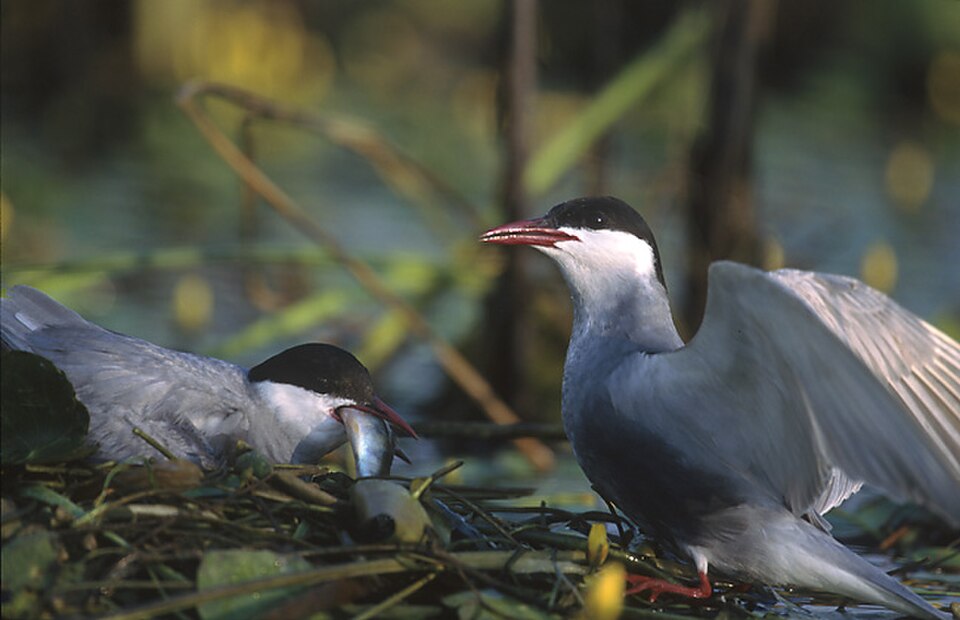 Whiskered Tern
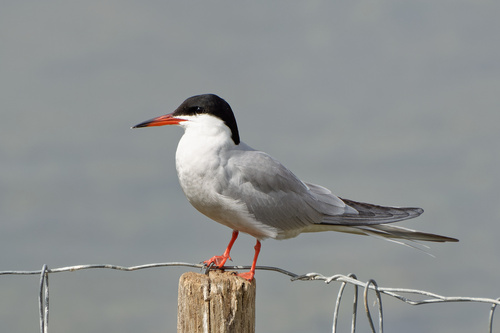 Common Tern
In short
Juvenile and first-winter Whiskered Terns show a distinctive ginger-buff, scaly pattern on the back and mantle, while Common Tern juveniles lack this feature and are generally plainer above. Adult Whiskered Terns in breeding plumage are darker overall, with a dark grey body both above and below, and have a short, forked tail, whereas Common Terns are paler, with a white underside and a longer, more deeply forked tail. Bill and leg color can help: Whiskered Terns have a strong, red bill and red legs, while Common Terns have an orange-red bill with a black tip and bright red legs. In flight, Whiskered Terns appear more marsh-tern-like, with a less elegant, more swallow-like jizz compared to the sleeker, more direct flight of Common Terns. Habitat can also help: Whiskered Terns are more likely over inland marshes, while Common Terns are typically coastal.
Identification tips
- Juvenile/First-winter upperparts: Look for the ginger-buff, scaly pattern on the back and mantle of Whiskered Tern juveniles—this is absent in Common Tern juveniles, which are plainer above.
- Adult breeding underparts: Whiskered Tern adults are dark grey below, while Common Tern adults are white below—this is a key difference at a distance.
- Tail shape and length: Whiskered Tern has a short, shallowly forked tail; Common Tern has a long, deeply forked tail that often projects well beyond the wingtips when perched.
- Bill color and shape: Whiskered Tern has a strong, red bill (males longer, females stubbier), while Common Tern has an orange-red bill with a black tip (except in some subspecies).
- Leg color: Both species have red legs, but Whiskered Tern's are often a deeper red; this can be subtle and variable.
- Head pattern: Whiskered Tern shows a C-shaped black band joining the ear-coverts and hindcrown, with a mottled white area above; Common Tern has a cleaner black cap and white cheeks.
- Flight style: Whiskered Tern is more swallow-like and buoyant in flight, often fluttering over marshes; Common Tern is more direct and purposeful, with stiffer, more triangular wings.
- Habitat context: Whiskered Tern is most often over inland marshes and wetlands; Common Tern is usually coastal, especially outside the breeding season.
- Rump color: Whiskered Tern's rump is pale grey year-round; Common Tern's rump can be greyish in non-breeding plumage but is usually less distinct.
- Seasonal changes: In winter, Whiskered Tern develops a white forehead and paler body, but still looks darker than Common Tern, which remains pale below.
- Voice: Listen for the 'krekk' of Whiskered Tern versus the sharper, higher-pitched calls of Common Tern.
- Perched jizz: Whiskered Tern appears more compact and 'swallow-like' when perched; Common Tern stands taller and looks more elongated.
- Mantle color (adult): Whiskered Tern has a silvery-grey mantle in adults; Common Tern's mantle is paler grey.
- Sex differences (Whiskered Tern): Males have a longer, stronger bill than females, but both sexes are structurally more compact than Common Tern.
- Pitfalls: Beware of non-breeding Whiskered Terns, which can look much paler and less distinctive; always check for the short tail and overall structure.
Size
Whiskered Tern is slightly heavier (body mass ~84g [wikidata]), but overall size difference is subtle and not reliable in the field. Both are medium-sized terns, but Common Tern tends to look longer and more streamlined due to its longer tail and wings, while Whiskered Tern appears more compact and 'swallow-like' in shape. Bill length is variable, but Whiskered Tern males have a longer, stronger bill than females, which can look stubbier.
Plumage
- Juvenile/First-winter: Whiskered Tern juveniles have a ginger-buff, scaly pattern on the back and mantle, with broad buff edgings and bars on the scapulars and back feathers. This gives a distinctly variegated, 'scaly' look, sometimes with new gray feathers appearing early in fall. Common Tern juveniles are plainer above, lacking the ginger-buff scaling, and do not show the same variegated mantle pattern.
- Adult breeding: Whiskered Tern adults are dark grey above and below, with white cheeks, a black cap, and a short, forked tail. Common Tern adults are pale grey above, white below, with a black cap and a longer, more deeply forked tail.
- Adult non-breeding: Whiskered Tern develops a white forehead and paler grey body, but retains a pale grey rump. Common Tern in non-breeding plumage can have a greyish rump, but remains paler below than Whiskered Tern.
- Head pattern: Whiskered Tern's black ear-coverts join the hindcrown, forming a C-shaped black band with mottled white above, and the collar is less sharply defined. Common Tern maintains a cleaner black cap and white cheeks, especially in breeding plumage.
- Tail: Whiskered Tern's tail is short and only slightly forked, while Common Tern's is long and deeply forked, often extending well beyond the wingtips when perched.
Behaviour
Whiskered Tern often appears more buoyant and swallow-like in flight, with a less direct, more fluttery flight style, especially over marshes. Common Tern is more streamlined, with a powerful, direct flight and more pointed wings, often seen making longer, more purposeful flights over open water. When perched, Common Tern stands taller on longer legs, while Whiskered Tern looks more compact.
Habitat
Whiskered Tern is typically found over inland marshes, lakes, and wetlands, often breeding in colonies among aquatic vegetation. Common Tern favors coastal habitats, breeding on sandy or pebbly beaches, islands, and sometimes inland lakes, but is more often seen along coasts and estuaries during migration and winter. Overlap can occur at large inland water bodies, but context is a helpful clue.
Voice
Whiskered Tern gives a characteristic 'krekk' call, which is different from the Common Tern's sharper, more piercing calls. Common Tern's calls are higher-pitched and more strident, often described as 'kee-arr' or 'kreee'. Vocalizations can be helpful when birds are in flight or obscured.