
Motmot

Willow Warbler vs Cetti's Warbler

Phylloscopus trochilus versus Cettia cetti

Play a quiz with Willow Warbler and Cetti's Warbler
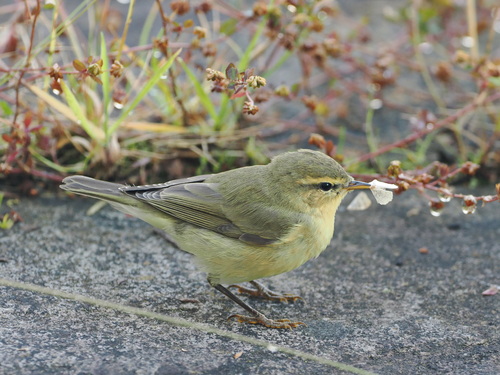
Willow Warbler (Phylloscopus trochilus) Willow Warbler
Cetti's Warbler (Cettia cetti) Cetti's Warbler

Media

Loading…

In short

The most reliable field mark to separate Willow Warbler from Cetti's Warbler is structure: Willow Warbler is slimmer, longer-winged, and more elegant, with a noticeably longer primary projection and a shorter, more rounded tail, while Cetti's Warbler is rounder, short-winged, and broad-tailed. In all plumages, Willow Warbler shows plain greenish-brown upperparts and paler underparts, often with a yellowish wash, and lacks wingbars; Cetti's Warbler is richer chestnut-brown above and pale grey-brown below, with a strong pale supercilium and a longer, rounded tail. Juvenile Willow Warblers are yellower below than adults, while juvenile Cetti's are similar to adults but can show dark tongue spots (not visible in field). Habitat and behavior also help: Willow Warbler prefers open woodland and is often seen flitting through trees, while Cetti's Warbler skulks in dense, damp thickets near water. Voice is a clincher if heard: Willow Warbler gives a soft, descending song and disyllabic call, while Cetti's explodes with loud, abrupt bursts.

Identification tips

  1. Primary projection: Willow Warbler shows a long primary projection (wingtip extends well beyond tertials), visible both perched and in flight; Cetti's Warbler has short, rounded wings with little or no primary projection. This is reliable for all ages.
  2. Tail shape and length: Cetti's Warbler has a noticeably longer, broader, and more rounded tail, often held cocked; Willow Warbler's tail is shorter and more square-tipped. This is visible in all plumages.
  3. Overall structure (jizz): Willow Warbler is slim, elegant, and long-winged, with a more delicate appearance; Cetti's is round-bodied, short-necked, and appears bulkier, especially when perched.
  4. Leg color: Willow Warbler has paler, pinkish-yellow legs; Cetti's Warbler's leg color is not described as diagnostic, but Willow Warbler's pale legs contrast with the dark legs of Chiffchaff, not Cetti's.
  5. Bill: Willow Warbler has a longer, paler bill; Cetti's bill is not described as distinctive, but Willow Warbler's bill is relatively fine and pointed.
  6. Plumage color: Willow Warbler is greenish-brown above and off-white to yellowish below, sometimes with a yellow wash (especially juveniles); Cetti's is rich chestnut or dark reddish-brown above and pale grey-brown below, with a more contrasting pale supercilium.
  7. Supercilium (eyebrow): Cetti's Warbler has a strong, narrow, pale grey supercilium arching over the eye; Willow Warbler's supercilium is less contrasting and less sharply defined.
  8. Wingbars: Both species lack wingbars, so this is not a separator.
  9. Juvenile plumage: Willow Warbler juveniles are yellower below than adults; Cetti's juveniles are similar to adults in the field, with no obvious external differences except fresher plumage.
  10. Flight style: Willow Warbler flies with a graceful, fluttering movement, often in open woodland; Cetti's Warbler flies low, with a whirring, direct flight, quickly diving into cover.
  11. Habitat: Willow Warbler prefers open woodlands with scattered trees and ground cover, away from water; Cetti's is almost always in dense, damp thickets near water.
  12. Song: Willow Warbler's song is a soft, descending, repetitive whistle; Cetti's is a loud, explosive burst. If you hear the song, identification is straightforward.
  13. Call: Willow Warbler gives a soft, disyllabic 'hoo-eet'; Cetti's call is not described here, but its song is diagnostic.
  14. Season and range: Willow Warbler is a widespread migrant, present in Europe mainly in spring and summer; Cetti's is resident or short-distance migrant, present year-round in suitable habitat.
  15. Pitfalls: Willow Warbler can be confused with Chiffchaff, but Cetti's is structurally and behaviorally very different. Be careful with brief, obscured views in dense vegetation, where Cetti's may be glimpsed as a brownish warbler; look for tail length, wing shape, and habitat.

Size

Willow Warbler is slightly smaller and lighter: 11–12.5 cm in length and 7–15 g in weight [wikipedia]. Cetti's Warbler is larger and heavier, at 13–14 cm and 12–15 g (males heavier than females) [wikipedia]. In the field, Cetti's looks bulkier, with a noticeably longer and broader tail, while Willow Warbler appears more delicate and slim. The difference is subtle but can be appreciated with experience, especially in direct comparison.

Plumage

Juvenile Willow Warblers are yellower below than adults, but otherwise resemble adults: greenish-brown above, off-white to yellowish below, with plain greenish-brown wings and no wingbars [wikipedia]. Cetti's Warbler juveniles are similar to adults in the field, with rich chestnut or dark reddish-brown upperparts, pale grey-brown underparts, and a strong pale supercilium; the tongue spots are not visible in the field. Adults of both species lack wingbars, but Cetti's Warbler always looks warmer and richer brown above, with a more contrasting pale eyebrow and a longer, rounded tail. Willow Warbler's upperparts are greener or browner depending on subspecies, but always plainer and less rufous than Cetti's. In flight, Willow Warbler's longer primary projection is visible as a longer wingtip beyond the tertials, while Cetti's has short, rounded wings and a broad, rounded tail.

Behaviour

Willow Warbler is active and often flits through open woodland, frequently perching in the open or moving through the canopy and lower branches. It is more likely to be seen feeding in trees or bushes, sometimes hovering briefly. Cetti's Warbler is secretive, usually skulking low in dense, damp vegetation near water, and rarely perches in the open. When flushed, Cetti's often flies a short distance with a whirring, low flight, quickly diving back into cover. Willow Warbler's movements are more graceful and less hurried, while Cetti's is abrupt and furtive.

Habitat

Willow Warbler breeds in open woodlands with trees and ground cover, especially birch, alder, and willow, across northern and temperate Europe and the Palearctic [wikipedia]. It avoids dense, wet thickets. Cetti's Warbler is tied to thick, shrubby vegetation in damp areas near ponds, lakes, marshes, and rivers, mostly in southern and western Europe, northwest Africa, and parts of Asia [wikipedia]. In areas of overlap, Willow Warbler is found in drier, more open woodland, while Cetti's is almost always near water in dense undergrowth.

Voice

Willow Warbler's song is a simple, repetitive, descending whistle, and its contact call is a soft, disyllabic 'hoo-eet' [wikipedia]. Cetti's Warbler gives a loud, explosive song in abrupt bursts, with a unique structure that is unmistakable if heard [wikipedia]. The call notes are not similar: Willow Warbler's is softer and more musical, while Cetti's is sharp and abrupt. Voice is a definitive field mark if heard well.

Submit a better description

Use the same sections as the comparison. Your text is published immediately.

The most reliable field mark to separate Willow Warbler from Cetti's Warbler is structure: Willow Warbler is slimmer, longer-winged, and more elegant, with a noticeably longer primary projection and a shorter, more rounded tail, while Cetti's Warbler is rounder, short-winged, and broad-tailed. In all plumages, Willow Warbler shows plain greenish-brown upperparts and paler underparts, often with a yellowish wash, and lacks wingbars; Cetti's Warbler is richer chestnut-brown above and pale grey-brown below, with a strong pale supercilium and a longer, rounded tail. Juvenile Willow Warblers are yellower below than adults, while juvenile Cetti's are similar to adults but can show dark tongue spots (not visible in field). Habitat and behavior also help: Willow Warbler prefers open woodland and is often seen flitting through trees, while Cetti's Warbler skulks in dense, damp thickets near water. Voice is a clincher if heard: Willow Warbler gives a soft, descending song and disyllabic call, while Cetti's explodes with loud, abrupt bursts.

  1. Primary projection: Willow Warbler shows a long primary projection (wingtip extends well beyond tertials), visible both perched and in flight; Cetti's Warbler has short, rounded wings with little or no primary projection. This is reliable for all ages.
  2. Tail shape and length: Cetti's Warbler has a noticeably longer, broader, and more rounded tail, often held cocked; Willow Warbler's tail is shorter and more square-tipped. This is visible in all plumages.
  3. Overall structure (jizz): Willow Warbler is slim, elegant, and long-winged, with a more delicate appearance; Cetti's is round-bodied, short-necked, and appears bulkier, especially when perched.
  4. Leg color: Willow Warbler has paler, pinkish-yellow legs; Cetti's Warbler's leg color is not described as diagnostic, but Willow Warbler's pale legs contrast with the dark legs of Chiffchaff, not Cetti's.
  5. Bill: Willow Warbler has a longer, paler bill; Cetti's bill is not described as distinctive, but Willow Warbler's bill is relatively fine and pointed.
  6. Plumage color: Willow Warbler is greenish-brown above and off-white to yellowish below, sometimes with a yellow wash (especially juveniles); Cetti's is rich chestnut or dark reddish-brown above and pale grey-brown below, with a more contrasting pale supercilium.
  7. Supercilium (eyebrow): Cetti's Warbler has a strong, narrow, pale grey supercilium arching over the eye; Willow Warbler's supercilium is less contrasting and less sharply defined.
  8. Wingbars: Both species lack wingbars, so this is not a separator.
  9. Juvenile plumage: Willow Warbler juveniles are yellower below than adults; Cetti's juveniles are similar to adults in the field, with no obvious external differences except fresher plumage.
  10. Flight style: Willow Warbler flies with a graceful, fluttering movement, often in open woodland; Cetti's Warbler flies low, with a whirring, direct flight, quickly diving into cover.
  11. Habitat: Willow Warbler prefers open woodlands with scattered trees and ground cover, away from water; Cetti's is almost always in dense, damp thickets near water.
  12. Song: Willow Warbler's song is a soft, descending, repetitive whistle; Cetti's is a loud, explosive burst. If you hear the song, identification is straightforward.
  13. Call: Willow Warbler gives a soft, disyllabic 'hoo-eet'; Cetti's call is not described here, but its song is diagnostic.
  14. Season and range: Willow Warbler is a widespread migrant, present in Europe mainly in spring and summer; Cetti's is resident or short-distance migrant, present year-round in suitable habitat.
  15. Pitfalls: Willow Warbler can be confused with Chiffchaff, but Cetti's is structurally and behaviorally very different. Be careful with brief, obscured views in dense vegetation, where Cetti's may be glimpsed as a brownish warbler; look for tail length, wing shape, and habitat.

Willow Warbler is slightly smaller and lighter: 11–12.5 cm in length and 7–15 g in weight [wikipedia]. Cetti's Warbler is larger and heavier, at 13–14 cm and 12–15 g (males heavier than females) [wikipedia]. In the field, Cetti's looks bulkier, with a noticeably longer and broader tail, while Willow Warbler appears more delicate and slim. The difference is subtle but can be appreciated with experience, especially in direct comparison.

Juvenile Willow Warblers are yellower below than adults, but otherwise resemble adults: greenish-brown above, off-white to yellowish below, with plain greenish-brown wings and no wingbars [wikipedia]. Cetti's Warbler juveniles are similar to adults in the field, with rich chestnut or dark reddish-brown upperparts, pale grey-brown underparts, and a strong pale supercilium; the tongue spots are not visible in the field. Adults of both species lack wingbars, but Cetti's Warbler always looks warmer and richer brown above, with a more contrasting pale eyebrow and a longer, rounded tail. Willow Warbler's upperparts are greener or browner depending on subspecies, but always plainer and less rufous than Cetti's. In flight, Willow Warbler's longer primary projection is visible as a longer wingtip beyond the tertials, while Cetti's has short, rounded wings and a broad, rounded tail.

Willow Warbler is active and often flits through open woodland, frequently perching in the open or moving through the canopy and lower branches. It is more likely to be seen feeding in trees or bushes, sometimes hovering briefly. Cetti's Warbler is secretive, usually skulking low in dense, damp vegetation near water, and rarely perches in the open. When flushed, Cetti's often flies a short distance with a whirring, low flight, quickly diving back into cover. Willow Warbler's movements are more graceful and less hurried, while Cetti's is abrupt and furtive.

Willow Warbler breeds in open woodlands with trees and ground cover, especially birch, alder, and willow, across northern and temperate Europe and the Palearctic [wikipedia]. It avoids dense, wet thickets. Cetti's Warbler is tied to thick, shrubby vegetation in damp areas near ponds, lakes, marshes, and rivers, mostly in southern and western Europe, northwest Africa, and parts of Asia [wikipedia]. In areas of overlap, Willow Warbler is found in drier, more open woodland, while Cetti's is almost always near water in dense undergrowth.

Willow Warbler's song is a simple, repetitive, descending whistle, and its contact call is a soft, disyllabic 'hoo-eet' [wikipedia]. Cetti's Warbler gives a loud, explosive song in abrupt bursts, with a unique structure that is unmistakable if heard [wikipedia]. The call notes are not similar: Willow Warbler's is softer and more musical, while Cetti's is sharp and abrupt. Voice is a definitive field mark if heard well.

Discard your changes?

You have unsaved edits. If you leave now, those changes will be lost.

Willow Warbler · Cetti's Warbler · My Tricky Birds