
Graubürzel-Singhabicht vs Gabarhabicht
Melierax metabates gegen Micronisus gabar
Ein Quiz mit Graubürzel-Singhabicht und Gabarhabicht spielen
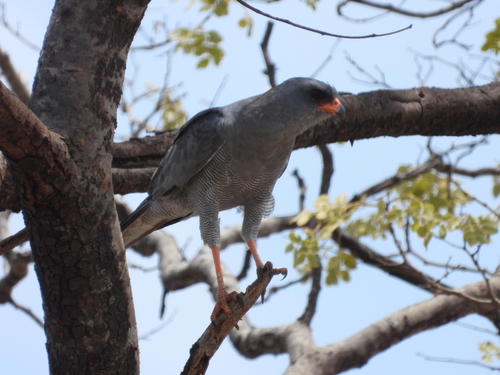 Graubürzel-Singhabicht
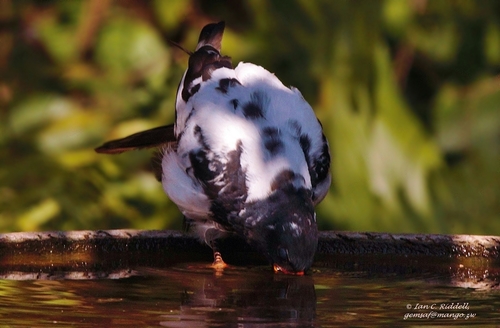 Gabarhabicht
Kurz gesagt
The most reliable field mark to separate Dark Chanting-Goshawk from Gabar Goshawk is size: Dark Chanting-Goshawk is much bulkier and heavier, with a more upright stance, while Gabar Goshawk is distinctly smaller and more lightly built. For immature birds, note that juvenile Dark Chanting-Goshawks are brownish and buzzard-like, whereas immature Gabar Goshawks are browner but with untidy barring and yellow legs/cere. Adult plumage is also diagnostic: Dark Chanting-Goshawk shows dark grey upperparts with finely barred white underparts and orange-red legs, while Gabar Goshawk (pale morph) has a white rump, more extensive underpart barring, and yellow (immature) or red (adult) legs/cere. Both species may be seen perched or hunting from a perch, but the size and structure difference is striking in the field.
Bestimmungstipps
- Size is the most immediate clue: Dark Chanting-Goshawk is much larger and bulkier than Gabar Goshawk; even at a distance, the difference is striking. Use this first, especially if seen together with other raptors for scale.
- Juvenile/immature plumage: Juvenile Dark Chanting-Goshawk is brownish and buzzard-like, with a broad-winged, long-tailed silhouette. Juvenile Gabar Goshawk is browner than adult, with untidier barring and yellow legs/cere, but always shows a white rump in the pale morph. If you see a brownish raptor with a white rump, think Gabar.
- White rump (Gabar only): The pale morph Gabar Goshawk (adult and immature) always shows a conspicuous white rump in flight and often when perched; Dark Chanting-Goshawk never shows a white rump at any age.
- Leg and cere color: Adult Dark Chanting-Goshawk has orange-red legs and cere; adult Gabar Goshawk has red legs and cere, but immatures have yellow legs and cere. If you see yellow, it's an immature Gabar.
- Underpart barring: Dark Chanting-Goshawk has white underparts finely barred with black, but only below the breast; the breast itself is dark grey. Gabar Goshawk (pale morph) has more extensive white and grey barring on the chest, thighs, and underwings.
- Tail pattern: Dark Chanting-Goshawk has a tail with broad black and white bars, while Gabar Goshawk's tail is dark grey with barring, but less contrasting and lacks the broad white bars.
- Structure and stance: Dark Chanting-Goshawk stands very upright with long legs and a bulky build. Gabar Goshawk is more lightly built and less upright.
- Head and upperparts: Dark Chanting-Goshawk is dark grey on the head, breast, and upperparts. Gabar Goshawk (pale morph) is mostly grey above, with a paler head and always a white rump.
- Dark morph Gabar: If you see a small, almost entirely black raptor, it's a dark morph Gabar Goshawk; Dark Chanting-Goshawk never appears this dark all over.
- Buzzard confusion: Juvenile Dark Chanting-Goshawk may be confused with buzzards due to brown plumage, but the long tail and broad wings, plus upright stance and size, help separate it from both buzzards and Gabar Goshawk.
- Sexual dimorphism: Both species have females larger than males, but the size gap between species is much greater than the difference between sexes within a species.
- Perched vs. flight views: In flight, focus on the white rump (Gabar) and overall size. When perched, check leg color, stance, and underpart barring.
- Nest context: If you see a nest decorated with spider webs and possibly live spiders, it's likely Gabar Goshawk.
- Behavioral clues: Gabar Goshawk is more likely to be seen attacking weaver nests or chasing small birds through trees, while Dark Chanting-Goshawk often follows mammals or people to catch flushed prey.
- Overlap and pitfalls: Both species can occur in the same habitats and regions, so do not rely on location alone. Always check multiple field marks, especially size, rump color, and underpart pattern.
Größe
Dark Chanting-Goshawk is significantly larger and heavier (average body mass ~758.5g) than Gabar Goshawk (~165g). The former is a medium-sized, bulky hawk, while the latter is small and lightly built. Female Gabar Goshawks can approach the lower end of male Dark Chanting-Goshawk mass, but even then, the difference in bulk and overall impression remains obvious. In flight or perched, Dark Chanting-Goshawk appears much more robust, with longer legs and a more upright posture.
Gefieder
Juvenile Dark Chanting-Goshawks are brownish overall, resembling buzzards with broad wings and long tails, but lack the white rump of Gabar. Juvenile Gabar Goshawks are also browner than adults, with untidier barring on the chest and yellow legs and cere; their pale morph always shows a conspicuous white rump, even in immature plumage. Adult Dark Chanting-Goshawk is dark grey above with a dark head and breast, white underparts finely barred with black, black primaries, and a tail with broad black and white bars; legs and cere are orange-red. Adult Gabar Goshawk (pale morph) is mostly grey above, white below with grey barring, and has a striking white rump and red legs/cere (yellow in immatures). The dark morph Gabar is almost entirely black, which does not resemble Dark Chanting-Goshawk. In flight, the white rump of Gabar is a key mark at all ages except in the rare dark morph.
Verhalten
Both species hunt from perches and may swoop to the ground or pursue prey in flight. Dark Chanting-Goshawk often follows large animals or people to catch flushed prey, while Gabar Goshawk is more likely to flush small birds from trees and chase them energetically. Gabar Goshawk is also known for attacking weaver nests. Both build stick platform nests, but Gabar Goshawk's use of live spiders and spider webs for nest camouflage is unique. Socially, both can be seen alone or in pairs, especially in breeding season.
Lebensraum
Both species occur widely across sub-Saharan Africa and southern Arabia, often overlapping in range. Habitat preferences are not strongly diagnostic between the two, as both can be found in open woodland and savanna. However, Gabar Goshawk may be more associated with thorny trees such as acacia, especially for nesting.
Graubürzel-Singhabicht · Gabarhabicht · Meine schwierigen Vögel