
Charrán Común vs Charrán Arábigo
Sterna hirundo frente a Sterna repressa
Juega un quiz con Charrán Común y Charrán Arábigo
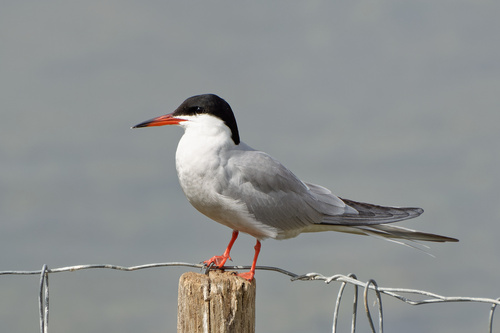 Charrán Común
 Charrán Arábigo
En breve
La marca de campo más confiable para separar el Charrán Común del Charrán Arábigo es el plumaje: los Charranes Arábigos adultos en plumaje de cría muestran partes superiores grises uniformes y mejillas notablemente más blancas, mientras que los Charranes Comunes tienen partes superiores grises más claras y menos contraste en la cara. Los plumajes juveniles e inmaduros no están completamente descritos para el Charrán Arábigo, pero los juveniles de Charrán Común se separan fácilmente de aves de otras especies de edad similar. Estructuralmente, el Charrán Común es ligeramente más grande y robusto, con patas más largas y una forma de ala más triangular, mientras que el Charrán Arábigo es más pequeño y más delicado. Ambas especies son costeras, pero sus rangos no se superponen: el Charrán Común es común en regiones templadas y subárticas, mientras que el Charrán Arábigo está restringido al Mar Rojo, el océano Índico occidental y costas adyacentes. Utiliza una combinación de plumaje, estructura y ubicación para una identificación confiable.
Consejos de identificación
- La ubicación es clave: Si estás fuera del Mar Rojo, el Golfo Pérsico o el océano Índico occidental, casi con seguridad estás observando un Charrán Común, no un Charrán Arábigo. Por el contrario, dentro del rango del Charrán Arábigo, ambas especies podrían ocurrir como vagantes, pero el Charrán Común es raro.
- Plumaje de cría adulto: Busca partes superiores grises uniformes y mejillas blancas nítidas en el Charrán Arábigo; el Charrán Común es más pálido en la parte superior con menos contraste facial.
- Patrón facial: El Charrán Arábigo en plumaje de cría tiene mejillas más blancas, lo que hace que la cara resalte más; las mejillas del Charrán Común son menos distintas del resto de la cabeza.
- Forma del ala y vuelo: El Charrán Común tiene alas más largas, más triangulares y más rígidas, lo que le da un vuelo más potente y directo. El Charrán Arábigo es más pequeño y probablemente más ágil, pero esto es sutil y se debe usar mejor con otras marcas.
- Color del pico y las patas: El pico del Charrán Común es rojo-naranja con una punta negra (excepto en algunas subespecies), y las patas son de un rojo brillante. El pico y las patas del Charrán Arábigo son más oscuros, pero esto no siempre es confiable a distancia.
- Tamaño y estructura: El Charrán Común es ligeramente más grande, con una cabeza más grande, un cuello más grueso y patas más largas. El Charrán Arábigo es más delicado en general.
- Patrón del ala superior: El Charrán Común desarrolla una cuña oscura en las alas durante la temporada de cría; las alas del Charrán Arábigo permanecen más uniformes.
- Aves juveniles/inmaduros: Se dice que los juveniles de Charrán Común se separan fácilmente de otras especies, pero no se proporcionan marcas detalladas para el Charrán Arábigo, por lo que se necesita precaución con las aves jóvenes.
- Plumaje no reproductivo: El Charrán Común puede mostrar un rabadilla grisácea y menos contraste facial; el plumaje no reproductivo del Charrán Arábigo no se describe en detalle, así que usa precaución.
- Contexto del hábitat: El Charrán Común puede verse en el interior durante la migración; el Charrán Arábigo es estrictamente costero.
- Longitud de la cola: No se detalla para el Charrán Arábigo, pero el Charrán Común tiene streamers de cola moderadamente largos; si los streamers de la cola son muy largos, considera otras especies.
- Bandadas mixtas: En áreas de superposición, busca contraste facial y color de las partes superiores para identificar al Charrán Arábigo entre los Charranes Comunes.
- Voz: No se proporciona información diagnóstica; no confíes en los llamados para la separación.
- Trampas: Ten cuidado con las condiciones de iluminación que pueden alterar la apariencia del color de las partes superiores y el contraste facial, especialmente a distancia o en luz dura.
- Cuando tengas dudas: Usa una combinación de rango, estructura y patrón facial para la separación más confiable, y documenta con fotos si es posible.
Tamaño
Los datos de masa directa solo están disponibles para el Charrán Arábigo (123.5 g [wikidata]); el Charrán Común es similar o ligeramente más grande por reputación, con una construcción más robusta, cabeza más grande y patas más largas. En el campo, el Charrán Común puede parecer más voluminoso y poderoso en vuelo, mientras que el Charrán Arábigo es más pequeño y más delicado en general. Sin embargo, el tamaño por sí solo es sutil y se debe usar mejor en conjunto con otras marcas.
Plumaje
- Plumaje juvenil/inmaduro: El plumaje juvenil detallado para el Charrán Arábigo no se describe en las fuentes, pero se señala que los juveniles de Charrán Común se separan fácilmente de aves de otras especies de edad similar (no se proporcionan detalles). Sin especificaciones, la separación basada en la edad es limitada.
- Plumaje de cría adulto: Los adultos de Charrán Arábigo en plumaje de cría tienen partes superiores grises uniformes y mejillas notablemente más blancas, creando un fuerte contraste facial. Los adultos de Charrán Común tienen partes superiores grises más pálidas y mejillas blancas menos definidas. El Charrán Común puede desarrollar una cuña oscura en las alas a medida que avanza la temporada de cría, mientras que las alas del Charrán Arábigo permanecen más uniformemente coloreadas.
- Plumaje no reproductivo: No se describe completamente para el Charrán Arábigo, pero el Charrán Común puede mostrar un rabadilla grisácea y menos contraste en la cara.
- Color del pico y las patas: El Charrán Común tiene un pico rojo-naranja con una punta negra (excepto en algunas subespecies) y patas rojas brillantes; el pico y las patas del Charrán Arábigo no se describen en detalle, pero son generalmente más oscuros.
- Patrón del ala en vuelo: Las alas del Charrán Común son más triangulares y rígidas, con solo las cuatro primarias más internas translúcidas contra el cielo, mientras que el estilo de vuelo y la translucidez del ala del Charrán Arábigo no se detallan.
Comportamiento
El Charrán Común tiene un vuelo más potente y directo con alas más rígidas y triangulares, reflejando su estructura robusta. El Charrán Arábigo es más pequeño y probablemente más ágil y delicado en vuelo, aunque no se describe un estilo de vuelo específico. Ambas especies son costeras y forrajean sobre el agua, pero el Charrán Común es fuertemente migratorio y puede verse en el interior durante la migración, mientras que el Charrán Arábigo está más localizado en áreas costeras tropicales.
Hábitat
El Charrán Común cría en regiones templadas y subárticas de Europa, Asia y América del Norte, y pasa el invierno en áreas costeras tropicales y subtropicales en todo el mundo. El Charrán Arábigo está restringido al Mar Rojo, el Cuerno de África, el Golfo Pérsico y costas adyacentes de Pakistán y el oeste de India. No hay superposición de rangos: ver un charrán en Europa o América del Norte descarta al Charrán Arábigo, mientras que un charrán en el Mar Rojo o el Golfo Pérsico es más probable que sea un Charrán Arábigo. Ambas especies utilizan hábitats costeros, pero el Charrán Común puede encontrarse más al interior durante la migración.