
Motmot

Cuco Grande vs Cuco Silbador

Hierococcyx sparverioides frente a Hierococcyx nisicolor

Juega un quiz con Cuco Grande y Cuco Silbador
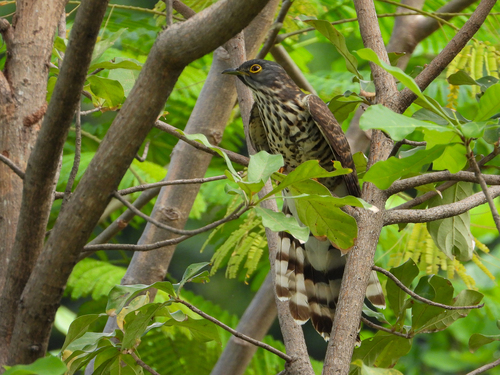
Cuco Grande (Hierococcyx sparverioides) Cuco Grande
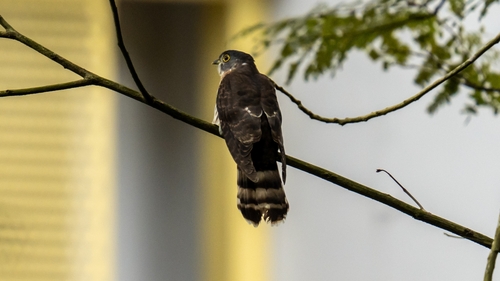
Cuco Silbador (Hierococcyx nisicolor) Cuco Silbador

Medios

Cargando…

En breve

The most reliable field mark to separate Large Hawk-Cuckoo from Hodgson's Hawk-Cuckoo is the black patch on the chin of adult Large Hawk-Cuckoo, which Hodgson's lacks. Both species are similar in overall shape and behavior, but Large Hawk-Cuckoo is somewhat larger and bulkier. Juvenile and immature plumages are not detailed in the sources, so adult chin pattern is the key. Calls are similar, but Large Hawk-Cuckoo's does not rise in crescendo. Use size and chin pattern for best separation in the field.

Consejos de identificación

  1. Chin Patch (Adults): Look for a black patch on the chin—present in adult Large Hawk-Cuckoo, absent in Hodgson's Hawk-Cuckoo. This is the single most reliable field mark when seen well.
  2. Overall Size: Large Hawk-Cuckoo is noticeably larger and bulkier than Hodgson's, but size can be hard to judge unless you have direct comparison or experience.
  3. Plumage Similarity: Both species have similar hawk-like barring and coloration, so do not rely on general plumage for separation.
  4. Juvenile/Immature Birds: No distinctive juvenile or upperwing pattern differences are described, so use size and chin pattern if possible. Immature birds may be very difficult to separate in the field.
  5. Perched vs. Flight Views: Chin patch is best seen on perched birds; in flight, rely on size and structure.
  6. Voice: Large Hawk-Cuckoo's call is repetitive but does not rise in crescendo. If you know the calls, this may help, but both species are vocally similar overall.
  7. Range and Context: If you are in the far north or east of the Himalayas, Large Hawk-Cuckoo is more likely, but both species overlap in northeast India and adjacent regions.
  8. Brood Parasitism Behavior: Not useful for field identification, as both species are brood parasites and behave similarly.
  9. Habitat: Both species use similar habitats where they overlap; do not use habitat alone for separation.
  10. Sex and Season: No described sexual dimorphism or seasonal plumage differences relevant to field ID.
  11. Pitfalls: Do not confuse the black chin patch of Large Hawk-Cuckoo with shadow or dirt—ensure good light and angle.
  12. When Marks Fail: If you cannot see the chin clearly and size is ambiguous, it may not be possible to separate the two with confidence.
  13. Community Experience: Local birders may have additional tips based on subtle behavioral or vocal differences, but these are not documented in the sources.
  14. Summary: Prioritize chin patch (adults), then size; treat all other features as supportive but not diagnostic.

Tamaño

Large Hawk-Cuckoo is distinctly larger and bulkier than Hodgson's Hawk-Cuckoo. While precise measurements for Large Hawk-Cuckoo are not provided, Hodgson's Hawk-Cuckoo averages 81 grams in body mass [wikidata]. In direct comparison, Large Hawk-Cuckoo appears more robust, which can be useful when seen side by side or with experience. However, size alone can be misleading without a reference, so always confirm with plumage marks.

Plumaje

The only directly described plumage difference is the presence of a black patch on the chin of adult Large Hawk-Cuckoo, which is absent in Hodgson's. No age-specific or upperwing pattern differences are detailed in the sources for either species, so separation of juveniles or birds in flight relies on overall size and structure. Both species otherwise have similar hawk-like barring and coloration, making the chin patch the most reliable visual cue in adults.

Comportamiento

Both species are brood parasites and exhibit similar behaviors, such as laying eggs in the nests of other birds. Hodgson's Hawk-Cuckoo chicks are noted for displaying gape-colored patches under the wing to stimulate feeding, but this is not observable in the field for identification purposes. In general, both species perch and fly in a hawk-like manner, and their jizz is similar.

Hábitat

Both species overlap in parts of their range, particularly in the Himalayas and northeastern India. Large Hawk-Cuckoo has a broader breeding distribution, extending further north and east, while Hodgson's is more restricted to northeast India, Myanmar, southern China, and southeast Asia. However, habitat preference is not diagnostic in areas of overlap.

Voz

Both species have loud, repetitive calls. Large Hawk-Cuckoo's call is similar to that of the common hawk-cuckoo but does not rise in crescendo, which may help distinguish it from Hodgson's if you are familiar with the vocalizations. However, the sources do not provide a direct comparison of Hodgson's call, so voice is only a supporting clue.

Enviar una descripción mejor

Usa las mismas secciones que la comparación. El texto se publica al momento.

The most reliable field mark to separate Large Hawk-Cuckoo from Hodgson's Hawk-Cuckoo is the black patch on the chin of adult Large Hawk-Cuckoo, which Hodgson's lacks. Both species are similar in overall shape and behavior, but Large Hawk-Cuckoo is somewhat larger and bulkier. Juvenile and immature plumages are not detailed in the sources, so adult chin pattern is the key. Calls are similar, but Large Hawk-Cuckoo's does not rise in crescendo. Use size and chin pattern for best separation in the field.

  1. Chin Patch (Adults): Look for a black patch on the chin—present in adult Large Hawk-Cuckoo, absent in Hodgson's Hawk-Cuckoo. This is the single most reliable field mark when seen well.
  2. Overall Size: Large Hawk-Cuckoo is noticeably larger and bulkier than Hodgson's, but size can be hard to judge unless you have direct comparison or experience.
  3. Plumage Similarity: Both species have similar hawk-like barring and coloration, so do not rely on general plumage for separation.
  4. Juvenile/Immature Birds: No distinctive juvenile or upperwing pattern differences are described, so use size and chin pattern if possible. Immature birds may be very difficult to separate in the field.
  5. Perched vs. Flight Views: Chin patch is best seen on perched birds; in flight, rely on size and structure.
  6. Voice: Large Hawk-Cuckoo's call is repetitive but does not rise in crescendo. If you know the calls, this may help, but both species are vocally similar overall.
  7. Range and Context: If you are in the far north or east of the Himalayas, Large Hawk-Cuckoo is more likely, but both species overlap in northeast India and adjacent regions.
  8. Brood Parasitism Behavior: Not useful for field identification, as both species are brood parasites and behave similarly.
  9. Habitat: Both species use similar habitats where they overlap; do not use habitat alone for separation.
  10. Sex and Season: No described sexual dimorphism or seasonal plumage differences relevant to field ID.
  11. Pitfalls: Do not confuse the black chin patch of Large Hawk-Cuckoo with shadow or dirt—ensure good light and angle.
  12. When Marks Fail: If you cannot see the chin clearly and size is ambiguous, it may not be possible to separate the two with confidence.
  13. Community Experience: Local birders may have additional tips based on subtle behavioral or vocal differences, but these are not documented in the sources.
  14. Summary: Prioritize chin patch (adults), then size; treat all other features as supportive but not diagnostic.

Large Hawk-Cuckoo is distinctly larger and bulkier than Hodgson's Hawk-Cuckoo. While precise measurements for Large Hawk-Cuckoo are not provided, Hodgson's Hawk-Cuckoo averages 81 grams in body mass [wikidata]. In direct comparison, Large Hawk-Cuckoo appears more robust, which can be useful when seen side by side or with experience. However, size alone can be misleading without a reference, so always confirm with plumage marks.

The only directly described plumage difference is the presence of a black patch on the chin of adult Large Hawk-Cuckoo, which is absent in Hodgson's. No age-specific or upperwing pattern differences are detailed in the sources for either species, so separation of juveniles or birds in flight relies on overall size and structure. Both species otherwise have similar hawk-like barring and coloration, making the chin patch the most reliable visual cue in adults.

Both species are brood parasites and exhibit similar behaviors, such as laying eggs in the nests of other birds. Hodgson's Hawk-Cuckoo chicks are noted for displaying gape-colored patches under the wing to stimulate feeding, but this is not observable in the field for identification purposes. In general, both species perch and fly in a hawk-like manner, and their jizz is similar.

Both species overlap in parts of their range, particularly in the Himalayas and northeastern India. Large Hawk-Cuckoo has a broader breeding distribution, extending further north and east, while Hodgson's is more restricted to northeast India, Myanmar, southern China, and southeast Asia. However, habitat preference is not diagnostic in areas of overlap.

Both species have loud, repetitive calls. Large Hawk-Cuckoo's call is similar to that of the common hawk-cuckoo but does not rise in crescendo, which may help distinguish it from Hodgson's if you are familiar with the vocalizations. However, the sources do not provide a direct comparison of Hodgson's call, so voice is only a supporting clue.

¿Descartar los cambios?

Tienes ediciones sin guardar. Si sales ahora, se perderán.

Cuco Grande · Cuco Silbador · Mis aves difíciles