

Cuclillo de Manglar vs Cuitlacoche Oscuro
Coccyzus minor frente a Allenia fusca
Juega un quiz con Cuclillo de Manglar y Cuitlacoche Oscuro
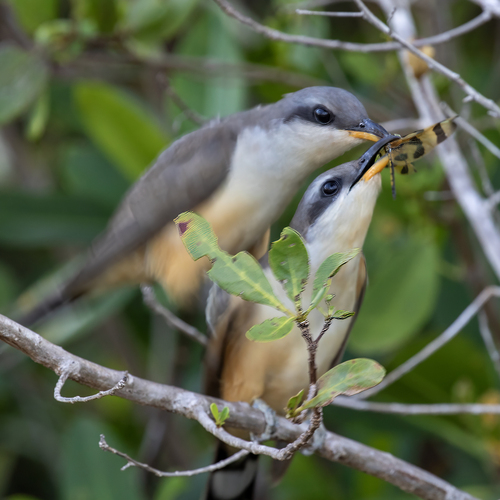 Cuclillo de Manglar
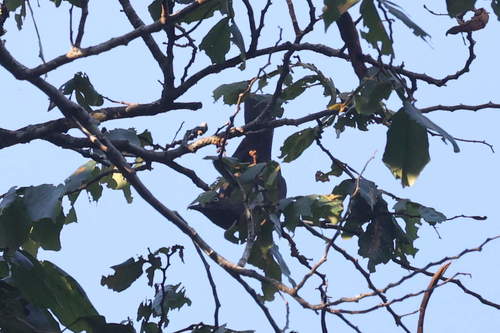 Cuitlacoche Oscuro
En breve
La marca de campo más confiable para separar el Cuclillo de Manglar del Cuitlacoche Oscuro es la presencia de una máscara facial negra audaz y partes inferiores color canela en el cuclillo, frente a las partes inferiores blanquecinas con marcas escamosas y la falta de una máscara facial en el cuitlacoche. En vuelo o posado, la larga cola del cuclillo con el lado inferior blanco y negro y el anillo ocular amarillo destacan, mientras que el cuitlacoche muestra una sola barra alar blanca y plumas de la cola con puntas blancas. La forma del pico también es clave: el pico del cuclillo es largo, negro con amarillo en la mandíbula inferior, y fuertemente curvado, mientras que el del cuitlacoche es más corto, solo ligeramente curvado, y carece de un fuerte contraste de color. Ambos son similares en tamaño, así que concéntrate en la cara, las partes inferiores y el pico para una identificación confiable.
Consejos de identificación
- Máscara facial (todas las edades): El Cuclillo de Manglar tiene una máscara facial negra audaz; el Cuitlacoche Oscuro no. Esta es la forma más rápida de separarlos si la cabeza es visible.
- Color y patrón de las partes inferiores (todas las edades): El cuclillo muestra partes inferiores color canela lisas, mientras que el cuitlacoche tiene partes inferiores blanquecinas con un marcado escamoso gris-marrón audaz, especialmente en el pecho y los flancos. El patrón escamoso es único del cuitlacoche.
- Forma y color del pico (todas las edades): El pico del cuclillo es largo, fuertemente curvado, negro arriba con amarillo en la mandíbula inferior. El pico del cuitlacoche es más corto, solo ligeramente curvado, y carece de un fuerte contraste de color.
- Anillo ocular (todas las edades): El cuclillo tiene un anillo ocular amarillo conspicuo; el cuitlacoche no.
- Patrón de la cola (todas las edades): La cola del cuclillo es larga, marrón arriba, y blanco y negro abajo. La cola del cuitlacoche es de un marrón negro más oscuro con puntas blancas en las plumas exteriores, pero no es blanco y negro por debajo.
- Barra alar (todas las edades): El cuitlacoche muestra una sola barra alar blanca en el ala plegada; el cuclillo carece de barras alares.
- Coloración general (todas las edades): El cuclillo es marrón arriba con color canela abajo; el cuitlacoche es gris-marrón arriba con un rabadilla rojiza y partes inferiores blanquecinas, marcadas fuertemente.
- Forma de la cabeza y jizz (todas las edades): La cabeza del cuclillo parece más estilizada con una curva de pico más pronunciada; la cabeza del cuitlacoche es más redonda, más parecida a un zorzal.
- Postura (todas las edades): El cuclillo a menudo parece alargado y horizontal cuando está posado; el cuitlacoche es más erguido, como un zorzal.
- Vocalizaciones (todas las edades): Escucha los llamados guturales repetidos del cuclillo frente a la canción más suave, variada y melódica del cuitlacoche.
- Hábitat (todas las edades): Si está en manglares densos, es más probable que sea un cuclillo; en matorrales secos o de tierras altas, es más probable que sea un cuitlacoche, pero puede haber superposición.
- Longitud de la cola (todas las edades): La cola del cuclillo es proporcionalmente más larga, a menudo extendiéndose más allá de las puntas de las alas cuando está posado.
- Variación de subespecies (cuitlacoche): Todas las subespecies de cuitlacoche retienen las partes inferiores escamosas y la barra alar, pero algunas son más pálidas o más oscuras arriba. No dejes que esta variación te confunda si el patrón de las partes inferiores es visible.
- Sin marcas de vuelo específicas de edad: Ninguna de las especies muestra patrones distintivos de alas superiores juveniles o inmaduras, así que concéntrate en las marcas faciales y de las partes inferiores independientemente de la edad.
- Evita el tamaño como separador: Ambas especies son casi idénticas en masa y similares en longitud; no te bases en el tamaño percibido para la identificación.
Tamaño
Ambas especies son muy cercanas en tamaño y masa: el Cuclillo de Manglar promedia 66 g y el Cuitlacoche Oscuro 68 g [wikidata]. El cuclillo es ligeramente más largo (28–34 cm frente a 23 cm para el cuitlacoche), pero esta diferencia es sutil en el campo. Ninguna de las especies es notablemente más robusta o más delgada que la otra, así que el tamaño solo no es un separador confiable.
Plumaje
-
Patrón de alas juveniles/inmaduros: No se describen marcas específicas de patrón de alas superiores o de vuelo para ninguna de las especies en las fuentes, así que concéntrate en el plumaje de los adultos para la separación.
-
Cuclillo de Manglar (adulto): Muestra un cuerpo superior marrón, máscara facial negra, anillo ocular amarillo y partes inferiores color canela. La cola es larga, marrón arriba, y strikingly black-and-white below. El pico es negro arriba con amarillo en la mandíbula inferior y fuertemente curvado. Sin barras alares.
-
Cuitlacoche Oscuro (adulto): Tiene una cabeza y partes superiores gris-marrón oscuro con un tinte rojizo en la rabadilla, y una cola marrón negro más oscura con puntas blancas en las plumas exteriores. El ala plegada muestra una sola barra blanca. Las partes inferiores son blanquecinas con un marcado escamoso gris-marrón audaz, especialmente en el pecho y los flancos. El pico es más corto, solo ligeramente curvado, y carece del fuerte contraste de color del cuclillo. Sin máscara facial ni anillo ocular amarillo.
-
Variación de subespecies (cuitlacoche): Algunas subespecies son más pálidas o más oscuras, pero todas retienen las partes inferiores escamosas y la barra alar blanca.
Comportamiento
No se describen diferencias de comportamiento fuertes en las fuentes. Ambas especies son propensas a ser vistas posadas o moviéndose a través de vegetación densa. El cuclillo puede parecer más alargado y deliberado en movimiento, mientras que el cuitlacoche puede parecer un gran zorzal en postura y estilo de forrajeo, pero estas son sutiles y no siempre confiables en el campo.
Hábitat
El Cuclillo de Manglar se encuentra típicamente en hábitats de manglares neotropicales [wikipedia], mientras que el Cuitlacoche Oscuro es común en las Antillas Menores [wikipedia]. Ambas pueden ocurrir en áreas densas y arbustivas, pero el cuclillo está más estrechamente asociado con los manglares. Si se ve en un hábitat clásico de manglares, es más probable que sea un cuclillo, pero puede haber superposición de hábitat, así que no te bases únicamente en esto.
Voz
El Cuclillo de Manglar emite un llamado gutural 'gawk gawk gawk gawk gauk gauk' y a veces un solo 'whit' [wikipedia]. El Cuitlacoche Oscuro canta una serie de notas y frases variadas, que recuerdan a un sinsonte pero más suaves y lentas [wikipedia]. El llamado del cuclillo es más repetitivo y menos musical, mientras que el del cuitlacoche es más complejo y variable. Si escuchas un llamado repetido y áspero, piensa en cuclillo; si escuchas una canción más suave, melodiosa y variada, piensa en cuitlacoche.
Cuclillo de Manglar · Cuitlacoche Oscuro · Mis aves difíciles