

papa-lagarta-do-mangue vs scaly-breasted thrasher
Coccyzus minor versus Allenia fusca
Jogue um quiz com papa-lagarta-do-mangue e scaly-breasted thrasher
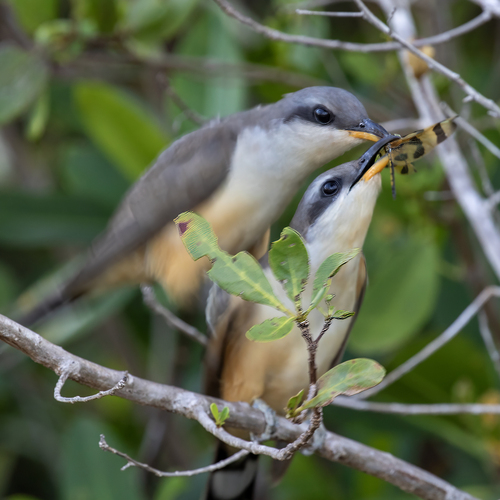 papa-lagarta-do-mangue
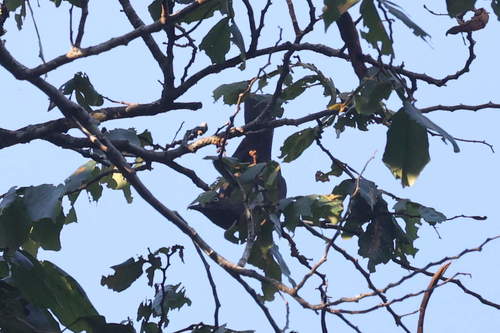 scaly-breasted thrasher
Em resumo
A marca de campo mais confiável para separar o papa-lagarta-do-mangue do scaly-breasted thrasher é a presença de uma máscara facial preta ousada e partes inferiores amareladas no papa-lagarta, em comparação com as partes inferiores brancas marcadas em escamas e a falta de máscara facial no thrasher. Em voo ou empoleirado, a longa cauda do papa-lagarta com parte inferior preta e branca e anel ocular amarelo se destaca, enquanto o thrasher exibe uma única barra alar branca e penas da cauda com pontas brancas. A forma do bico também é fundamental: o bico do papa-lagarta é longo, preto com amarelo na mandíbula inferior e fortemente curvado, enquanto o do thrasher é mais curto, apenas levemente curvado, e carece de forte contraste de cor. Ambos são semelhantes em tamanho, então concentre-se no rosto, partes inferiores e bico para uma identificação confiante.
Dicas de identificação
- Máscara facial (todas as idades): O papa-lagarta-do-mangue tem uma máscara facial preta ousada; o scaly-breasted thrasher não tem. Esta é a maneira mais rápida de separá-los se a cabeça estiver visível.
- Cor e padrão das partes inferiores (todas as idades): O papa-lagarta apresenta partes inferiores amareladas simples, enquanto o thrasher tem partes inferiores brancas com marcadores escamosos cinza-marrom ousados, especialmente no peito e flancos. O padrão escamoso é exclusivo do thrasher.
- Forma e cor do bico (todas as idades): O bico do papa-lagarta é longo, fortemente curvado, preto por cima com amarelo na mandíbula inferior. O bico do thrasher é mais curto, apenas levemente curvado, e carece de forte contraste de cor.
- Anel ocular (todas as idades): O papa-lagarta tem um anel ocular amarelo conspícuo; o thrasher não tem.
- Padrão da cauda (todas as idades): A cauda do papa-lagarta é longa, marrom por cima, e preta e branca por baixo. A cauda do thrasher é marrom-escura com pontas brancas nas penas externas, mas não é preta e branca por baixo.
- Barra alar (todas as idades): O thrasher exibe uma única barra alar branca na asa dobrada; o papa-lagarta não tem barras alares.
- Coloração geral (todas as idades): O papa-lagarta é marrom por cima com partes inferiores amareladas; o thrasher é cinza-marrom por cima com um rabo avermelhado e partes inferiores brancas, fortemente marcadas.
- Forma da cabeça e jizz (todas as idades): A cabeça do papa-lagarta parece mais elegante com uma curva de bico mais pronunciada; a cabeça do thrasher é mais arredondada, mais parecida com a de um tordo.
- Postura (todas as idades): O papa-lagarta frequentemente aparece alongado e horizontal quando empoleirado; o thrasher é mais ereto, como um tordo.
- Vocalizações (todas as idades): Ouça os chamados guturais repetidos do papa-lagarta em comparação com a canção mais suave, variada e melódica do thrasher.
- Habitat (todas as idades): Se em manguezais densos, o papa-lagarta é mais provável; em arbustos secos ou de montanha, o thrasher é mais provável, mas pode haver sobreposição.
- Comprimento da cauda (todas as idades): A cauda do papa-lagarta é proporcionalmente mais longa, frequentemente se estendendo bem além das pontas das asas quando empoleirado.
- Variação de subespécies (thrasher): Todas as subespécies de thrasher mantêm as partes inferiores escamosas e a barra alar, mas algumas são mais claras ou mais escuras por cima. Não deixe que essa variação confunda você se o padrão das partes inferiores estiver visível.
- Sem marcas de voo específicas para idade: Nenhuma das espécies apresenta padrões distintivos de asas superiores juvenis ou imaturas, então concentre-se nas marcas faciais e das partes inferiores, independentemente da idade.
- Evite o tamanho como separador: Ambas as espécies são quase idênticas em massa e semelhantes em comprimento; não confie no tamanho percebido para identificação.
Tamanho
Ambas as espécies são muito próximas em tamanho e massa: o papa-lagarta-do-mangue tem uma média de 66 g e o scaly-breasted thrasher 68 g [wikidata]. O papa-lagarta é ligeiramente mais longo (28–34 cm contra 23 cm para o thrasher), mas essa diferença é sutil no campo. Nenhuma das espécies é notavelmente mais robusta ou mais esbelta do que a outra, então o tamanho sozinho não é um separador confiável.
Plumagem
-
Padrão de asa juvenil/imatura: Nenhuma marca de padrão de asa superior ou de voo específica para idade é descrita para qualquer uma das espécies nas fontes, então concentre-se na plumagem adulta para separação.
-
Papa-lagarta-do-mangue (adulto): Apresenta um corpo superior marrom, máscara facial preta, anel ocular amarelo e partes inferiores amareladas. A cauda é longa, marrom por cima, e impressionantemente preta e branca por baixo. O bico é preto por cima com amarelo na mandíbula inferior e fortemente curvado. Sem barras alares.
-
Scaly-breasted Thrasher (adulto): Tem uma cabeça e partes superiores cinza-marrom escuras com um tom avermelhado na região do rabo, e uma cauda marrom-escura com pontas brancas nas penas externas. A asa dobrada mostra uma única barra branca. As partes inferiores são brancas com marcadores escamosos cinza-marrom ousados, especialmente no peito e flancos. O bico é mais curto, apenas levemente curvado, e carece do forte contraste de cor do papa-lagarta. Sem máscara facial ou anel ocular amarelo.
-
Variação de subespécies (thrasher): Algumas subespécies são mais claras ou mais escuras, mas todas mantêm as partes inferiores escamosas e a barra alar branca.
Comportamento
Nenhuma diferença comportamental forte é descrita nas fontes. Ambas as espécies são propensas a serem vistas empoleiradas ou se movendo através da vegetação densa. O papa-lagarta pode parecer mais alongado e deliberado em movimento, enquanto o thrasher pode se assemelhar a um grande tordo em postura e estilo de forrageio, mas essas são sutis e nem sempre confiáveis no campo.
Habitat
O papa-lagarta-do-mangue é tipicamente encontrado em habitats de manguezais neotropicais [wikipedia], enquanto o scaly-breasted thrasher é amplamente distribuído nas Pequenas Antilhas [wikipedia]. Ambos podem ocorrer em áreas densas e arbustivas, mas o papa-lagarta está mais intimamente associado aos manguezais. Se visto em habitat clássico de manguezal, o papa-lagarta é mais provável, mas pode haver sobreposição de habitat, então não confie apenas nisso.
Voz
O papa-lagarta-do-mangue emite um chamado gutural 'gawk gawk gawk gawk gauk gauk' e às vezes um único 'whit' [wikipedia]. O scaly-breasted thrasher canta uma série de notas e frases variadas, reminiscentes de um sabiá, mas mais suaves e lentas [wikipedia]. O chamado do papa-lagarta é mais repetitivo e menos musical, enquanto o do thrasher é mais complexo e variável. Se você ouvir um chamado repetido e áspero, pense no papa-lagarta; se ouvir uma canção mais suave, melódica e variada, pense no thrasher.
papa-lagarta-do-mangue · scaly-breasted thrasher · Minhas aves difíceis