

Abanico de Palaos vs Monarca de Palaos
Rhipidura lepida frente a Myiagra erythrops
Juega un quiz con Abanico de Palaos y Monarca de Palaos
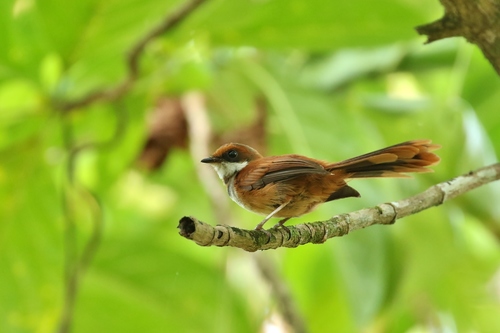 Abanico de Palaos
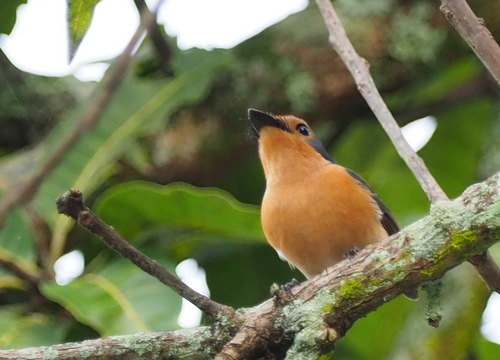 Monarca de Palaos
En breve
The most reliable way to separate Palau Fantail from Palau Flycatcher is by their structure and tail: the Fantail is distinctly long-tailed and often fans or flicks its tail, while the Flycatcher has a shorter, broader tail and a more robust, upright posture. Adult Palau Fantails show a striking combination of cinnamon upperparts, black breast, and white throat and belly, whereas the Palau Flycatcher lacks this contrast and has a different head pattern. Juvenile Fantails have brown upperparts and dingy white throats, which can be confused with other drab birds, but their structure and tail behavior remain distinctive. Both species are endemic to Palau and can occur in similar habitats, so careful attention to shape and plumage is essential.
Consejos de identificación
- Tail shape and behavior: Palau Fantail has a long, often fanned or flicked tail, which is a constant field mark in all ages and plumages. The Palau Flycatcher has a shorter, broader tail and does not fan or flick it in the same way.
- Overall structure: Fantail is slender and elongated, with a short body and long tail, giving a delicate appearance. Flycatcher is more compact and upright, with a stouter bill and body.
- Adult plumage contrast: Fantail adults show cinnamon upperparts, black breast, white throat and belly, and a tail with black and rufous. Flycatcher lacks this combination, instead showing a more uniform or subtly marked plumage, possibly with a rufous face but not the strong black-and-white contrast.
- Juvenile plumage: Juvenile Fantails are brown above with dingy white throats, lacking adult contrast but still showing the long tail and active tail behavior. Juvenile Flycatcher plumage is not described, but structure and behavior should still separate them.
- Wing pattern: No distinctive upperwing pattern is described for either species that would allow separation in flight based on wing markings alone.
- Bill shape: Fantail has a fine, slender bill suited for gleaning; Flycatcher has a broader, flatter bill typical of Myiagra, adapted for aerial insect capture.
- Perched posture: Fantail often appears horizontal with tail cocked or fanned; Flycatcher perches more upright, with a steadier, less fidgety stance.
- Flight style: Fantail is restless, with frequent short flights and tail action; Flycatcher makes more direct, sallying flights from a perch.
- Sex differences: Both species are similar in plumage between sexes; Fantail females are slightly smaller, but this is not a reliable field mark.
- Habitat overlap: Both can occur in the same forest types, so do not rely on habitat alone for identification.
- Vocalizations: No diagnostic differences are described in the notes; do not rely on voice unless you have local experience.
- Pitfalls with immatures: Young Fantails can appear drab and may be mistaken for other small birds, but their structure and tail behavior remain distinctive.
- Local abundance: Fantail is described as common in Palau forests; Flycatcher status is not detailed, but both can be expected in suitable habitat.
- Contextual clues: If you see a bird actively fanning its tail and moving restlessly through the undergrowth, it is almost certainly a Fantail. A bird perching upright and sallying for insects without tail-fanning is more likely a Flycatcher.
- When in doubt: Focus on tail length and behavior first, then check for the Fantail's unique plumage contrasts and overall shape.
Tamaño
Palau Fantail averages about 18 cm in length and appears slender with a long tail, giving it a delicate, elongated look. The Palau Flycatcher is not described in detail for size in the available notes, but as a Myiagra flycatcher, it is expected to be shorter-tailed and more compact, with a stouter body and bill. Females of the Fantail are slightly smaller than males, but this is subtle and not a reliable field mark.
Plumaje
Adult Palau Fantails are cinnamon above (crown, nape, back, upper tail), with a white throat and malar, black breast, and white belly. Their wings are black edged with cinnamon, and the tail is black tipped with rufous. Juveniles are brown above and have dingy white throats, lacking the sharp adult contrast but still showing the long tail and active tail-fanning behavior. The Palau Flycatcher is not described in detail for plumage in the notes, but as a Myiagra, it lacks the Fantail's cinnamon tones and strong black-and-white breast contrast, and instead has a more uniform or subtly marked plumage with a rufous face (as suggested by alternate names like 'rufous-faced flycatcher'). The Flycatcher does not show the Fantail's unique tail pattern or extensive cinnamon coloration.
Comportamiento
Palau Fantails are highly active, frequently fanning and flicking their long tails, and are often seen moving through the subcanopy and undergrowth, gleaning insects from foliage or catching them in short sallies. This restless, fidgety behavior is typical of fantails. Palau Flycatchers, by contrast, are more likely to perch upright and sally out for insects, with less tail movement and a steadier, more flycatcher-like demeanor. The Fantail's constant tail action is a key behavioral clue.
Hábitat
Both species are endemic to Palau and can be found in forests, including primary and secondary growth, forest patches, and occasionally scrub or mangroves. The Fantail is noted as common in these habitats and is especially active in the subcanopy and undergrowth. There is no evidence in the notes of strong habitat separation between the two, so habitat alone is not diagnostic.