

Ermitaño Ventripálido vs Ermitaño Gorjiestriado
Phaethornis anthophilus frente a Phaethornis striigularis
Juega un quiz con Ermitaño Ventripálido y Ermitaño Gorjiestriado
 Ermitaño Ventripálido
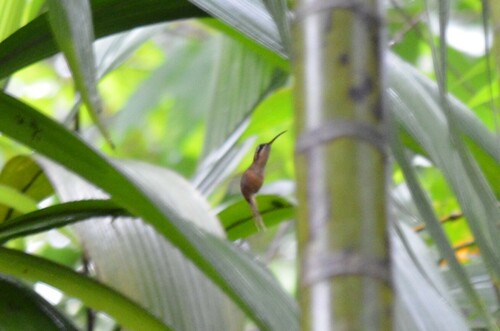 Ermitaño Gorjiestriado
En breve
La marca de campo más confiable entre el Ermitaño Ventripálido y el Ermitaño Gorjiestriado es el tamaño: el Ventripálido es notablemente más grande y pesado, con un cuerpo visiblemente más largo y una apariencia más robusta. En vistas cercanas, las partes inferiores también son diagnósticas: el Ermitaño Ventripálido muestra partes inferiores de color gris pálido, mientras que el Ermitaño Gorjiestriado tiene flancos y vientre de color canela con una garganta de color marrón grisáceo, a menudo débilmente estriada. La forma y el color del pico proporcionan más pistas: los machos del Ermitaño Ventripálido tienen un pico casi recto, mientras que el Ermitaño Gorjiestriado tiene un pico largo y curvado hacia abajo con una base amarillenta en la mandíbula inferior. Los jóvenes Ermitaños Gorjiestriados son únicos por tener una espalda completamente de color rufo pálido, una característica que no se observa en el Ventripálido. Ambas especies comparten una máscara negra y un supercilio canela, pero la impresión general y las sutiles diferencias en el plumaje son clave para una separación confiable.
Consejos de identificación
- El tamaño es la primera pista: Si el ave parece grande y robusta para un ermitaño, favorece al Ventripálido; si es pequeña y delicada, es más probable que sea el Gorjiestriado.
- Color de la espalda juvenil: Cualquier ermitaño con una espalda completamente de color rufo pálido es un joven Ermitaño Gorjiestriado; el Ventripálido nunca muestra esto.
- Color de las partes inferiores: El Ermitaño Ventripálido tiene partes inferiores de color gris pálido, mientras que el Ermitaño Gorjiestriado muestra flancos y vientre canela con una garganta marrón grisácea.
- Estrías en la garganta: Busca pequeñas estrías oscuras en la garganta del Ermitaño Gorjiestriado (aunque estas pueden ser débiles); la garganta del Ermitaño Ventripálido es mayormente blanca y sin estrías.
- Patrón facial: Ambos tienen una máscara negra y un supercilio canela, pero el malar y el supercilio del Gorjiestriado son de color canela blanquecino, y la máscara puede parecer más 'de bandido'.
- Forma del pico: Los machos del Ermitaño Ventripálido tienen un pico casi recto; el Ermitaño Gorjiestriado siempre tiene un pico largo y curvado hacia abajo. La hembra del Ventripálido también tiene un pico curvado, por lo que esto es más útil para los machos.
- Color del pico: El Ermitaño Gorjiestriado muestra una base amarillenta en la mandíbula inferior (de otro modo negra); el pico del Ventripálido no se describe como bicolor.
- Patrón de la cola: El Ermitaño Gorjiestriado tiene una cola negruzca con puntas blanquecinas a ocráceas; el patrón de la cola del Ventripálido no se destaca como distintivo.
- Color del rabadilla: El Ermitaño Gorjiestriado tiene una rabadilla de color rufo pálido, lo que puede ser una marca de campo útil en buena luz; el Ermitaño Ventripálido no lo tiene.
- Apariencia en vuelo: El Ermitaño Ventripálido parece más pesado y más alargado en vuelo; el Gorjiestriado es más rápido y ágil.
- Lekking y canto: Si observas a un ermitaño cantando una canción aguda, chirriante y monótona en un lek, es el Ermitaño Gorjiestriado.
- Contexto geográfico: En América Central al norte de Panamá, solo se espera el Gorjiestriado; en Colombia y Panamá, ambos ocurren, pero el Gorjiestriado es más extendido y común.
- Diferencias sexuales: Ambas especies son sexualmente similares en plumaje, pero las diferencias en la forma del pico (más recto en el macho Ventripálido) pueden ayudar con individuos sexados.
- Variación de subespecies: Algunas subespecies del Ermitaño Ventripálido (P. a. hyalinus) son más verde azulado por encima y más pálidas por debajo, pero esto no se superpone con los tonos rufo y canela del Gorjiestriado.
- Cuando tengas dudas: Concéntrate en el tamaño general, el color de las partes inferiores y la forma/color del pico para la separación más confiable en el campo.
Tamaño
El Ermitaño Ventripálido es significativamente más grande y pesado: aproximadamente 13 cm de longitud y 5.9 g de masa (machos 4.5–5.5 g, hembras 4–5 g). El Ermitaño Gorjiestriado es mucho más pequeño, con 9–10 cm y solo 2–3 g. En el campo, el Ventripálido parece más robusto y alargado, mientras que el Gorjiestriado es notablemente pequeño y delicado. Esta diferencia de tamaño a menudo es evidente incluso sin comparación directa, especialmente si estás familiarizado con el rango de tamaño típico de los ermitaños locales.
Plumaje
- Aves juveniles/inmaduras: Los jóvenes del Ermitaño Gorjiestriado tienen una espalda completamente de color rufo pálido, que es única y no es igualada por el Ermitaño Ventripálido a ninguna edad. Si ves un pequeño ermitaño con una espalda rufo, es el Gorjiestriado.
- Adultos: El Ermitaño Ventripálido tiene partes superiores de color verde oscuro a oliva y partes inferiores de color gris claro. La cara muestra una máscara negra, supercilio canela y garganta mayormente blanca. Los adultos del Ermitaño Gorjiestriado tienen partes superiores de color verde iridiscente apagado, una rabadilla de color rufo pálido, flancos y vientre canela, y una garganta de color marrón grisáceo pálido con pequeñas estrías oscuras, a menudo débiles. El patrón facial es similar (máscara negra, supercilio y malar canela blanquecinos), pero las estrías en la garganta (incluso si son débiles) y las partes inferiores canela ayudan a separar al Gorjiestriado del más limpio y pálido Ventripálido.
- Cola: El Ermitaño Gorjiestriado tiene una cola negruzca con puntas blanquecinas a ocráceas (dependiendo de la subespecie), mientras que el patrón de la cola del Ermitaño Ventripálido no se describe como distintivo en las fuentes.
- Pico: Los machos del Ermitaño Ventripálido tienen un pico casi recto; el Ermitaño Gorjiestriado tiene un pico largo y curvado hacia abajo con una base amarillenta en la mandíbula inferior (de otro modo negra).
Comportamiento
Ambas especies son típicos ermitaños en comportamiento, a menudo solitarios y alimentándose mediante el forrajeo entre flores. Los machos del Ermitaño Gorjiestriado forman leks y cantan para atraer a las hembras, un comportamiento que no se ha notado específicamente para el Ermitaño Ventripálido en las fuentes. En vuelo, el Ermitaño Ventripálido puede parecer más pesado y directo debido a su tamaño, mientras que el Gorjiestriado probablemente parecerá más ágil y rápido, coincidiendo con su construcción más pequeña.
Hábitat
Ambas especies ocurren en regiones superpuestas de Colombia y Panamá, pero el Ermitaño Gorjiestriado se extiende más al norte hacia América Central y es generalmente más común. El Ermitaño Ventripálido se encuentra en Colombia, Panamá y Venezuela. Ambas habitan áreas forestales húmedas, pero la abundancia local y las preferencias de microhábitat pueden diferir; el Gorjiestriado se describe generalmente como bastante común.
Voz
Los machos del Ermitaño Gorjiestriado tienen una canción aguda, chirriante y monótona, que se escucha fácilmente y varía geográficamente. No se proporciona descripción vocal para el Ermitaño Ventripálido en las fuentes, por lo que la voz no es un separador confiable a menos que estés familiarizado con la distintiva canción del Gorjiestriado.
Ermitaño Ventripálido · Ermitaño Gorjiestriado · Mis aves difíciles