
Correlimos Gordo vs Combatiente
Calidris canutus frente a Calidris pugnax
Juega un quiz con Correlimos Gordo y Combatiente
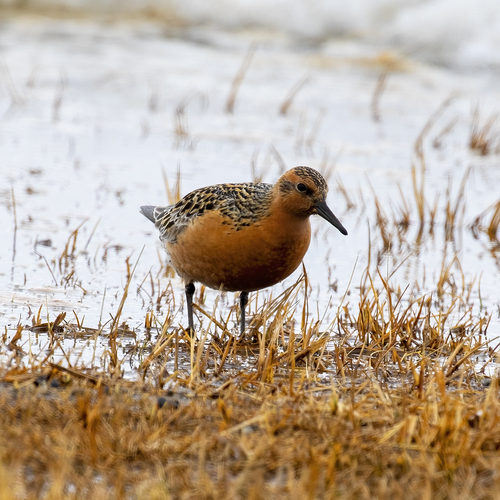 Correlimos Gordo
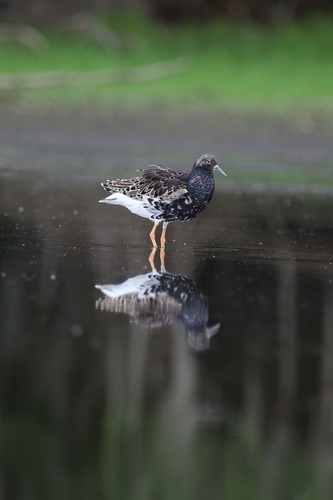 Combatiente
En breve
La marca de campo más confiable para separar el Correlimos Gordo del Combatiente es el patrón de las alas y la cola en vuelo: el Correlimos Gordo muestra una banda alar blanca audaz y una rabadilla y cola gris sólido, mientras que el Combatiente tiene solo una delgada y poco definida banda alar blanca y óvalos blancos distintivos en los lados de la cola. En el suelo, el Correlimos Gordo es compacto y bajo, con patas cortas y oscuras y un pico recto de longitud media, mientras que el Combatiente parece tener barriga, con cuello más largo y se mantiene más erguido sobre patas largas y a menudo coloridas. Las aves juveniles y de invierno de ambas especies pueden parecer superficialmente similares, pero la atención cuidadosa a la estructura, el color de las patas y el patrón de vuelo confirmará la identificación. Las diferencias en el plumaje de cría son dramáticas en el Combatiente macho adulto (con cuellos y mechones ornamentales), pero las hembras y las aves no reproductoras requieren un examen más detallado.
Consejos de identificación
- Patrón de vuelo (todas las edades): El Correlimos Gordo muestra una banda alar blanca audaz y amplia y una rabadilla y cola gris simple en vuelo. El Combatiente tiene solo una delgada y tenue banda alar y óvalos blancos distintivos en los lados de la cola. Esta es la marca más confiable, especialmente para inmaduros y aves no reproductoras.
- Longitud y color de las patas: El Correlimos Gordo tiene patas cortas y de color verde oscuro en todas las edades. El Combatiente tiene patas mucho más largas, de color verde en juveniles y de color rosa a naranja (a veces rojizo) en adultos, especialmente machos en temporada de cría.
- Estructura y postura: El Correlimos Gordo es compacto, con un cuello corto y una postura 'baja'. El Combatiente tiene barriga, con un cuello más largo, cabeza pequeña y se mantiene más erguido y alto.
- Pico: El pico del Correlimos Gordo es de longitud media, recto y aproximadamente tan largo como su cabeza. El pico del Combatiente es similar en longitud, pero puede parecer ligeramente más largo y más fino, especialmente en hembras.
- Plumaje de cría (adultos): El macho Combatiente en plumaje de cría es inconfundible con su cuello ornamentado y mechones en la cabeza. La hembra Combatiente y el Correlimos Gordo son menos distintivos, pero los machos del Correlimos Gordo tienen un color de parte inferior canela rico, mientras que la hembra Combatiente es más apagada con manchas negras.
- Partes superiores juveniles: Los juveniles del Correlimos Gordo muestran líneas submarginales y cobertoras marrones; los juveniles del Combatiente tienen un patrón de partes superiores ordenado y escamoso con un fuerte tono amarillento por debajo.
- Color de la parte inferior (no reproductores): Ambos son de color gris pálido en invierno, pero el Correlimos Gordo es más uniforme, mientras que el Combatiente puede mostrar más contraste y un aspecto ligeramente escamoso.
- Comportamiento alimenticio: El Correlimos Gordo se mueve de manera constante con una acción de sondeo agachada; el Combatiente a menudo se mantiene erguido y puede verse en bandadas más grandes y activas.
- Preferencia de hábitat: El Correlimos Gordo es más estrictamente costero, especialmente en migración y áreas de invernada. El Combatiente es más probable que se encuentre en el interior o en pantanos de agua dulce, aunque hay superposición.
- Batido de alas en vuelo: El Combatiente tiene un batido de alas más profundo y lento que el Correlimos Gordo, que vuela de manera más directa y uniforme.
- Dimorfismo sexual: Solo el macho Combatiente muestra plumaje de cría extravagante; la hembra Combatiente y el Correlimos Gordo están marcados de manera más sutil.
- Impresión de tamaño: Ambos son similares en masa y longitud, pero el Combatiente parece más alto y más alargado debido a su estructura.
- Voz: El Correlimos Gordo emite un 'knutt' o 'knuup-knuup' bajo en vuelo; los llamados del Combatiente no son distintivos para la separación.
- Trampas: La hembra Combatiente y el Correlimos Gordo pueden ser muy similares en plumaje no reproductor; confíe en la estructura, el color de las patas y el patrón de vuelo para la separación.
- Contexto estacional: Si ve un ave con un cuello y mechones en la cabeza, es un macho Combatiente en plumaje de cría. De lo contrario, use las marcas anteriores, especialmente en otoño e invierno cuando ambas especies son simples.
Tamaño
Correlimos Gordo and Combatiente are nearly identical in mass (about 137 g for Correlimos Gordo, 136 g for Combatiente [wikidata]), and their lengths overlap (Correlimos Gordo 23–26 cm, Combatiente female 22–26 cm [wikipedia]). However, Combatiente typically looks taller and more elongated due to its longer neck and legs, while Correlimos Gordo is more compact and 'low-slung.' In mixed flocks, Combatiente may stand out for its pot-bellied, upright stance, especially when compared to the more horizontal, squat posture of Correlimos Gordo.
Plumaje
- Juvenile/First-winter: Correlimos Gordo juveniles have distinctive submarginal lines and brown coverts, while Combatiente juveniles show a neat, scale-like pattern on the upperparts with dark feather centers and a strong buff tinge below. In flight, Correlimos Gordo of all ages displays a broad, clean white wing bar and a plain grey rump and tail; Combatiente shows only a thin, faint wing bar and white ovals at the tail sides.
- Adult non-breeding: Both are mostly pale grey above and below, but Correlimos Gordo is more uniformly pale grey, while Combatiente (especially females) may show more contrast and a slightly scaly effect on the upperparts.
- Adult breeding: Correlimos Gordo is mottled grey above with a rich cinnamon face, throat, and breast, fading to a pale rear belly. Combatiente males are unmistakable in full breeding plumage with extravagant ruffs and head tufts (not present in females or juveniles), while females show grey-brown upperparts with white-fringed, dark-centered feathers and variable black blotching below.
- Leg color: Correlimos Gordo always has short, dark greenish legs; Combatiente legs are much longer and vary from greenish (juvenile) to pink, orange, or even reddish (adult males in breeding season).
Comportamiento
El Correlimos Gordo típicamente forrajea en una postura baja y agachada, moviéndose de manera constante y sondeando el barro con su pico. Es menos gregario al alimentarse, y sus patas cortas le dan un aspecto 'bajo'. El Combatiente es altamente gregario, especialmente fuera de la temporada de cría, y a menudo forma grandes bandadas. Se mantiene más erguido, se mueve con un andar de barriga, y sus patas y cuello más largos le dan una apariencia más alta y elegante. En vuelo, el Combatiente tiene un batido de alas más profundo y lento en comparación con el vuelo más directo y uniforme del Correlimos Gordo.
Hábitat
El Correlimos Gordo cría en la tundra ártica y migra a llanuras de barro costeras y estuarios. El Combatiente cría en pantanos y praderas húmedas a través de Eurasia del norte y pasa el invierno en una gama más amplia de humedales, incluidos pantanos interiores y campos inundados, así como áreas costeras. En migración e invierno, ambos pueden ocurrir juntos en llanuras de barro, pero el Combatiente es más probable que se encuentre en el interior o en hábitats de agua dulce, mientras que el Correlimos Gordo es más estrictamente costero.
Voz
El Correlimos Gordo generalmente es silencioso al alimentarse, pero en bandadas de vuelo emite un 'knutt' monosilábico bajo o un 'knuup-knuup' disilábico. Su canción de exhibición es un 'poor-me' melodioso. Los llamados y sonidos de exhibición del Combatiente no están detallados en las notas, pero las diferencias vocales no son una marca de campo primaria para la separación.