

Colombar giouanne vs Gobemouche de Goodfellow
Treron vernans contre Vauriella goodfellowi
Faire un quiz avec Colombar giouanne et Gobemouche de Goodfellow
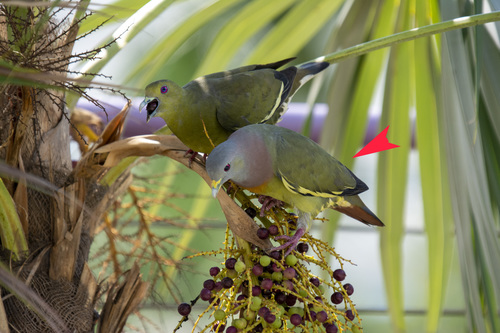 Colombar giouanne
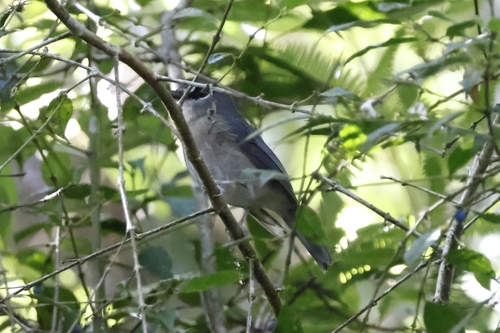 Gobemouche de Goodfellow
En bref
Le marqueur de terrain le plus fiable pour séparer le Colombar giouanne du Gobemouche de Goodfellow est la structure et la couleur globales : le pigeon est un oiseau robuste de taille moyenne, à plumage vert, avec un bec épais et, chez les mâles, un cou rose frappant, tandis que le gobemouche est beaucoup plus petit, élancé et brun-gris avec un ventre pâle, des lunettes blanches et un bec fin et crochu. En vol, le pigeon montre une barre jaune sur l'aile (provenant des tertiaires à bords jaunes), qui n'est jamais présente chez le gobemouche. Les pigeons juvéniles peuvent manquer du cou rose du mâle mais restent plus volumineux et plus verts que le gobemouche. Les deux espèces diffèrent considérablement par leur allure, leur habitat et leur voix, le pigeon se trouvant souvent dans des zones basses ouvertes et le gobemouche étant limité aux forêts montagnardes de Mindanao.
Conseils d’identification
- Taille et forme : Le Colombar giouanne est beaucoup plus grand et plus volumineux que le Gobemouche de Goodfellow. Même une femelle ou un juvénile pigeon est nettement plus robuste que le gobemouche, qui est élancé et droit.
- Forme du bec : Le pigeon a un bec épais et pâle (blanc, bleu-vert ou gris), tandis que le gobemouche a un petit bec noir avec une pointe crochue. La couleur et la forme du bec sont visibles de près.
- Couleur des pattes : Les deux espèces peuvent montrer des pattes rosées, mais ce n'est pas un séparateur fort. Concentrez-vous sur d'autres marques.
- Mâle Colombar giouanne : Seul le mâle pigeon a un cou rose et une poitrine supérieure avec une poitrine inférieure orange—jamais vu chez le gobemouche. Si vous voyez du rose ou de l'orange sur le cou/la poitrine, c'est le pigeon.
- Femme/juvénile pigeon vs gobemouche : Les femelles et les juvéniles pigeons manquent de rose/orange, mais sont toujours verdâtres au-dessus et jaunâtres en dessous, avec une barre jaune sur l'aile en vol. Le gobemouche est toujours gris-brun au-dessus et pâle en dessous, sans vert ni jaune.
- Motif des ailes en vol : Le pigeon montre une barre jaune sur l'aile (provenant des tertiaires à bords jaunes) et des primaires noires—cela est visible chez tous les âges et sexes. Le gobemouche a des ailes brunâtres unies sans barres ni panneaux.
- Motif facial : Le gobemouche a des lunettes blanches et un front, un cercle oculaire sombre et des lores, et un aspect généralement 'masqué'. Le pigeon n'a aucune blancheur sur le visage ; les mâles ont une tête grise et un cou rose, les femelles sont verdâtres/jaunâtres.
- Motif de la queue : Le pigeon a une queue grise avec une bande terminale noire et des couvertures supérieures châtaigne, visibles lorsqu'il est perché ou en vol. Le gobemouche a une queue unie sans motif fort.
- Teintes du plumage : Le pigeon est toujours verdâtre (même chez les juvéniles), avec du jaune et parfois du rose/orange. Le gobemouche est toujours de teinte terre (gris-brun, pâle en dessous), sans vert/jaune/rose.
- Habitat : Le pigeon se trouve dans des habitats ouverts, bas ou en lisière, souvent près des humains. Le gobemouche est limité aux forêts montagnardes de Mindanao—jamais dans des jardins ou des plantations de plaine.
- Comportement : Le pigeon se perche droit sur des branches exposées, parfois en groupes, se nourrissant de fruits. Le gobemouche est solitaire, cherche sa nourriture bas dans une forêt dense, et fait de courtes sorties pour attraper des insectes.
- Voix : Le pigeon émet des appels profonds, sifflants ou râpeux, rarement vocal sauf dans les dortoirs ou lorsqu'il se nourrit. Le gobemouche émet des notes aiguës, rapides, qui accélèrent et décélèrent.
- Répartition : Si vous n'êtes pas à Mindanao dans une forêt montagnarde, vous ne voyez presque certainement pas le Gobemouche de Goodfellow. Le pigeon est répandu à travers l'Asie du Sud-Est et les Philippines.
- Dimorphisme sexuel : Seul le pigeon est dimorphe sexuellement (mâle avec rose/orange, femelle plus verte/jaune). Le gobemouche montre peu ou pas de différence de sexe dans le plumage.
- Pièges : Les femelles et les juvéniles pigeons peuvent être confondus avec d'autres pigeons verts, mais pas avec le gobemouche si vous vérifiez la taille, la barre des ailes et la couleur globale. Le gobemouche n'est jamais vert ou jaune et n'a aucune barre sur les ailes.
Taille
Le Colombar giouanne est significativement plus grand, mesurant 25–30 cm de long et pesant 105–160 g [wikipedia], comparé au Gobemouche de Goodfellow, qui mesure 17–18 cm de long et est beaucoup plus léger [wikipedia]. Le pigeon est trapu et robuste, avec un cou épais et de larges ailes, tandis que le gobemouche est élancé, avec une posture typique de Muscicapidae, à bec fin et droit. Même une femelle ou un juvénile pigeon écrase le gobemouche en volume et en longueur.
Plumage
- Comparaison juvénile/immature : Les juvéniles Colombar giouanne ressemblent aux femelles, étant verdâtres au-dessus et jaunâtres en dessous, mais sont généralement plus gris sur les parties supérieures. Ils montrent toujours les ailes vertes avec des primaires noires et une barre jaune sur l'aile en vol (provenant des bords jaunes des tertiaires). Les juvéniles du Gobemouche de Goodfellow ne sont pas décrits en détail, mais tous les âges sont brun-gris au-dessus, pâles en dessous, et manquent de teintes vertes ou jaunes.
- Mâle adulte Colombar giouanne : Cou rose frappant et poitrine supérieure, poitrine inférieure orange, dos olive-vert, ailes vertes avec des primaires noires et des bords de tertiaires jaunes (créant une barre jaune en vol), ventre jaunâtre, queue grise avec une bande terminale noire, et couvertures supérieures châtaigne. La femelle est similaire mais manque de rose et d'orange, étant plus uniformément verdâtre avec un ventre et un visage jaunâtres.
- Gobemouche de Goodfellow (tous âges/sexe) : Brun-gris pâle au-dessus, ventre et gorge plus clairs, lunettes blanches et front, cercle oculaire sombre et lores, pattes roses, et un bec noir avec une pointe crochue. Pas de teintes vertes, jaunes ou roses nulle part. L'effet global est atténué et de teinte terre, avec un motif facial distinctif.
- En vol : Seul le pigeon montre une barre jaune sur l'aile ; le gobemouche a des ailes brunâtres unies sans panneaux ou barres contrastants.
Comportement
Le Colombar giouanne est souvent vu perché droit sur des branches exposées, parfois en petits groupes, se nourrissant de fruits, ou volant avec des battements d'ailes forts et directs. Il peut être trouvé dans des jardins, des plantations ou en lisière de forêt, et est souvent conspicueux en raison de sa taille et de sa couleur. Le Gobemouche de Goodfellow est un oiseau solitaire, calme et discret, cherchant généralement sa nourriture bas dans une forêt montagnarde dense, sortant pour attraper des insectes puis retournant à un perchoir. Ses mouvements sont plus délicats et ressemblent à ceux d'un gobemouche, avec un vol moins évident et plus de temps passé perché à couvert.
Habitat
Le Colombar giouanne est répandu et commun dans les plaines de l'Asie du Sud-Est, trouvé dans une large gamme d'habitats ouverts et en lisière, y compris des jardins, des plantations, des forêts secondaires et des mangroves, ainsi qu'en lisière de forêt jusqu'à des altitudes modérées (jusqu'à 1200 m à Sulawesi, mais généralement plus bas ailleurs) [wikipedia]. Le Gobemouche de Goodfellow est strictement endémique aux forêts montagnardes de Mindanao, aux Philippines, et n'est pas trouvé dans des habitats de plaine ou ouverts. Ainsi, le contexte est un indice fort : un pigeon vert dans un parc urbain ou une zone côtière n'est presque certainement pas un gobemouche de jungle.
Voix
Le Colombar giouanne est généralement silencieux, mais les mâles peuvent émettre un appel sifflant tri-syllabique se terminant par un roucoulement, ou un 'krrak krrak...' râpeux dans des dortoirs communs ou lorsqu'ils se nourrissent [wikipedia]. Le Gobemouche de Goodfellow émet une série de notes rapides, aiguës et répétées qui accélèrent et décélèrent, une chanson typique de gobemouche. Les appels du pigeon sont plus profonds et plus semblables à ceux d'un pigeon, tandis que ceux du gobemouche sont plus aigus et ressemblent à des insectes.
Colombar giouanne · Gobemouche de Goodfellow · Mes oiseaux difficiles