

Pispola golarossa
Anthus cervinus
Wagtails and Pipits (Motacillidae) · Passeriformes · Pispole e Pipit
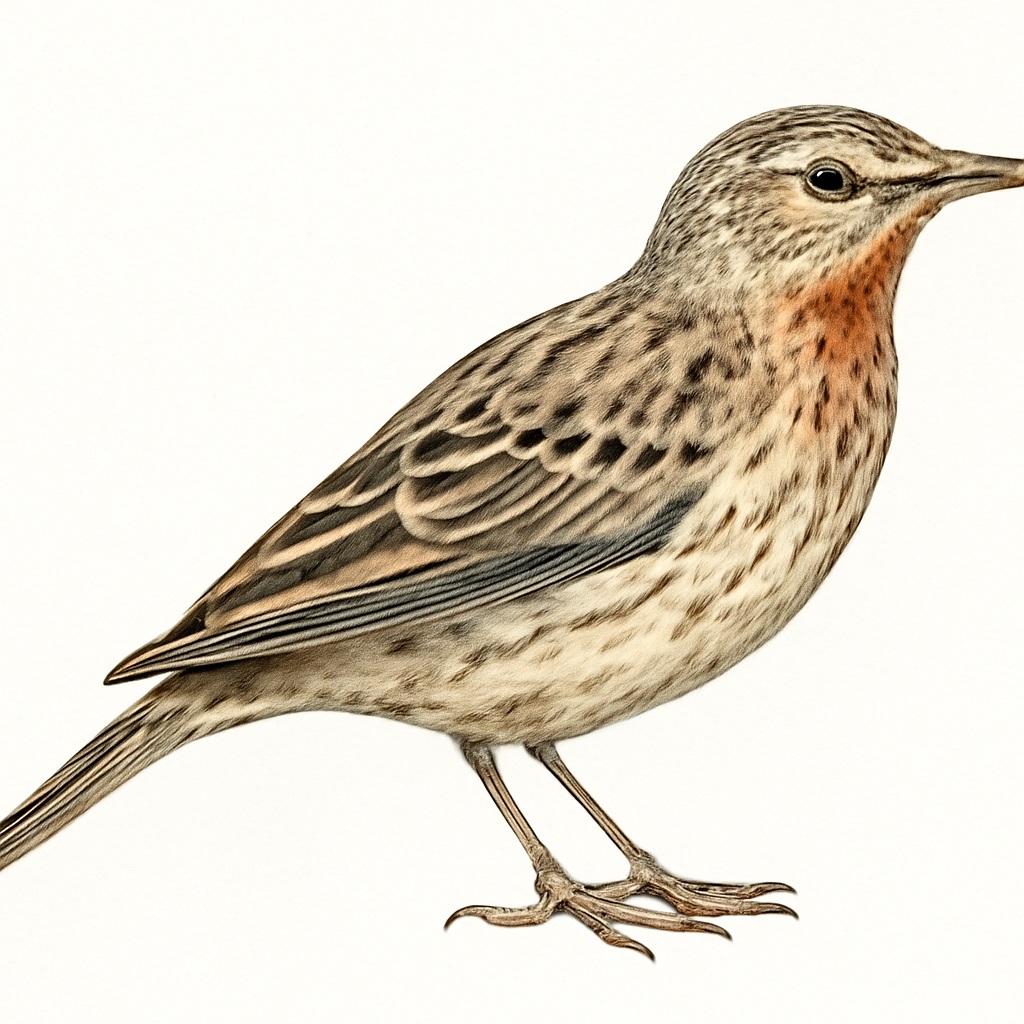
Fai un quiz con Pispola golarossa e specie simili
Vedi tutte le foto, i video e i suoni
Revisionato

O-o, i crediti IA sono finiti. Sviluppo Motmot nel tempo libero, e al momento non c’è finanziamento. Se vuoi aiutare a farlo crescere, scrivimi a info@motmot.club.
Come riconoscere Pispola golarossa
Sto scrivendo le note di identificazione…
Cerca note di identificazione in fonti aperte, poi chiede al modello di scriverle. Può richiedere un minuto.
Accedi per generare note di identificazione per questo uccello.
Spesso confuso con
Nei quiz i giocatori confondono più spesso Pispola golarossa con questi uccelli: o questa specie è stata scelta per errore, o il contrario.
| Specie | Confusioni |
|---|---|
| Prispolone Anthus trivialis | 83 |
| Pispola Anthus pratensis | 79 |
| Spioncello Anthus spinoletta | 53 |
| Spioncello del Pacifico Anthus rubescens | 41 |
| Spioncello marino Anthus petrosus | 33 |
Famiglia
The wagtails, longclaws, and pipits are a family, Motacillidae, of small passerine birds with medium to long tails. Around 70 species occur in five genera. The longclaws are entirely restricted to the Afrotropics, and the wagtails are predominantly found in Europe, Africa, and Asia, with two species migrating and breeding in Alaska.
Ordine
A passerine () is any bird of the order Passeriformes (; from Latin passer 'sparrow' and formis '-shaped'), which includes more than half of all bird species. Sometimes known as perching birds, passerines generally have an anisodactyl arrangement of their toes (three pointing forward and one back), which facilitates perching. With more than 140 families and some 6,500 identified species, Passeriformes is the largest order of birds and one of the most diverse clades of terrestrial vertebrates, representing 60% of …