

African Rail vs Broad-billed Roller
Rallus caerulescens contro Eurystomus glaucurus
Fai un quiz con African Rail e Broad-billed Roller
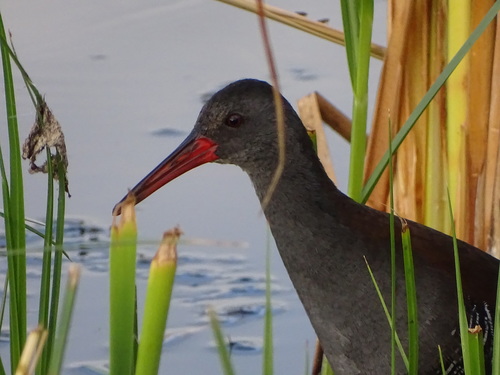 African Rail
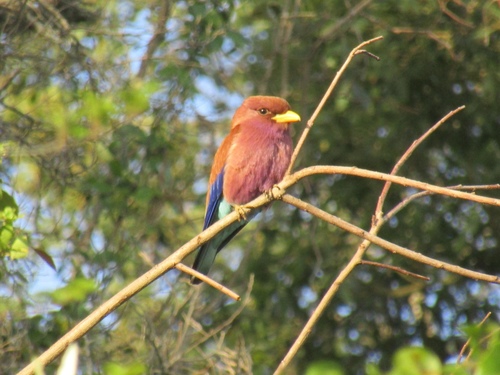 Broad-billed Roller
In breve
Il modo più affidabile per separare l'African Rail dal Broad-billed Roller è attraverso la struttura generale e il colore del becco: l'African Rail è un uccello delle zone umide snodato e compresso lateralmente con un lungo becco sottile di un rosso opaco, mentre il Broad-billed Roller è un percher robusto e eretto con un becco spesso e giallo brillante. In volo, il roller mostra un blu brillante nelle ali e nella coda, mai mostrato dal rail. Le differenze nel piumaggio sono anche forti: l'African Rail ha parti inferiori blu-grigie e parti superiori marroni con fianchi nero e bianco, mentre il roller ha un petto lilla, un dorso marrone e nessuna striatura. L'habitat è un forte indizio: i rail sono uccelli segreti delle paludi, i roller sono conspicui in boschi aperti o appollaiati in alto. I roller giovani sono più opachi ma ancora strutturalmente distinti dai rail.
Consigli di identificazione
- Bill shape and color: L'African Rail ha un lungo becco sottile di un rosso opaco; il Broad-billed Roller ha un becco spesso, largo e giallo brillante. Questo è visibile anche a distanza ed è diagnostico a tutte le età.
- Body shape: I rail sono compressi lateralmente, con un corpo stretto ed allungato adattato per scivolare tra le canne. I roller sono robusti, eretti e con una testa larga, con un profilo molto più massiccio.
- Leg color: L'African Rail ha zampe rosse, che corrispondono al suo becco; le zampe del Broad-billed Roller sono meno evidenti ma non corrispondono alla luminosità del becco.
- Upperparts: L'African Rail è marrone uniforme sopra (senza striature o motivi), mentre il roller è marrone caldo ma con un collo e un petto lilla.
- Underparts: I rail mostrano parti inferiori blu-grigie (adulti) o buff (immaturi), con forti striature nero e bianco sui fianchi e sull'area sottocoda. I roller hanno un petto lilla o pallido (giovani), mai striato o blu-grigio.
- Flight appearance: Il Broad-billed Roller in volo mostra un blu brillante nelle ali e nella coda, una caratteristica mai presente nell'African Rail. I rail volano bassi e debolmente, raramente esponendo molto colore.
- Tail: La coda del rail è corta e spesso tenuta inclinata; la coda del roller è più lunga e squadrata, spesso aperta in volo.
- Juvenile confusion: Il giovane African Rail è buff sotto, ma ha ancora striature sui fianchi e un becco rosso sottile. Il giovane roller è più opaco e pallido rispetto all'adulto ma strutturalmente identico all'adulto roller, con un becco giallo largo e senza striature.
- Habitat: I rail si trovano sempre in o vicino a vegetazione palustre densa; i roller si trovano in boschi aperti, ai margini delle foreste, o appollaiati su rami esposti, raramente vicino a canne dense.
- Behavior: I rail sono segreti, correndo o scivolando tra le canne, raramente appollaiandosi in vista aperta. I roller sono conspicui, spesso lanciandosi da posatoi o volando in alto sopra la chioma.
- Vocalizations: Il richiamo del rail è un trill fischiato; quello del roller è un ronzio aspro e ringhioso. I richiami sono distintivi e appropriati all'habitat.
- Feeding: I rail setacciano fango o acqua bassa per invertebrati; i roller cacciano insetti volanti, spesso in gruppi, e possono bere in volo.
- Sexes: Entrambe le specie hanno piumaggio simile in entrambi i sessi, quindi il sesso non è un utile segno sul campo.
- Size impression: Nonostante lunghezze simili, i rail appaiono molto più snelli e leggeri; i roller sono più massicci e robusti.
- Common pitfalls: Visioni distanti o brevi possono confondere un roller appollaiato per un rail a causa delle dimensioni, ma la forma del becco, la postura e l'habitat dovrebbero rapidamente chiarire l'identificazione.
Taglia
L'African Rail è leggermente più pesante (media 160 g contro 104 g per il Broad-billed Roller) ma appare molto più snello e allungato, con una lunghezza del corpo di 27–28 cm. Il Broad-billed Roller è un po' più lungo (29–30 cm) ma è più massiccio, con una testa e un becco larghi. Il corpo del rail è appiattito lateralmente per muoversi tra le canne, mentre il roller è tozzo e eretto.
Piumaggio
Non sono descritti segni di volo specifici per età per nessuna delle due specie, ma il piumaggio complessivo è distintivo a tutte le età. L'African Rail adulto è marrone sopra, blu-grigio sotto, con forti striature nero e bianco sui fianchi e sull'area sottocoda. La sua schiena è uniforme (unica tra i rail Rallus). I rail immaturi sostituiscono il blu-grigio con buff, ma mantengono il modello generale. Il Broad-billed Roller è marrone caldo sopra, con un collo e un petto lilla, e il resto principalmente marrone; in volo, le ali e la coda mostrano blu brillante. I roller giovani sono più opachi, con un petto pallido, ma mancano ancora delle striature e delle tonalità blu-grigie del rail. Il becco del roller è sempre giallo brillante e largo, in contrasto con il lungo, sottile e opaco becco rosso del rail. Il roller non mostra mai striature sui fianchi.
Comportamento
L'African Rail è segreto, muovendosi furtivamente attraverso la densa vegetazione palustre, spesso solo intravisto mentre scivola tra le canne. Si nutre setacciando fango o acqua bassa. Il Broad-billed Roller è molto più conspicuo, spesso visto appollaiato in vista aperta o facendo voli diretti e forti con battiti d'ala rapidi. I roller sono inattivi per gran parte della giornata ma diventano attivi nel tardo pomeriggio, a volte radunandosi in gruppi per nutrirsi di insetti in sciami. Possono bere in volo, immergendo il becco nell'acqua.
Habitat
L'African Rail è strettamente una specie delle zone umide, trovata in densi canneti e paludi nell'Africa orientale e meridionale. È raramente visto lontano dall'acqua o da vegetazione emergente densa. Il Broad-billed Roller occupa boschi aperti, savane e margini forestali in tutta l'Africa tropicale e Madagascar, evitando solo le regioni più secche. È raramente, se non mai, trovato in paludi dense o canneti.
Voce
L'African Rail emette un richiamo trillato e fischiato 'treee-tee-tee-tee-tee', spesso udito da un riparo nelle zone umide. Il Broad-billed Roller ha un richiamo aspro e ringhioso 'k-k-k-k-k-r-r-r-r-r', tipicamente emesso da un posatoio o in volo. I due richiami sono abbastanza diversi e riflettono i loro habitat contrastanti.
African Rail · Broad-billed Roller · I miei uccelli difficili