
Rondone maggiore vs Rondone comune
Tachymarptis melba contro Apus apus
Fai un quiz con Rondone maggiore e Rondone comune
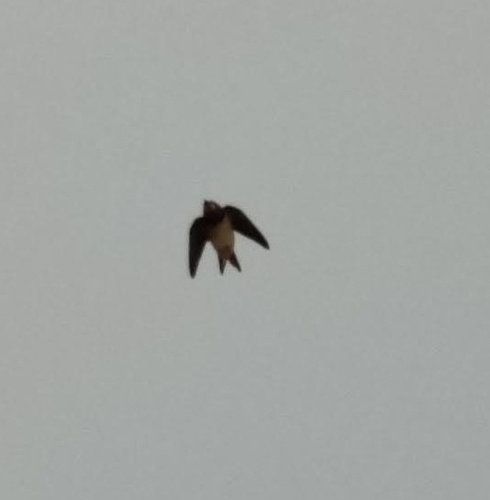 Rondone maggiore
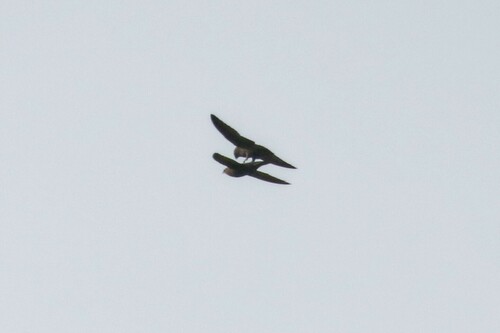 Rondone comune
In breve
Il modo più affidabile per separare il Rondone maggiore dal Rondone comune è la dimensione e il modello delle parti inferiori: il Rondone maggiore è molto più grande e mostra un ventre e una gola bianchi distintivi divisi da una banda scura sul petto, mentre il Rondone comune è più piccolo e uniformemente scuro sotto, tranne per una piccola macchia chiara sul mento. Entrambe le specie hanno ali lunghe e ripiegate all'indietro e una coda forked, ma le ali del Rondone maggiore sono più larghe e il suo volo è più lento e potente. I Rondoni maggiori giovani assomigliano agli adulti ma con bordi delle piume chiari, mentre i Rondoni comuni rimangono completamente scuri. Queste differenze sono visibili in volo e a riposo, ma sono più evidenti quando gli uccelli virano o mostrano le loro parti inferiori.
Consigli di identificazione
- La dimensione è il primo indizio: Il Rondone maggiore è quasi due volte più grande del Rondone comune. Se un rondone appare insolitamente grande e massiccio rispetto agli altri, considera il Rondone maggiore.
- Modello delle parti inferiori: Il Rondone maggiore mostra un ventre e una gola bianchi audaci, divisi da una banda scura sul petto. Questo è visibile in tutte le età ed è diagnostico in volo o quando è appollaiato. Il Rondone comune è uniformemente scuro sotto, con solo una piccola macchia chiara sul mento che è raramente visibile sul campo.
- Forma e ampiezza delle ali: Le ali del Rondone maggiore sono più larghe e meno a forma di falce rispetto a quelle del Rondone comune. In volo, il Rondone maggiore può ricordare un grande Rondone domestico o una Rondine, ma con ali più lunghe e un corpo più robusto.
- Coda forked: Entrambe le specie hanno code forked, ma la fork del Rondone maggiore è più superficiale e la coda appare più larga. La coda del Rondone comune è più snella e la fork può sembrare più profonda, specialmente quando è aperta.
- Stile di volo: Il Rondone maggiore vola con battiti d'ali più lenti e profondi e plana più spesso, dando un'impressione potente e costante. Il Rondone comune è molto più veloce e più erratico, con battiti d'ali rapidi e tremolanti e curve agili.
- Piumaggio giovanile: I Rondoni maggiori giovani hanno piume con bordi chiari sulle parti superiori, ma mostrano ancora il ventre e la gola bianchi. I Rondoni comuni giovani sono completamente scuri, come gli adulti.
- Trappole del piumaggio: In scarsa luce, le parti inferiori bianche del Rondone maggiore possono apparire più opache, ma il contrasto con la banda scura sul petto e i fianchi rimane. Il Rondone comune non mostra mai un ventre o una gola bianchi.
- Viste appollaiate: Il Rondone maggiore è più propenso a posarsi su scogliere o grandi edifici, a volte visibile a riposo. Il Rondone comune è raramente visto appollaiato tranne che nel nido ed è più riservato.
- Contesto dell'habitat: Il Rondone maggiore è più spesso visto sopra montagne, scogliere o grandi strutture urbane, specialmente nel sud Europa e in Asia. Il Rondone comune è diffuso in città e aree di pianura in tutta Europa e Asia.
- Vocalizzazioni: Ascolta il cinguettio prolungato del Rondone maggiore, che è meno acuto rispetto agli strilli penetranti del Rondone comune. Se senti un gruppo che urla, è probabile che sia il Rondone comune.
- Composizione del gruppo: Se vedi un gruppo misto, cerca gli uccelli più grandi e con il ventre più chiaro tra i rondoni più piccoli e completamente scuri.
- Contesto stagionale: Entrambe le specie sono migratorie, ma il Rondone maggiore tende ad arrivare prima in primavera nel sud Europa ed è più probabile vederlo in grandi gruppi sciolti sopra scogliere o città.
- Sesso e età: Non ci sono differenze sessuali significative nei segni sul campo per nessuna delle due specie; le differenze di età sono sottili e influenzano principalmente i bordi delle piume nei giovani Rondoni maggiori.
- Distanza e luce: A grande distanza o in silhouette, la dimensione e lo stile di volo sono i migliori indizi. In buona luce, le parti inferiori bianche del Rondone maggiore sono inconfondibili.
- Trappole comuni: Non confondere il ventre bianco del Rondone maggiore con il mento chiaro del Rondone comune; quest'ultimo è piccolo e raramente visibile. Controlla sempre l'estensione e la posizione del bianco sulle parti inferiori.
Taglia
Il Rondone maggiore è quasi due volte la dimensione del Rondone comune. Il Rondone maggiore misura circa 20–23 cm di lunghezza con un'apertura alare di 54–60 cm e una massa corporea di circa 96 g [wikidata]; il Rondone comune è lungo 16–17 cm con un'apertura alare di 38–40 cm ed è molto più leggero. Sul campo, il Rondone maggiore appare più massiccio, con ali più larghe e un corpo più robusto, mentre il Rondone comune è visibilmente più snello e agile.
Piumaggio
- Giovani e immaturi: I giovani Rondoni maggiori assomigliano agli adulti ma hanno bordi delle piume chiari, specialmente sulle parti superiori, il che può dare un aspetto leggermente squamoso nel piumaggio fresco. I giovani Rondoni comuni sono completamente scuri come gli adulti, privi di macchie chiare o bianche sulle parti inferiori.
- Adulti: Il Rondone maggiore è marrone scuro sopra con una gola bianca e una grande macchia ovale bianca sul ventre, separata da una banda scura sul petto e circondata da fianchi e copritrici della coda marroni. Il bianco sulla gola e sul ventre è molto visibile in volo, specialmente da sotto. Il Rondone comune è uniformemente bruno-nerastro con solo una piccola macchia chiara sul mento, che non è visibile a distanza; altrimenti, le parti inferiori sono completamente scure. Entrambe le specie hanno ali lunghe e ripiegate all'indietro e una coda forked corta, ma le ali del Rondone maggiore sono più larghe e la fork della coda è più superficiale.
Comportamento
Il Rondone maggiore ha un volo più lento e potente con battiti d'ali profondi e costanti, spesso descritto come più 'muscolare' o 'deliberato' rispetto al volo rapido, agile e altamente acrobatico del Rondone comune. I Rondoni maggiori possono apparire più in grado di planare e possono a volte essere visti circolare in gruppi sciolti, mentre i Rondoni comuni sono quasi sempre in volo veloce ed erratico, spesso urlando in gruppi compatti. Entrambe le specie trascorrono la maggior parte della loro vita in volo, ma lo stile di volo del Rondone maggiore è visibilmente meno frenetico.
Habitat
Il Rondone maggiore nidifica in regioni montuose, spesso costruendo nidi su scogliere o alti edifici nel sud Europa, Africa e Asia. È più probabile trovarlo in o vicino a zone montuose o grandi strutture urbane che imitano le scogliere. Il Rondone comune è più diffuso nelle aree di pianura, nidificando frequentemente in città e paesi in tutta Europa e Asia, spesso sotto le grondaie o nelle fessure degli edifici. Anche se entrambi possono essere visti sopra aree urbane, il Rondone maggiore è più legato a habitat montuosi o scoscesi, specialmente durante la nidificazione.
Voce
Il Rondone maggiore emette un richiamo prolungato e cinguettante, che è meno penetrante rispetto al grido forte e acuto del Rondone comune. I richiami del Rondone comune sono note acute e urlanti 'srii', spesso emesse in rapida successione e in gruppi, con maschi e femmine che producono toni leggermente diversi. I richiami del Rondone maggiore sono meno probabili da sentire come un gruppo che urla sopra la testa.
Rondone maggiore · Rondone comune · I miei uccelli difficili