

Asian Koel vs Square-tailed Drongo-Cuckoo
Eudynamys scolopaceus contro Surniculus lugubris
Fai un quiz con Asian Koel e Square-tailed Drongo-Cuckoo
 Asian Koel
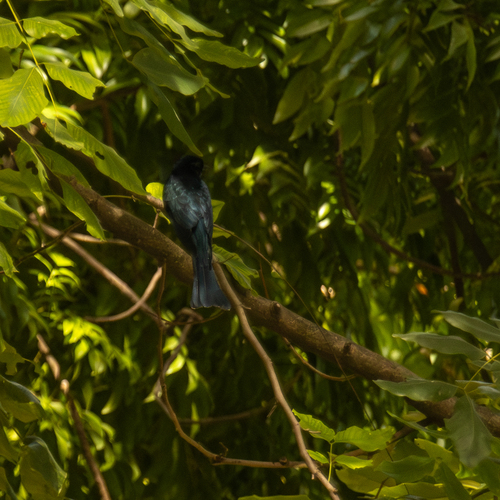 Square-tailed Drongo-Cuckoo
In breve
Il segno distintivo più affidabile tra Asian Koel e Square-tailed Drongo-Cuckoo è la presenza di una striscia bianca sulle ali visibile da sotto in volo sul drongo-cuculo, che il koel manca in tutte le età. Se vedi un grande cuculo nero lucido senza alcun bianco sulla parte inferiore dell'ala, è probabile che sia un Asian Koel; se vedi un uccello più piccolo, simile a un drongo, con un'apertura bianca e una striscia bianca sulle ali in volo, è il drongo-cuculo. La forma del becco è anche fondamentale: il becco del koel è chiaro e dritto, mentre quello del drongo-cuculo è scuro e distintamente ricurvo. La forma della coda e le marcature dell'apertura aiutano ulteriormente: il koel ha una coda lunga e arrotondata (maschio) o una coda marrone a strisce (femmina/immatura), mentre la coda del drongo-cuculo è solo leggermente incisa con punte allargate e strisce bianche sotto. Le vocalizzazioni sono molto diverse e il contesto (specie ospite, habitat) può anche aiutare.
Consigli di identificazione
- Striscia bianca sulle ali in volo: Solo il Square-tailed Drongo-Cuckoo mostra una striscia bianca sulle ali da sotto quando vola; l'Asian Koel non lo fa mai. Questo è il segno più affidabile per gli uccelli in volo di qualsiasi età.
- Forma e colore del becco: L'Asian Koel ha un becco dritto di un verde-grigio chiaro (adulti) o un becco nero (immaturi); il Square-tailed Drongo-Cuckoo ha un becco scuro e distintamente ricurvo. Questo è visibile anche da lontano con buona luce.
- Forma e marcature della coda: La coda del koel è lunga e arrotondata (maschio) o a strisce e marrone (femmina/immatura); la coda del drongo-cuculo è solo leggermente incisa, con punte allargate e strisce bianche sotto. Il koel non mostra mai bianco sulla parte inferiore della coda.
- Apertura e parte inferiore della coda: Il drongo-cuculo ha sempre un'apertura a strisce bianche e una parte inferiore della coda esterna; le parti inferiori del koel sono striate (femmina/immatura) o semplici (maschio) ma non sono mai a strisce all'apertura.
- Dimensioni e struttura complessive: Il koel è molto più grande, più robusto e con una coda più lunga. Il drongo-cuculo è delle dimensioni di un drongo, più compatto e agile.
- Lucentezza del piumaggio: Il maschio adulto del koel è lucido bluastro-nero; il drongo-cuculo è lucido nero ma più piccolo e più compatto. La femmina/immatura del koel è marrone con striature rugginose e macchie pesanti, a differenza del drongo-cuculo.
- Colore dell'iride: Il maschio adulto del koel ha un'iride cremisi sorprendente; questo è meno ovvio sul campo ma può aiutare a distanza ravvicinata. L'iride del drongo-cuculo non è notata come distintiva.
- Posa in perching: Il koel si posa in posizione eretta e appare spesso pesante e con una coda lunga; il drongo-cuculo si posa più come un drongo, eretto ma più snello, a volte muovendo la coda.
- Contesto dell'habitat: In aree urbane o aperte, il koel è più probabile; in foreste dense, il drongo-cuculo è più probabile.
- Contesto dell'ospite: Se visto vicino a corvi o mynas, il koel è più probabile; se vicino a piccoli babblers, il drongo-cuculo è più probabile.
- Voce: Il 'koo-Ooo' o 'kik-kik-kik...' del koel è molto diverso dai fischi acuti e crescenti del drongo-cuculo. Se senti il richiamo classico del koel, non è il drongo-cuculo.
- Trappole per sesso e età: Le femmine e gli immaturi del koel possono essere confusi con il drongo-cuculo a causa del piumaggio marrone e striato, ma mancano sempre dell'apertura a strisce bianche e della striscia sulle ali. I giovani koel hanno un becco nero, ma mancano comunque delle marcature bianche del drongo-cuculo.
- Stile di volo: Il volo del koel è pesante e diretto; il drongo-cuculo è più agile e simile a un drongo, con movimenti rapidi e saltuari.
- Contesto stagionale: Entrambe le specie sono più vocali durante la stagione di riproduzione, ma i richiami del koel sono molto più probabili da sentire in aree urbane durante questo periodo.
- Sovrapposizione geografica: Entrambe le specie si sovrappongono in alcune parti del sud-est asiatico, ma controlla l'habitat e il contesto dell'ospite per ulteriori indizi.
Taglia
L'Asian Koel è molto più grande (39–46 cm, 190–327 g) rispetto al Square-tailed Drongo-Cuckoo, che è notevolmente più piccolo e più snello. Il koel è un cuculo pesante e con una coda lunga, mentre il drongo-cuculo è delle dimensioni di un drongo, più compatto e più leggero. In un confronto diretto, il koel apparirà più robusto e lungo sia in posizione perching che in volo.
Piumaggio
I koel giovanili e immaturi assomigliano a femmine adulte: marroni sopra con striature rugginose sulla testa, dorso e copritrici delle ali marroni scuri con macchie bianche/crema, e parti inferiori bianche pesantemente striate. I giovani koel hanno un becco nero. I maschi adulti di koel sono lucidi bluastro-neri in tutto con un becco di un verde-grigio chiaro e un'iride cremisi, privi di qualsiasi bianco sulla parte inferiore dell'ala o dell'apertura. Al contrario, il Square-tailed Drongo-Cuckoo di tutte le età mostra un piumaggio nero lucido con un apertura a strisce bianche e parte inferiore della coda esterna, e in volo, una striscia bianca sulle ali visibile da sotto. La coda del drongo-cuculo è solo leggermente incisa, con punte allargate e strisce bianche sotto, mai così lunga o arrotondata come quella del koel. Il koel non mostra mai una striscia bianca sulle ali o un'apertura a strisce.
Comportamento
L'Asian Koel è spesso visto cercare cibo in alberi da frutto o chiamare in modo evidente da alte posizioni, a volte in aree urbane o aperte. È un parassita della covata, ma i suoi ospiti sono spesso uccelli più grandi (ad es. corvi, mynas). Il Square-tailed Drongo-Cuckoo è più probabile da vedere in habitat forestali, muovendosi attivamente e a volte saltando come un drongo. Il suo comportamento di imitazione del drongo include posarsi in posizione eretta e voli rapidi e agili. Entrambi sono parassiti della covata, ma il drongo-cuculo prende di mira piccoli babblers.
Habitat
L'Asian Koel è diffuso nel subcontinente indiano, in Cina e nel sud-est asiatico, e si adatta bene a habitat urbani, rurali e boschivi aperti. Si trova spesso vicino all'abitazione umana, specialmente dove le specie ospiti sono comuni. Il Square-tailed Drongo-Cuckoo preferisce aree boschive lungo l'Himalaya e nel sud-est asiatico, di solito in boschi più densi e meno spesso in ambienti urbani. Se ti trovi in una foresta profonda, è più probabile vedere il drongo-cuculo; in giardini o parchi cittadini, è più probabile vedere il koel.
Voce
L'Asian Koel ha una canzone molto distintiva e ripetuta 'koo-Ooo' (maschio) e un 'kik-kik-kik...' acuto (femmina), specialmente durante la stagione di riproduzione. Questi richiami sono forti, lontani e familiari in gran parte del suo areale. Il Square-tailed Drongo-Cuckoo emette una serie di fischi acuti e penetranti che aumentano di tono ma sono acuti e spezzati, molto diversi dalla canzone dolce e ripetitiva del koel. Se senti un fischio crescente e spezzato, pensa al drongo-cuculo; se senti il richiamo classico del 'koel', è il koel.
Asian Koel · Square-tailed Drongo-Cuckoo · I miei uccelli difficili