
Blue-tailed Bee-eater vs Rainbow Bee-eater
Merops philippinus contro Merops ornatus
Fai un quiz con Blue-tailed Bee-eater e Rainbow Bee-eater
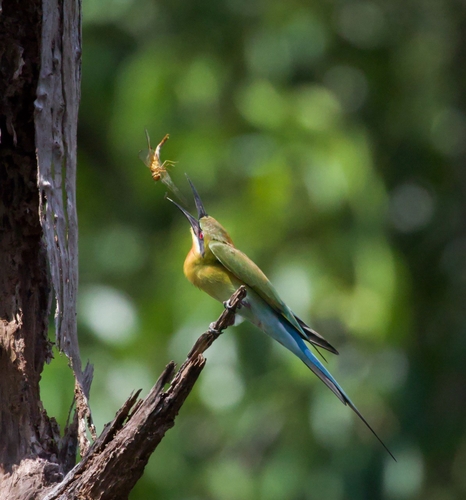 Blue-tailed Bee-eater
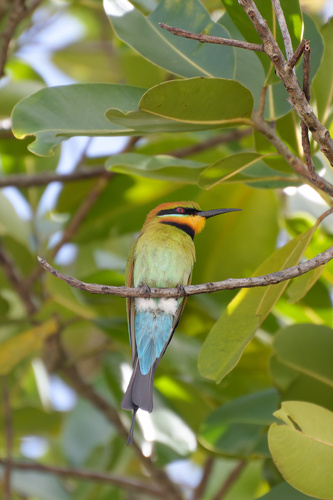 Rainbow Bee-eater
In breve
Il segno distintivo più affidabile per separare il Blue-tailed Bee-eater dal Rainbow Bee-eater è il colore e l'estensione del blu sul dorso e sulla coda: il Blue-tailed mostra una coda e un dorso blu brillante, mentre il Rainbow ha una parte bassa blu ma una coda più scura, spesso nerastra o violacea. Gli adulti del Rainbow Bee-eater hanno anche una caratteristica banda nera alla gola (gorget) e una maggiore estensione di giallo-arancio sulle parti inferiori, che il Blue-tailed non ha. I giovani di entrambe le specie non hanno le lunghe streamers della coda, ma i giovani Rainbow sono più opachi con una corona più verde e senza banda alla gola. Entrambe le specie sono slanciate, di colore verde, con strisce nere sugli occhi e penne centrali della coda allungate, ma prestare attenzione al colore della coda e della gola, specialmente negli uccelli in posa, è fondamentale.
Consigli di identificazione
- Tail color (all ages): Il Blue-tailed Bee-eater mostra sempre una coda e un dorso blu brillante, mentre il Rainbow Bee-eater ha una parte bassa blu ma una coda che è nerastra o di un blu profondo. Questo è più evidente negli uccelli in posa ed è affidabile sia negli adulti che nei giovani.
- Throat band (adults): Il Rainbow Bee-eater ha una bold banda nera a forma di mezzaluna sulla gola giallo-arancio, assente nel Blue-tailed. Questo è un separatore rapido negli adulti.
- Underparts color (adults): Il Rainbow Bee-eater mostra un ampio giallo-arancio pallido dalla corona attraverso il petto e la pancia, mentre il Blue-tailed ha una gola gialla e marrone ma altrimenti parti inferiori verdi.
- Face pattern: Entrambi hanno una striscia nera sugli occhi, ma la macchia blu del Blue-tailed è più stretta e meno estesa rispetto al bordo blu del Rainbow sulla striscia dell'occhio.
- Juvenile plumage: I giovani Rainbow Bee-eaters sono più opachi, con una corona più verde e senza banda alla gola o streamers della coda; i giovani Blue-tailed sono anch'essi più opachi e privi di streamers, ma la coda blu è ancora evidente.
- Tail streamers (sex/age): Entrambe le specie hanno penne centrali della coda allungate negli adulti, più lunghe nei maschi. I giovani di entrambe le specie non hanno streamers, quindi non fare affidamento su questo solo per la separazione di età/sesso.
- Rump color: Il dorso del Blue-tailed è blu brillante e contrasta con il dorso verde; la parte bassa del Rainbow è blu ma la coda è più scura, quindi cerca un dorso blu netto rispetto ai copritail blu.
- Size: Il Blue-tailed è marginalmente più grande e pesante, ma questo non è un segno distintivo affidabile a meno che gli uccelli non siano affiancati.
- Habitat context: Il Blue-tailed è più strettamente legato all'acqua e alle valli fluviali aperte, mentre il Rainbow può essere trovato in paesi aperti più secchi così come vicino a zone umide.
- Behavior: Entrambi si lanciano per gli insetti e battono le prede sui posatoi, ma il Blue-tailed è più probabile che venga visto in grandi stormi migratori, specialmente vicino all'acqua.
- Nesting: Entrambi nidificano colonialmente in banchi sabbiosi, ma il Rainbow è più probabile che condivida tunnel con altri bee-eaters e persino con altre specie di uccelli.
- Voice: Il Blue-tailed emette un richiamo rotolante e cinguettante 'teerp' in volo; il richiamo del Rainbow non è descritto qui, quindi usalo con cautela.
- Sex differences: In entrambi, i maschi hanno streamers della coda più lunghi; nel Blue-tailed, i maschi possono avere gole castagne più scure e piumaggio verde più brillante, ma questo è sottile e di solito non visibile sul campo.
- Flight views: In volo, concentrati sul colore e sulla lunghezza della coda, e sulla presenza o assenza della banda nera alla gola (solo negli adulti Rainbow).
- Common pitfalls: Gli uccelli immaturi di entrambe le specie mancano di streamers della coda e possono apparire simili; fai affidamento sul colore della coda e del dorso e sulla presenza/assenza della banda alla gola per la migliore separazione.
Taglia
Entrambe le specie sono simili in dimensioni e struttura complessive, essendo slanciate e di dimensioni medie. Il Blue-tailed Bee-eater ha una lunghezza media di circa 29 cm (escludendo le streamers della coda di 7 cm) e pesa 29–43 g [wikipedia], mentre il Rainbow Bee-eater è leggermente più piccolo a 23–28 cm includendo le streamers e pesa 20–33 g [wikidata]. Sul campo, questa differenza di dimensioni è sottile e di solito non è diagnostica a meno che non siano visti affiancati.
Piumaggio
- Juveniles: Entrambe le specie mancano di penne centrali della coda allungate quando immature. I giovani Blue-tailed Bee-eaters sono generalmente di un verde più opaco, mentre i giovani Rainbow Bee-eaters sono anch'essi più opachi ma mostrano una corona più verde e mancano sia della banda alla gola che delle streamers della coda.
- Adults: Il Blue-tailed Bee-eater ha un corpo prevalentemente verde, una stretta macchia blu sul viso, una striscia nera sugli occhi, una gola gialla e marrone, e un dorso e una coda blu brillante. Gli adulti del Rainbow Bee-eater mostrano un dorso e ali verdi, una parte bassa blu brillante e copritail sotto la coda, una coda nera o di un blu profondo, una corona, un petto e una gola giallo-arancio pallido, e un bold gorget nero a forma di mezzaluna sulla gola. Il gorget nero e le parti inferiori giallo-arancio più estese sono uniche per il Rainbow.
- Tail: La coda del Blue-tailed è blu in tutto, mentre quella del Rainbow è più scura (nerastra o violacea) con blu solo sulla parte bassa e sui copritail sotto la coda. Entrambe hanno penne centrali della coda allungate negli adulti, più lunghe nei maschi.
Comportamento
Entrambe le specie sono insetti aerei, lanciandosi da posatoi aperti per catturare insetti volanti, specialmente api. Entrambi battono le prede sui posatoi per ucciderle e disarmarle. I Blue-tailed Bee-eaters sono spesso visti in stormi, specialmente durante la migrazione, e possono cercare cibo sopra l'acqua, le foci e persino il mare (ma non lontano dalla costa). I Rainbow Bee-eaters si posano anche in modo appariscente e scavano tane, a volte in modo comunitario, e sono noti per il loro comportamento di ventilazione delle tane simile a un pistone. Entrambe le specie nidificano colonialmente in banchi sabbiosi, ma il Rainbow è noto per condividere tunnel con altri bee-eaters e a volte con altre specie.
Habitat
Il Blue-tailed Bee-eater si trova principalmente in habitat aperti vicino all'acqua, come valli fluviali, rive di laghi e foci in tutta l'Asia meridionale e sud-est asiatico. Il Rainbow Bee-eater occupa una nicchia ecologica simile in Australia e nelle regioni vicine, preferendo paesi aperti, margini di boschi e banchi sabbiosi per nidificare, a volte vicino a zone umide ma anche in aree più secche. Entrambe le specie richiedono terreni sabbiosi o argillosi per le tane, ma non sono strettamente legate all'acqua nel caso del Rainbow Bee-eater.
Voce
Il Blue-tailed Bee-eater emette un richiamo rotolante, cinguettante e fischiante 'teerp', principalmente in volo. Le vocalizzazioni del Rainbow Bee-eater non sono descritte nelle note fornite, quindi la voce non è un separatore affidabile basato sulle informazioni attuali.
Blue-tailed Bee-eater · Rainbow Bee-eater · I miei uccelli difficili