

Broad-winged Hawk vs Hawaiian Hawk
Buteo platypterus contro Buteo solitarius
Fai un quiz con Broad-winged Hawk e Hawaiian Hawk
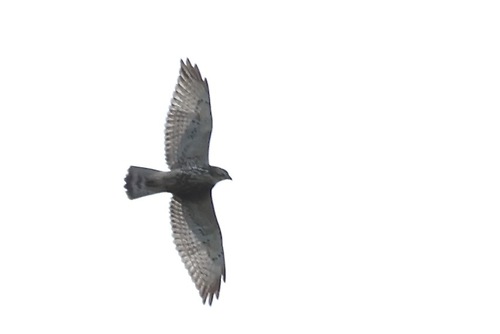 Broad-winged Hawk
 Hawaiian Hawk
In breve
Il segno di campo più affidabile tra Broad-winged Hawk e Hawaiian Hawk è il modello della coda: il Broad-winged Hawk (tutte le età) mostra una coda scura con bande bianche strette e distinte, mentre la coda dell'Hawaiian Hawk è meno distintamente striata. I giovani Broad-winged Hawks hanno striature verticali sulle parti inferiori, mentre i giovani Hawaiian Hawks mostrano zampe e piedi verdastri. In volo, il Broad-winged Hawk ha ali più corte e affusolate e una coda più corta rispetto all'Hawaiian Hawk, che è più robusto e ha ali più lunghe. L'areale è anche un indizio forte: il Broad-winged Hawk si trova in Nord America e migra, mentre l'Hawaiian Hawk è endemico alla Grande Isola delle Hawaiʻi. Usa una combinazione di modello della coda, forma delle ali e contesto locale per la separazione più sicura.
Consigli di identificazione
- Modello della coda (tutte le età): Il Broad-winged Hawk mostra sempre una coda scura con diverse bande bianche strette e nitide (alla base, al centro e alla punta). La coda dell'Hawaiian Hawk è meno distintamente striata e spesso appare più semplice o con meno contrasto.
- Parti inferiori dei giovani: Il giovane Broad-winged Hawk ha striature verticali (bande longitudinali) sulle parti inferiori, mentre i giovani Hawaiian Hawk non presentano questo modello e possono mostrare un aspetto più uniforme o maculato.
- Colore delle zampe (giovani): Il giovane Hawaiian Hawk ha zampe e piedi verdastri, mentre il Broad-winged Hawk (tutte le età) ha zampe giallastre.
- Parti inferiori degli adulti: L'adulto Broad-winged Hawk ha parti inferiori bianche con bande orizzontali fini; l'adulto Hawaiian Hawk (morfologia chiara) ha una testa scura e parti inferiori chiare, ma senza le bande fini.
- Morfologie di colore: Entrambe le specie hanno morfologie scure e chiare. La morfologia scura del Broad-winged Hawk è rara e uniformemente marrone scuro; la morfologia scura dell'Hawaiian Hawk è più comune ed è anch'essa marrone scuro, ma controlla il colore della coda e delle zampe per conferma.
- Forma delle ali in volo: Il Broad-winged Hawk ha ali corte, larghe e appuntite con un aspetto affusolato unico. Le ali dell'Hawaiian Hawk sono più larghe e lunghe, dando un'impressione più robusta.
- Lunghezza e forma della coda: Il Broad-winged Hawk ha una coda relativamente corta; la coda dell'Hawaiian Hawk è più lunga in proporzione al suo corpo.
- Dimensioni: L'Hawaiian Hawk è più grande e robusto, specialmente la femmina, ma la sovrapposizione delle dimensioni rende questo poco affidabile a meno che entrambi non siano visti insieme.
- Areale: Il Broad-winged Hawk si trova in Nord America (e migra), mai nelle Hawaiʻi. L'Hawaiian Hawk è presente solo sulla Grande Isola; qualsiasi Buteo lì è un Hawaiian Hawk.
- Habitat: Il Broad-winged Hawk preferisce le foreste decidue; l'Hawaiian Hawk si trova nelle foreste native di ʻōhiʻa lehua nelle Hawaiʻi.
- Segno della stagione di riproduzione: Durante la riproduzione, un Hawaiian Hawk (probabilmente la femmina) può mostrare un cappuccio giallastro sopra il becco—mai visto nel Broad-winged Hawk.
- Comportamento: Il Broad-winged Hawk migra in grandi stormi (kettles); l'Hawaiian Hawk è sedentario e territoriale.
- Confusione del piumaggio: La morfologia chiara del Broad-winged Hawk può assomigliare alla morfologia chiara dell'Hawaiian Hawk, ma controlla le bande della coda e le bande delle parti inferiori.
- Postura in perching: Entrambi si posano eretti, ma il Broad-winged Hawk può apparire più compatto a causa della sua coda e ali più corte.
- Voce: Non diagnostica con le informazioni attuali.
Taglia
Il Broad-winged Hawk è leggermente più piccolo, misurando 32–44 cm (13–17 in) di lunghezza e pesando 265–560 g (9.3–19.8 oz) [wikipedia]. L'Hawaiian Hawk è più grande, con una lunghezza di 40–46 cm (16–18 in); le femmine pesano in media 605 g (21.3 oz), i maschi 441 g (15.6 oz) [wikipedia]. Entrambi sono Buteos di dimensioni medie, ma l'Hawaiian Hawk è più robusto e pesante nel complesso, specialmente la femmina. L'apertura alare è fornita solo per il Broad-winged Hawk (74–100 cm), ma l'Hawaiian Hawk è probabilmente simile o leggermente più grande data la sua dimensione corporea.
Piumaggio
-
Giovani/uccelli immaturi: I giovani Broad-winged Hawk hanno più bianco in generale e striature verticali (bande longitudinali) sulle parti inferiori, mentre i giovani Hawaiian Hawk sono meglio riconosciuti per le loro zampe e piedi verdastri (gli adulti hanno zampe gialle). Entrambe le specie hanno morfologie chiare e scure, ma la morfologia chiara del Broad-winged Hawk è più suscettibile di essere confusa con altri Buteos a causa delle sue parti inferiori chiare e della coda striata.
-
Adulti: Gli adulti Broad-winged Hawk mostrano parti superiori marrone scuro, parti inferiori bianche con bande orizzontali e una coda scura con più bande bianche strette (alla base, al centro e alla punta). Gli adulti Hawaiian Hawk hanno due fasi di colore: scura (marrone scuro in tutto) e chiara (testa scura, parti inferiori chiare e sottoali). La coda è meno distintamente striata rispetto al Broad-winged Hawk. Durante la riproduzione, un Hawaiian Hawk (probabilmente la femmina) può mostrare un cappuccio giallastro sopra il becco.
-
In volo: Le ali del Broad-winged Hawk sono corte, larghe e appuntite con un aspetto affusolato unico; la coda è corta e distintamente striata. Le ali dell'Hawaiian Hawk sono più larghe e lunghe, e la coda è meno marcata.
Comportamento
Entrambi sono Buteos tipici, spesso visti planare su ali larghe. Il Broad-winged Hawk migra in grandi stormi ('kettles') durante la migrazione, mentre l'Hawaiian Hawk è sedentario e territoriale sulla Grande Isola. Le esibizioni di corteggiamento (ruote, tuffi) sono notate per il Broad-winged Hawk, ma non specificamente descritte per l'Hawaiian Hawk. Entrambi si posano sugli alberi e cacciano da un posatoio o in volo.
Habitat
Il Broad-winged Hawk si riproduce nelle foreste decidue dell'est del Nord America e migra verso il Centro e il Sud America per l'inverno. L'Hawaiian Hawk è strettamente endemico alla Grande Isola delle Hawaiʻi, riproducendosi nelle foreste native di ʻōhiʻa lehua. Se ti trovi al di fuori delle Hawaiʻi, stai quasi certamente vedendo un Broad-winged Hawk; se sei sulla Grande Isola, l'Hawaiian Hawk è l'unico Buteo presente.
Broad-winged Hawk · Hawaiian Hawk · I miei uccelli difficili