
Buff-headed Coucal vs Pacific Koel
Centropus milo contro Eudynamys orientalis
Fai un quiz con Buff-headed Coucal e Pacific Koel
 Buff-headed Coucal
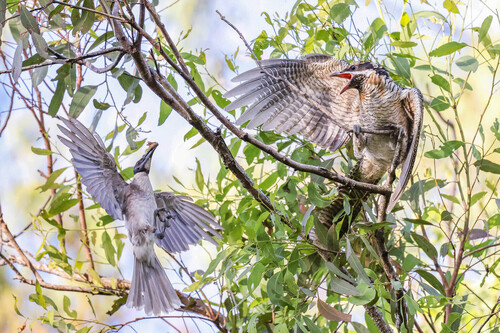 Pacific Koel
In breve
Il segno distintivo più affidabile tra Buff-headed Coucal e Pacific Koel è la testa e le parti inferiori di colore buff del Buff-headed Coucal negli adulti, che non si verifica mai nel Pacific Koel di qualsiasi età o sesso. I Buff-headed Coucal juvenili sono anche distintivi, essendo pesantemente maculati e barrati di marrone, mentre i Pacific Koel juvenili e femminili sono marroni sopra con macchie bianche e parti inferiori striate o barrate, ma mancano delle tonalità buff e delle forti barre del Coucal. Strutturalmente, il Buff-headed Coucal è un uccello molto più pesante e massiccio con un becco massiccio e ali corte, in contrasto con il Pacific Koel più snello, dalla coda più lunga e più aerodinamico. Se vedi un grande cuculo dal corpo pesante con una testa e parti inferiori buff, è un Buff-headed Coucal; un uccello più snello, nero o marrone con occhi rossi è un Pacific Koel.
Consigli di identificazione
- Testa e parti inferiori buff (adulto Buff-headed Coucal): Solo il Buff-headed Coucal mostra una testa di colore buff, parte superiore della schiena e parti inferiori. Il Pacific Koel non mostra mai questo, indipendentemente dall'età o dal sesso.
- Ali e coda nere lucide (adulto Buff-headed Coucal): In contrasto con il corpo buff; i maschi di Pacific Koel sono tutti neri, ma senza l'effetto bicolore.
- Piumaggio giovanile: Il Buff-headed Coucal giovanile è marrone con maculature nere e ali e coda barrate di marrone rossiccio. Il Pacific Koel giovanile è marrone sopra con macchie bianche e parti inferiori color crema con striature scure—mai così pesantemente barrato o maculato come il Coucal.
- Piumaggio femminile: La femmina di Pacific Koel è marrone sopra con macchie bianche e parti inferiori color crema con striature nere. Le femmine di Buff-headed Coucal assomigliano ai maschi (buff e nero), mai macchiate o striate sotto.
- Struttura del becco: Il Buff-headed Coucal ha un becco massiccio e pesante (grigio scuro negli adulti, bicolore nei giovanili). Il becco del Pacific Koel è più snello e meno robusto.
- Struttura del corpo: Il Buff-headed Coucal è più massiccio, con un corpo pesante e ali corte. Il Pacific Koel è più snello ed allungato, con una coda e ali più lunghe.
- Stile di volo: Il Coucal vola in brevi, pesanti e faticosi scatti, spesso vicino al suolo. Il Koel vola in modo più diretto e veloce, di solito più in alto nella chioma degli alberi.
- Colore degli occhi: Il Buff-headed Coucal adulto e il Pacific Koel hanno entrambi occhi rossi. Il Coucal giovanile ha occhi marrone-grigi; il giovanile Koel ha occhi scuri.
- Colore del becco (giovanili): Il Buff-headed Coucal giovanile ha un becco bicolore (marrone sopra, corno chiaro sotto); i giovanili Koel hanno un becco più chiaro, ma non bicolore.
- Habitat: Il Buff-headed Coucal è limitato alle foreste centrali delle Isole Salomone; il Pacific Koel è diffuso in Australasia e nel Sud-est asiatico, in una varietà di habitat boschivi.
- Vocalizzazione: Richiami persistenti, forti e ripetitivi indicano il Pacific Koel. Il Buff-headed Coucal è molto più silenzioso.
- Schema della coda: La coda del Koel è lunga e spesso appare graduata; la coda del Coucal è larga e meno allungata.
- Comportamento: Il Coucal è più probabile che venga visto arrampicarsi attraverso la fitta vegetazione o rami bassi; il Koel è più arboricolo e raramente visto a terra.
- Dimensione relativa: Se l'uccello appare eccezionalmente grande e pesante per un cuculo, è probabile che sia un Buff-headed Coucal.
- Contesto locale: Se ti trovi al di fuori delle Isole Salomone, è estremamente improbabile vedere un Buff-headed Coucal.
Taglia
Il Buff-headed Coucal è significativamente più grande e pesante del Pacific Koel. Misura 60–69 cm di lunghezza e pesa circa 769 g, rendendolo forse la più grande specie di cuculo [wikipedia]. Il Pacific Koel è grande per un cuculo ma è più snello e leggero, con un corpo e una coda più allungati. La massa, il becco pesante e le ali corte del Coucal sono evidenti anche a distanza, mentre il Koel appare più snello e allungato, specialmente in volo.
Piumaggio
- Giovanili: Il Buff-headed Coucal giovanile è marrone, maculato di nero, e ha ali e coda marrone rossiccio con barre nere. L'iride è marrone-grigia e il becco è bicolore (marrone sopra, corno chiaro sotto). Al contrario, il Pacific Koel giovanile assomiglia alla femmina: marrone sopra con macchie bianche, parti inferiori color crema con striature scure o barre, e occhi scuri. Nessuna tonalità buff o pesante barratura come nel Coucal.
- Maschi adulti: Gli adulti di Buff-headed Coucal hanno una testa, parte superiore della schiena e parti inferiori buff, con ali nere lucide, parte bassa della schiena e coda. I maschi adulti di Pacific Koel sono tutti neri con riflessi blu-verdi e occhi rossi—mai buff o bicolore.
- Femmine adulte: La femmina di Pacific Koel è marrone sopra con macchie bianche e parti inferiori color crema con fini strisce nere, mancando della colorazione buff del Coucal. Le femmine di Buff-headed Coucal assomigliano ai maschi (buff e nero).
- Colore dell'iride: Il Buff-headed Coucal adulto ha occhi rossi; il giovanile ha marrone-grigi. Gli adulti di Pacific Koel (entrambi i sessi) hanno occhi rossi; i giovanili hanno occhi scuri.
- Colore del becco: Gli adulti di Buff-headed Coucal hanno becchi grigio scuro; i giovanili hanno becchi bicolori. Il Pacific Koel ha un becco scuro nei maschi, più chiaro nelle femmine e nei giovanili.
Comportamento
Il Buff-headed Coucal è un abitante del suolo o della vegetazione bassa, che si muove pesantemente e spesso goffamente attraverso la fitta vegetazione forestale. Non è un forte volatore e tende a muoversi in brevi voli pesanti. Il Pacific Koel è più arboricolo e agile, spesso visto volare tra gli alberi o posarsi in alto nella chioma. I Koel sono parassiti della covata, raramente visti a terra, e sono più propensi a essere notati per i loro richiami o per i voli rapidi e diretti.
Habitat
Il Buff-headed Coucal è endemico delle Isole Salomone centrali, trovato in foreste tropicali umide di pianura e montagna, sia di crescita primaria che secondaria [wikipedia]. È rigorosamente un uccello di foresta. Il Pacific Koel è diffuso in Australasia e nel Sud-est asiatico, trovato in una varietà di habitat boschivi, comprese foreste, piantagioni e persino parchi urbani. Se ti trovi nelle foreste centrali delle Isole Salomone, è probabile vedere un Buff-headed Coucal; altrove, specialmente in aree aperte o urbane, è più probabile vedere un Pacific Koel.
Voce
Il Pacific Koel è famoso per i suoi richiami forti e ripetitivi, specialmente durante la stagione degli amori, spesso uditi giorno e notte. La voce del Buff-headed Coucal non è descritta nelle note fornite, ma i coucals in generale sono meno vocali e non producono i richiami distintivi e lontani del Koel. Se l'uccello chiama in modo persistente e forte, specialmente con note ascendenti o ripetitive, è quasi certamente un Pacific Koel.
Buff-headed Coucal · Pacific Koel · I miei uccelli difficili