Cuculo vs Oriental Cuckoo
Cuculus canorus contro Cuculus optatus
Fai un quiz con Cuculo e Oriental Cuckoo
 Cuculo
 Oriental Cuckoo
In breve
Il miglior segno sul campo per separare il Cuculo da Cuculo Orientale è il modello del ventre e della parte inferiore della coda: il Cuculo di solito mostra un ventre bianco con barre scure, mentre il Cuculo Orientale ha spesso un ventre color crema con poche o nessuna marcatura. I giovani Cuculi hanno una distintiva macchia bianca sulla nuca e frange di piume bianche, che il Cuculo Orientale non ha. Negli adulti, il Cuculo è più robusto, ha ali più lunghe e un grigio più chiaro nel complesso, con barre nere più larghe sui morph rugginosi e un petto grigio più nettamente delimitato. Entrambe le specie sono molto simili e possono essere estremamente difficili da separare, specialmente in volo o a distanza, ma prestando attenzione al colore del ventre, alla struttura generale e ai dettagli del piumaggio specifici per età si può aiutare.
Consigli di identificazione
- Il giovane Cuculo mostra una audace macchia bianca sulla nuca e frange di piume bianche sulla parte superiore dell'ala—i giovani Cuculi Orientali non hanno questo. Questo è il segno più affidabile per i giovani uccelli in volo o appollaiati.
- Controlla l'area del ventre e della parte inferiore della coda: il Cuculo di solito ha un ventre bianco con barre scure; il Cuculo Orientale ha spesso un ventre color crema con poche o nessuna marcatura. Questo è meglio visibile sugli uccelli appollaiati o in buone viste di volo.
- Dimensioni e struttura complessive: il Cuculo è più robusto, ha ali più lunghe e una coda più lunga, con una testa e un becco leggermente più piccoli rispetto alla dimensione del corpo. Il Cuculo Orientale è più compatto e snello. Usa questo solo con esperienza o confronto affiancato.
- Piumaggio degli adulti maschi: il Cuculo è di un grigio più chiaro sopra e ha un confine più netto tra il petto grigio e le parti inferiori barrate. Il Cuculo Orientale è leggermente più scuro e la transizione è meno brusca.
- Morph rugginosi: i morph rugginosi del Cuculo (soprattutto i giovani) hanno barre nere più larghe e un posteriore semplice o leggermente macchiato; i morph rugginosi del Cuculo Orientale sono più pesantemente barrati ovunque, incluso il posteriore. Cerca il modello sul posteriore e sulle parti superiori.
- Modello dell'ala negli immaturi: i giovani Cuculi di prima autunno possono mostrare bordi bianco-cremosi sulle copritrici dell'ala superiore e sulle primarie, e barre o macchie castano sulle secondarie e sulle copritrici maggiori. Il Cuculo Orientale non ha la forte nuca bianca e i bordi delle piume.
- Postura appollaiata: il Cuculo spesso si appollaia in modo aperto con le ali abbassate e la coda sollevata, specialmente quando canta. Il Cuculo Orientale è più riservato e meno propenso a posarsi in modo aperto, specialmente in foreste dense.
- Aspetto in volo: entrambe le specie possono apparire simili a un falco in volo, ma il Cuculo appare più robusto e con ali più lunghe. Questo è sottile e meglio usato con altri segni.
- Voce: il 'goo-ko' del Cuculo è immediatamente riconoscibile e molto diverso dalle note abbinate 'poo-poo' del Cuculo Orientale. Se senti il classico richiamo del cuculo, è il Cuculo; se senti note basse e abbinate, considera il Cuculo Orientale.
- Contesto dell'habitat: in foreste dense, è più probabile trovare il Cuculo Orientale; in campagna aperta o ai margini del bosco, è più probabile trovare il Cuculo. Usa questo solo come prova di supporto.
- Stagione e distribuzione: in Europa, ci si aspetta il Cuculo; il Cuculo Orientale è raro. In Siberia e nell'Asia orientale, entrambe le specie possono verificarsi, ma il Cuculo Orientale è più legato alla foresta.
- Differenze sessuali: la femmina del Cuculo (morph grigio) ha una lavatura rosa-crema sulle barre e sui lati del collo, a volte con piccole macchie rugginose sulle copritrici delle ali e sulle secondarie. La femmina del Cuculo Orientale (morph grigio) ha una lavatura marrone sul petto.
- Colore del becco e degli occhi: entrambe hanno anelli orbitali gialli e base del becco, ma le gambe e i piedi del Cuculo Orientale sono più giallo-arancio. Questo è sottile e raramente diagnostico sul campo.
- Tempi di muta: il Cuculo muta parzialmente in estate e completamente in inverno; il programma di muta del Cuculo Orientale non è dettagliato qui, quindi non usarlo per la separazione.
- Trappole: entrambe le specie sono estremamente simili, specialmente negli adulti di morph grigio. Usa una combinazione di colore del ventre, macchia sulla nuca dei giovani, dimensioni complessive e voce per la migliore possibilità di identificazione corretta.
Taglia
Il Cuculo è visibilmente più grande e più pesante del Cuculo Orientale, con una massa media di 111,5g contro 94,5g. È anche più lungo (32–34 cm contro 30–32 cm) e ha un'apertura alare più ampia (55–60 cm contro 51–57 cm). Sul campo, il Cuculo appare spesso più robusto, con ali e coda più lunghe, e una testa e un becco leggermente più piccoli rispetto alla dimensione del corpo. Queste differenze sono sottili ma possono essere evidenti con un confronto diretto o buone viste.
Piumaggio
- Giovani/Uccelli di prima anno: il giovane Cuculo mostra una audace macchia bianca sulla nuca e frange di piume bianche, specialmente sulla parte superiore dell'ala. Le loro parti superiori possono essere fortemente barrate di marrone castano o grigio semplice, con bordi bianchi sulle copritrici dell'ala superiore e sulle primarie, e barre o macchie castano sulle secondarie e sulle copritrici maggiori. I giovani Cuculi Orientali non mostrano la macchia bianca sulla nuca; il loro ventre è marrone scuro con bande bianche, e i nidiacei più grandi hanno piume nerastre con frange bianche, ma la parte superiore dell'ala manca della forte nuca bianca e dei bordi delle piume del Cuculo.
- Maschi adulti: entrambe le specie hanno teste, petto e parti superiori grigie con ventri bianco-cremosi e barre scure. Il Cuculo è di un grigio più chiaro, con una demarcazione più netta tra il petto grigio e le parti inferiori barrate. Il ventre del Cuculo Orientale è solitamente color crema con poche marcature, mentre quello del Cuculo è tipicamente bianco con barre scure.
- Femmine adulte e morph rugginosi: entrambe le specie hanno morph rugginosi, ma il morph rugginoso del Cuculo mostra barre superiori nere più strette e un posteriore semplice o leggermente macchiato, mentre il morph rugginoso del Cuculo Orientale è più pesantemente barrato ovunque, incluso il posteriore. I morph rugginosi del Cuculo sono più comuni nei giovani, e le loro barre nere sono più larghe rispetto agli adulti.
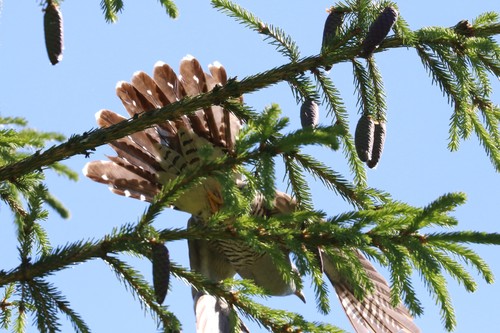
- Ali e coda: il Cuculo ha ali più lunghe e una coda più lunga, che può essere vista in volo o quando è appollaiato.
Comportamento
Il Cuculo spesso si appollaia in modo aperto con le ali abbassate e la coda sollevata, specialmente quando canta. Può muovere la coda o ruotare il corpo quando chiama o si mostra alle femmine. Il Cuculo Orientale è più riservato, di solito rimane nascosto in habitat forestali e meno propenso a posarsi in modo aperto. Entrambe le specie sono parassite della covata, ma le loro preferenze per gli ospiti differiscono (non è un segno sul campo). In volo, entrambe hanno un volo diretto simile a un falco con battiti regolari delle ali, ma il Cuculo appare più robusto e più simile a un falco di passero.
Habitat
Il Cuculo è diffuso in campagna aperta, ai margini dei boschi e in terreni agricoli in tutta Europa e Asia in estate, svernando in Africa. Il Cuculo Orientale preferisce habitat più forestali, specialmente foreste conifere, decidue e miste in tutta l'Eurasia settentrionale e nell'Asia orientale, svernando nel Sud-est asiatico e in Australasia. Nelle aree di sovrapposizione, il Cuculo Orientale è più probabile trovarlo in foreste dense, mentre il Cuculo è più spesso visto in habitat aperti o ai margini.
Voce
Il maschio del Cuculo emette il classico richiamo 'goo-ko', di solito in gruppi ripetuti con un intervallo discendente di terza minore a quarta man mano che la stagione avanza. La femmina ha un forte richiamo frizzante. Il maschio del Cuculo Orientale emette una serie di note basse abbinate 'poo-poo', entrambe accentuate in modo uguale, a volte introdotte da una breve frase o note graffianti. Il richiamo della femmina è un profondo trill frizzante. Al di fuori della stagione riproduttiva, il Cuculo Orientale è solitamente silenzioso. I richiami sono distintivi, ma la confusione è possibile se si sentono solo note brevi o distanti.