
Common Cuckoo vs Oriental Cuckoo
Cuculus canorus versus Cuculus optatus
Play a quiz with Common Cuckoo and Oriental Cuckoo
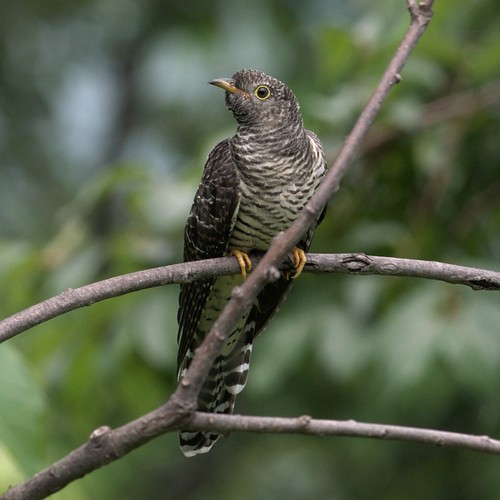 Common Cuckoo
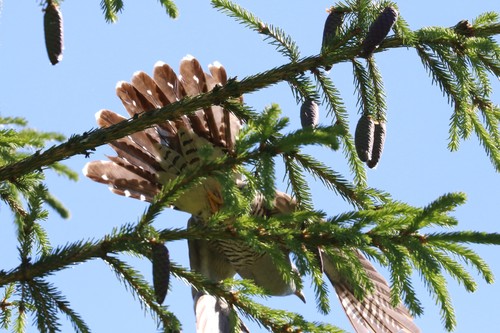 Oriental Cuckoo
In short
The best field mark to separate Common Cuckoo from Oriental Cuckoo is the vent and undertail pattern: Common Cuckoo usually shows a white vent with dark bars, while Oriental Cuckoo often has a buff vent with few or no markings. Juvenile Common Cuckoos have a distinctive white nape patch and white feather fringes, which Oriental Cuckoo lacks. In adults, Common Cuckoo is bulkier, longer-winged, and paler grey overall, with broader black bars on rufous morphs and a more sharply demarcated grey breast. Both species are very similar and can be extremely challenging to separate, especially in flight or at a distance, but careful attention to vent color, overall structure, and age-specific plumage details can help.
Identification tips
- Juvenile Common Cuckoo shows a bold white nape patch and white feather fringes on the upperwing—Oriental Cuckoo juveniles lack this. This is the most reliable mark for young birds in flight or perched.
- Check the vent and undertail area: Common Cuckoo usually has a white vent with dark bars; Oriental Cuckoo often has a buff vent with few or no markings. This is best seen on perched birds or in good flight views.
- Overall size and structure: Common Cuckoo is bulkier, longer-winged, and longer-tailed, with a slightly smaller head and bill relative to body size. Oriental Cuckoo is more compact and slimmer. Use this only with experience or side-by-side comparison.
- Adult male plumage: Common Cuckoo is paler grey above and has a sharper boundary between the grey breast and the barred underparts. Oriental Cuckoo is slightly darker and the transition is less abrupt.
- Rufous morphs: Common Cuckoo rufous morphs (especially juveniles) have broader black bars and a plain or lightly spotted rump; Oriental Cuckoo rufous morphs are more heavily banded all over, including the rump. Look for the pattern on the rump and upperparts.
- Wing pattern in immatures: Common Cuckoo first-autumn birds may show creamy-white edges to upperwing coverts and primaries, and chestnut bars or spots on secondaries and greater coverts. Oriental Cuckoo lacks the strong white nape and feather edges.
- Perched posture: Common Cuckoo often perches in the open with drooped wings and raised tail, especially when singing. Oriental Cuckoo is more secretive and less likely to perch openly, especially in dense forest.
- Flight jizz: Both species can look sparrowhawk-like in flight, but Common Cuckoo appears bulkier and longer-winged. This is subtle and best used with other marks.
- Voice: Common Cuckoo's 'goo-ko' is instantly recognizable and very different from Oriental Cuckoo's paired 'poo-poo' notes. If you hear the classic cuckoo call, it's Common Cuckoo; if you hear low, even paired notes, consider Oriental Cuckoo.
- Habitat context: In dense forest, Oriental Cuckoo is more likely; in open country or woodland edge, Common Cuckoo is more likely. Use this only as supporting evidence.
- Season and range: In Europe, Common Cuckoo is expected; Oriental Cuckoo is rare. In Siberia and east Asia, both may occur, but Oriental Cuckoo is more tied to forest.
- Sex differences: Female Common Cuckoo (grey morph) has a pinkish-buff wash to the barring and neck sides, sometimes with small rufous spots on the wing coverts and secondaries. Oriental Cuckoo female (grey morph) has a brownish wash on the breast.
- Bill and eye color: Both have yellow orbital rings and base of bill, but Oriental Cuckoo's legs and feet are more orange-yellow. This is subtle and rarely diagnostic in the field.
- Moult timing: Common Cuckoo moults partially in summer and completely in winter; Oriental Cuckoo's moult schedule is not detailed here, so do not use this for separation.
- Pitfalls: Both species are extremely similar, especially in grey morph adults. Use a combination of vent color, juvenile nape patch, overall size, and voice for the best chance of correct identification.
Size
Common Cuckoo is noticeably larger and heavier than Oriental Cuckoo, with an average mass of 111.5g versus 94.5g. It is also longer (32–34 cm vs 30–32 cm) and has a broader wingspan (55–60 cm vs 51–57 cm). In the field, Common Cuckoo often appears bulkier, with longer wings and tail, and a slightly smaller head and bill relative to body size. These differences are subtle but can be apparent with direct comparison or good views.
Plumage
- Juveniles/First-year birds: Juvenile Common Cuckoo shows a bold white nape patch and white feather fringes, especially on the upperwing. Their upperparts can be strongly barred chestnut-brown or plain grey, with whitish edges to the upper wing-coverts and primaries, and chestnut bars or spots on the secondaries and greater coverts. Oriental Cuckoo juveniles do not show the white nape patch; their belly is dark brown with white bands, and older nestlings have blackish feathers with white fringes, but the upperwing lacks the strong white nape and feather edges of Common Cuckoo.
- Adult males: Both species have grey heads, breast, and upperparts with creamy-white bellies and dark barring. Common Cuckoo is paler grey, with a sharper demarcation between the grey breast and barred underparts. Oriental Cuckoo's vent is usually buff with few markings, while Common Cuckoo's is typically white with dark bars.
- Adult females and rufous morphs: Both species have rufous morphs, but Common Cuckoo's rufous morph shows narrower black upperpart bars and a plain or lightly spotted rump, while Oriental Cuckoo's rufous morph is more heavily banded all over, including the rump. Common Cuckoo rufous morphs are more common in juveniles, and their black bars are broader than in adults.
- Wing and tail: Common Cuckoo is longer-winged and longer-tailed, which can be seen in flight or when perched.
Behaviour
Common Cuckoo often perches openly with drooped wings and a raised tail, especially when singing. It may wag its tail or pivot its body when calling or displaying to females. Oriental Cuckoo is more secretive, usually staying hidden in forested habitats and less likely to perch in the open. Both species are brood parasites, but their host preferences differ (not a field mark). In flight, both have a falcon-like, direct flight with regular wingbeats, but Common Cuckoo appears bulkier and more sparrowhawk-like.
Habitat
Common Cuckoo is widespread in open country, woodland edges, and farmland across Europe and Asia in summer, wintering in Africa. Oriental Cuckoo prefers more forested habitats, especially coniferous, deciduous, and mixed forests across northern Eurasia and east Asia, wintering in Southeast Asia and Australasia. In areas of overlap, Oriental Cuckoo is more likely in dense forest, while Common Cuckoo is more often seen in open or edge habitats.
Voice
Common Cuckoo male gives the classic 'goo-ko' call, usually in repeated groups with a descending minor third to fourth interval as the season progresses. The female has a loud bubbling call. Oriental Cuckoo male gives a series of low, paired 'poo-poo' notes, both stressed equally, sometimes introduced by a short phrase or grating notes. The female's call is a deep bubbling trill. Outside the breeding season, Oriental Cuckoo is usually silent. The calls are distinct, but confusion is possible if only brief or distant notes are heard.