
Crested Goshawk vs Shikra
Lophospiza trivirgata contro Tachyspiza badia
Fai un quiz con Crested Goshawk e Shikra
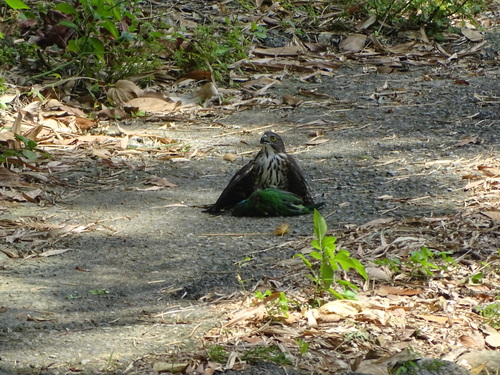 Crested Goshawk
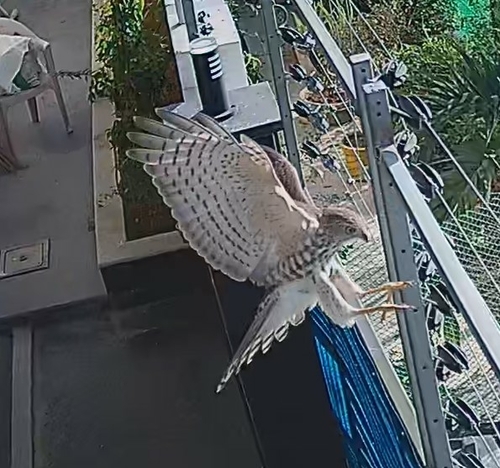 Shikra
In breve
Il segno distintivo più affidabile tra Crested Goshawk e Shikra è la presenza di una cresta corta e folta sul Crested Goshawk, che è assente nello Shikra. La livrea giovanile e il modello delle parti inferiori possono essere utili: i giovani Crested Goshawk mostrano parti inferiori color crema con piume della testa con bordi chiari, mentre i giovani Shikra hanno ali e code più strettamente barrate con forti striature sul petto superiore. Strutturalmente, il Crested Goshawk è notevolmente più grande e massiccio, specialmente la femmina, e mostra un profilo della testa più prominente con la sua cresta. Entrambe le specie condividono ali corte e larghe e lunghe code, ma la dimensione e la forma della testa del Goshawk sono distintive. Lo stile di volo è simile, ma il Crested Goshawk tende ad apparire più pesante e potente, mentre lo Shikra è più compatto e agile.
Consigli di identificazione
- Crest presence: Solo il Crested Goshawk mostra una cresta corta e folta sulla testa, visibile di profilo, specialmente quando è posato o all'erta. Lo Shikra è sempre privo di cresta.
- Size and bulk: Il Crested Goshawk è più grande e massiccio, specialmente la femmina. Lo Shikra è nettamente più piccolo e più snello. Usa uccelli vicini o il contesto per la scala.
- Juvenile underparts: Il giovane Crested Goshawk ha parti inferiori color crema con piume della testa con bordi chiari e petto striato (non barrato); il giovane Shikra è più bianco sotto con striature/macchie scure sul petto superiore e barrature strette sulle ali e sulla coda.
- Adult underparts: Gli adulti di Crested Goshawk hanno parti inferiori chiare con striature ruggine sul petto e barre sull'addome; gli adulti di Shikra sono bianchi sotto con barre ruggine fini, e l'addome inferiore è meno barrato, con cosce bianche.
- Head pattern: Il maschio di Crested Goshawk ha una corona marrone scuro, lati grigi della testa, e bold strisce nere sul baffo e sulla gola; lo Shikra ha una testa meno contrastante, con una stretta striscia scura mesiale sulla gola e nessun segno bold sul baffo.
- Iris color: Il maschio adulto di Shikra ha un'iride rossa; la femmina di Shikra ha un'iride giallo-arancio. Il colore dell'iride del Crested Goshawk non è specificato nelle note, quindi usa con cautela.
- Tail pattern (in flight): La coda dello Shikra ha bande deboli sulle piume laterali e una forte banda terminale scura sulle piume centrali; la coda del Crested Goshawk è lunga e può mostrare barrature più forti, ma le note non specificano un modello unico.
- Underwing (in flight): Il maschio di Shikra mostra un rivestimento chiaro sotto le ali e punte nere quando visto da sotto. Il modello sotto le ali del Crested Goshawk non è dettagliato, quindi questo è più utile per confermare lo Shikra.
- Flight style: Il volo del Crested Goshawk è più pesante e più lento ('battito lento, battito lento, planata dritta'), mentre lo Shikra è più veloce e più agile, specialmente quando caccia o evade.
- Habitat: Il Crested Goshawk preferisce foreste dense; lo Shikra è comune in campagna aperta, terreni agricoli e aree urbane così come nelle foreste. Un uccello in un parco cittadino o in un villaggio è più probabile che sia uno Shikra.
- Behavior: Lo Shikra è spesso visto singolarmente o in coppie, e la sua presenza allerta piccoli uccelli e mammiferi. Il Crested Goshawk è più segreto e meno probabile che venga assalito in aree aperte.
- Voice: Un richiamo 'pee-wee' o 'kik-ki' indica lo Shikra, specialmente se udito in volo. La mancanza di vocalizzazione non è diagnostica per il Crested Goshawk.
- Sex differences: La femmina di Crested Goshawk è molto più grande e marrone del maschio, con striature e barre marroni sulle parti inferiori; la femmina di Shikra è solo leggermente più grande del maschio e ha barrature più pesanti sotto.
- Pitfalls: Gli uccelli immaturi di entrambe le specie possono essere confusi; concentrati sulla forma della testa (cresta), dimensione e modello delle parti inferiori. Se la cresta non è visibile, usa una combinazione di dimensione, habitat e modello delle parti inferiori per separarli.
- Not diagnostic: La forma del becco, la proiezione primaria e la forma della coda sono simili e non affidabili per la separazione sul campo basata sulle note fornite.
Taglia
Crested Goshawk is significantly larger, measuring 30–46 cm in length, with females much larger than males. Shikra is smaller, at 26–30 cm. This size difference is most apparent when both are seen together or with familiar species for scale. Crested Goshawk also appears bulkier and more robust, while Shikra is more slender and compact. Female Crested Goshawk is especially large compared to any Shikra, and even male Crested Goshawk is usually larger than a female Shikra. [wikipedia][avonet]
Piumaggio
- Juvenile/immature birds:
- Crested Goshawk juveniles have buff underparts with pale fringes to the head feathers, giving a paler, more washed-out look. Underparts are streaked rather than barred, and the background is buff, not white.
- Shikra juveniles show dark streaks and spots on the upper breast, with underparts less buff and more white-based. The wing is narrowly barred, and the tail has dark but narrow bands. In post-juvenile transition, Shikra shows strong barring on the underside contour feathers.
- Adults:
- Crested Goshawk males have a dark brown crown, grey sides to the head, and bold black moustachial and throat stripes. Underparts are pale with rufous streaks on the breast and bars on the belly. Females are browner on the head and have brown streaks and bars below.
- Shikra adults are whitish below with fine rufous bars, grey above, and the lower belly is less barred. Thighs are whitish. Males have a red iris, females a yellowish-orange iris and browner upperparts. The mesial throat stripe is dark but narrow (less bold than Crested Goshawk). In flight, Shikra males show a light underwing lining and blackish wingtips. Tail bands are faint except for a dark terminal band on the central feathers.
- Crest:
- Only Crested Goshawk shows a short, bushy crest, visible in profile, which is absent in Shikra.
[wikipedia]
Comportamento
Entrambe le specie usano un volo a battito-planata tipico degli accipitri, ma il volo del Crested Goshawk è descritto come 'battito lento, battito lento, planata dritta,' dando un'impressione più pesante e deliberata. Lo Shikra è più agile e compatto in volo, spesso visto singolarmente o in coppie, ed è noto per i suoi rapidi e agili movimenti quando caccia o evade. Durante la stagione riproduttiva, le coppie di Shikra possono planare e tuffarsi l'una verso l'altra, e la loro presenza allerta spesso piccoli uccelli e mammiferi. Il Crested Goshawk è più adattato alla foresta, usando la sua massa e potenza per manovrare attraverso alberi densi, mentre lo Shikra è più probabile che venga visto in aree aperte o urbane così come nelle foreste.
Habitat
Il Crested Goshawk è principalmente una specie forestale, adattata per manovrare attraverso boschi densi con le sue ali corte e larghe e la lunga coda. Lo Shikra è più versatile, trovato in foreste, terreni agricoli e aree urbane, ed è più probabile che venga visto in campagna aperta o vicino a insediamenti umani. L'adattabilità dello Shikra a una gamma più ampia di habitat, comprese città e villaggi, è un utile indizio di contesto se l'habitat è noto.
Voce
Lo Shikra ha un richiamo distintivo 'pee-wee', con la prima nota più alta e la seconda più lunga; in volo, emette brevi e acuti richiami 'kik-ki ... kik-ki'. Le vocalizzazioni del Crested Goshawk non sono dettagliate nelle note fornite, quindi la voce è più utile per confermare lo Shikra che per escludere il Crested Goshawk.