

Greater Yellowlegs vs Stilt Sandpiper
Tringa melanoleuca contro Calidris himantopus
Fai un quiz con Greater Yellowlegs e Stilt Sandpiper
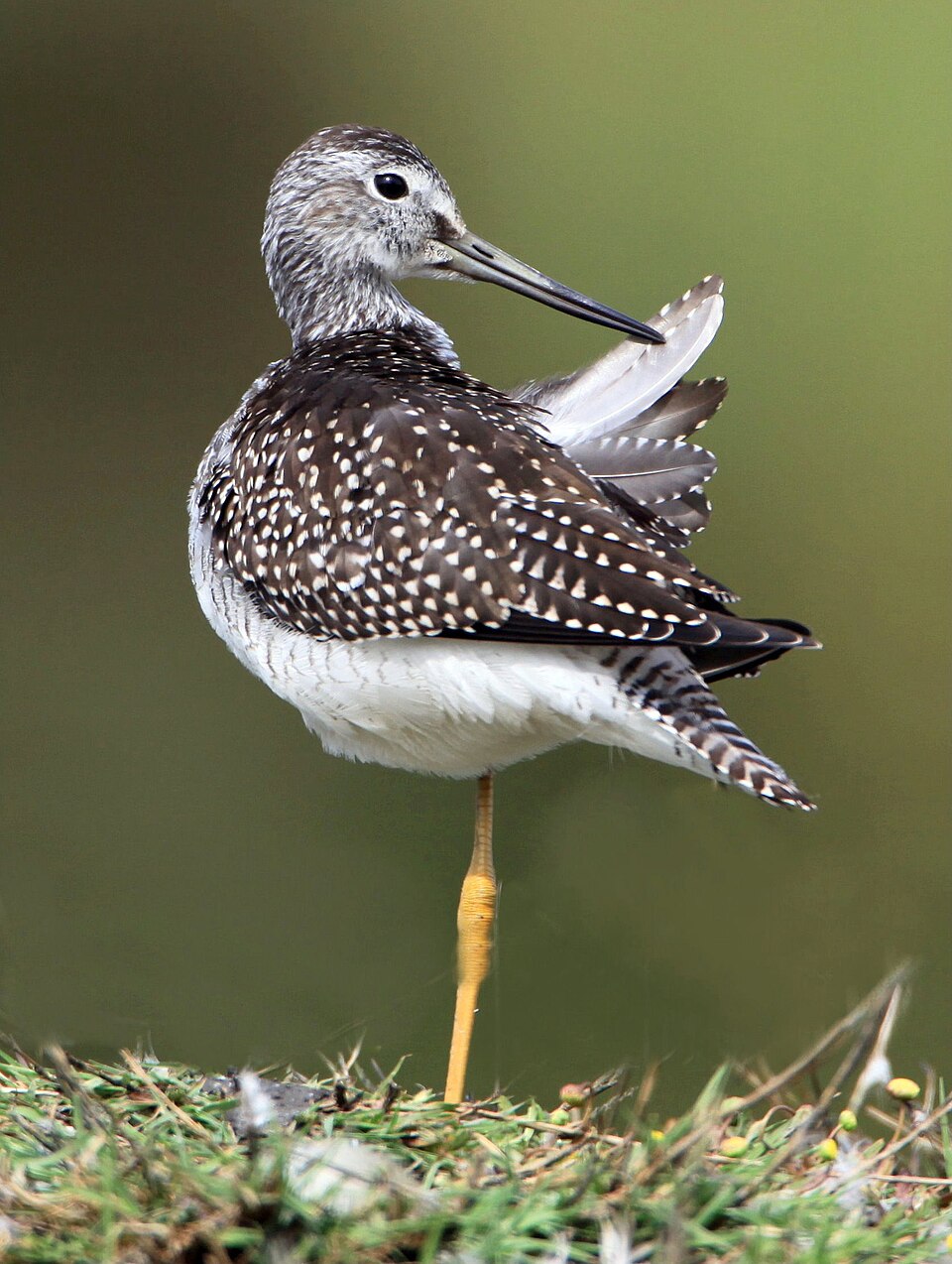 Greater Yellowlegs
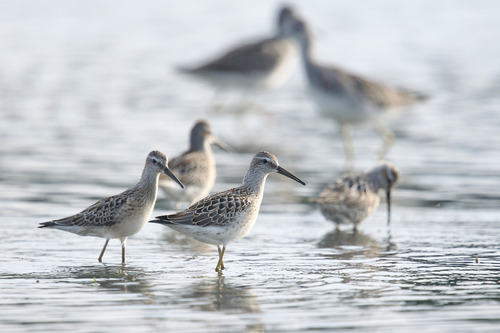 Stilt Sandpiper
In breve
Il modo più affidabile per separare il Greater Yellowlegs dallo Stilt Sandpiper è attraverso la struttura generale e la forma del becco: il Greater Yellowlegs è un uccello molto più grande e slanciato con un becco lungo, dritto e leggermente ricurvo verso l'alto, mentre lo Stilt Sandpiper è più piccolo e compatto, con un becco più corto e leggermente ricurvo. In volo, lo Stilt Sandpiper non ha una banda alare e mostra un sopracciglio bianco, mentre il Greater Yellowlegs ha un'ala superiore grigio-marrone uniforme e un sopracciglio bianco. Le piume giovanili e non riproduttive possono essere confuse, ma le gambe più lunghe del yellowlegs e le striature più audaci sul collo e sul petto sono utili. La voce è anche un forte indizio: il Greater Yellowlegs emette un fischio forte e chiaro a tre note, mentre lo Stilt Sandpiper è più silenzioso.
Consigli di identificazione
- Dimensione e struttura: Il Greater Yellowlegs è molto più grande e alto dello Stilt Sandpiper, con lunghe gambe gialle brillanti e una postura slanciata e verticale. Usa questo soprattutto quando gli uccelli sono affiancati.
- Forma del becco: Il Greater Yellowlegs ha un becco lungo, dritto e leggermente ricurvo che è più lungo della sua testa. Il becco dello Stilt Sandpiper è più corto, solo leggermente ricurvo, e mai ovviamente ricurvo verso l'alto.
- Colore delle gambe: Entrambe le specie hanno gambe giallastre, ma quelle del Greater Yellowlegs sono gialle brillanti, mentre quelle dello Stilt Sandpiper sono giallo-verde e di solito più opache. Questo è sottile e inaffidabile a distanza o in scarsa illuminazione.
- Schema di volo: Entrambe le specie mostrano un sopracciglio bianco, ma lo Stilt Sandpiper non ha alcuna banda alare in volo, mentre il Greater Yellowlegs ha ali superiori grigio-marrone uniformi. Nessuna delle due ha un forte schema alare contrastante, quindi concentrati su dimensione e struttura in volo.
- Schema della testa: Lo Stilt Sandpiper (tutte le età) mostra un forte sopracciglio bianco, particolarmente evidente nei giovanili e negli adulti invernali. Il Greater Yellowlegs non ha questo, mostrando una testa più uniforme con fini striature.
- Petto e ventre: Lo Stilt Sandpiper in riproduzione è pesantemente barrato sotto, mentre il Greater Yellowlegs ha striature scure e grossolane sul collo e sul petto superiore ma è altrimenti bianco sotto. Lo Stilt Sandpiper giovanile non ha barrature sotto ma ha un ventre pulito e non striato.
- Schiena e scapolari: Lo Stilt Sandpiper giovanile mostra piume della schiena con bordi bianchi, dando un aspetto squamoso. Il Greater Yellowlegs ha una schiena grigio-marrone uniforme in tutte le piume.
- Postura e alimentazione: Il Greater Yellowlegs sta in piedi alto e spesso si nutre in acque più profonde, a volte mescolando l'acqua con il suo becco. Lo Stilt Sandpiper è più accovacciato e esplora metodicamente.
- Voce: Se senti un fischio forte, chiaro e a tre note, è il Greater Yellowlegs. Lo Stilt Sandpiper è silenzioso e raramente chiama in modo evidente.
- Associazione in stormi: Lo Stilt Sandpiper è di solito con altri piccoli limicoli ('peeps'), mentre il Greater Yellowlegs è spesso solitario o con altri yellowlegs.
- Colore del becco: Entrambi hanno becchi scuri, ma il becco del Greater Yellowlegs è proporzionalmente più lungo e più robusto.
- Confusione stagionale: In piumaggio non riproduttivo, entrambe le specie diventano più semplici, ma la dimensione del yellowlegs, le gambe più lunghe e il collo striato rimangono buoni indizi.
- Sovrapposizione dell'habitat: Entrambi utilizzano habitat umidi simili durante la migrazione, quindi non fare affidamento solo sul contesto per l'identificazione.
- Confusione giovanile: Il giovanile Stilt Sandpiper può essere scambiato per yellowlegs a distanza, ma nota la dimensione più piccola, il forte sopracciglio e il becco più corto e leggermente pendente.
- Quando hai dubbi: Se non riesci a giudicare la dimensione o la forma del becco, cerca la combinazione di un forte sopracciglio (Stilt Sandpiper) rispetto a un collo e un petto striati (Greater Yellowlegs).
Taglia
Il Greater Yellowlegs è sostanzialmente più grande e pesante dello Stilt Sandpiper. Il Greater Yellowlegs pesa in media circa 170 g e misura 29–40 cm di lunghezza con un'apertura alare di 60 cm. Lo Stilt Sandpiper è molto più piccolo, pesando solo 50–70 g, con una lunghezza di 18–23 cm e un'apertura alare di 37–42 cm. Sul campo, il Greater Yellowlegs sta molto più alto, con gambe più lunghe e una silhouette più allungata, mentre lo Stilt Sandpiper appare più compatto e più vicino al suolo.
Piumaggio
I giovanili e i non riproduttivi Stilt Sandpipers mostrano un forte sopracciglio bianco e un sopracciglio bianco, e in volo, non hanno alcuna banda alare—questa è una differenza chiave rispetto a molti altri uccelli costieri, ma entrambe le specie qui hanno ali superiori uniformi. I giovanili Stilt Sandpipers hanno una schiena marrone con bordi di piume bianchi e un forte schema della testa, ma nessuna barratura sotto. Gli adulti in riproduzione Stilt Sandpipers sono pesantemente barrati sotto e hanno macchie rosso-arancioni sopra e sotto il sopracciglio. Il Greater Yellowlegs, in tutte le piume, mostra un collo e un petto grossolanamente striati, con una schiena grigio-marrone per lo più uniforme e parti inferiori bianche. Entrambe le specie hanno sopraccigli bianchi, ma il Greater Yellowlegs non mostra mai il forte schema della testa o le barrature sotto dello Stilt Sandpiper in riproduzione. Il becco del yellowlegs è più lungo della testa e spesso leggermente ricurvo, mentre quello dello Stilt Sandpiper è più corto e solo leggermente ricurvo. Il colore delle gambe è giallo nel Greater Yellowlegs e giallo-verde nello Stilt Sandpiper, ma questo può essere sottile a distanza.
Comportamento
Il Greater Yellowlegs spesso cerca attivamente cibo in acque poco profonde, a volte mescolando l'acqua con il suo becco, e tende ad essere più eretto e allerta nella postura. Lo Stilt Sandpiper si nutre esplorando metodicamente, spesso in acque più profonde rispetto alla maggior parte dei piccoli limicoli, ma appare comunque più accovacciato e meno eretto rispetto ai yellowlegs. Negli stormi misti, il Greater Yellowlegs si distingue per la sua altezza e la tendenza a guadare più in profondità, mentre lo Stilt Sandpiper si fonde di più con altri piccoli limicoli.
Habitat
Entrambe le specie possono essere trovate in zone umide poco profonde, fanghi e campi allagati durante la migrazione. Il Greater Yellowlegs è più probabile che venga visto in acque leggermente più profonde ed è spesso solitario o in piccoli gruppi. Lo Stilt Sandpiper si trova tipicamente in stormi misti con altri 'peeps' e preferisce bordi fangosi e acque poco profonde, ma può anche guadare abbastanza in profondità. C'è una considerevole sovrapposizione nei siti di sosta migratoria, quindi il contesto da solo è raramente diagnostico.
Voce
Il Greater Yellowlegs è molto più vocale, emettendo un fischio forte, chiaro e a tre sillabe, con la terza nota più bassa di tono. Questo richiamo è distintivo e si sente bene. Lo Stilt Sandpiper è generalmente silenzioso, senza un richiamo forte e diagnostico; le sue vocalizzazioni sono più morbide e meno probabili da essere notate dai birdwatcher sul campo.
Greater Yellowlegs · Stilt Sandpiper · I miei uccelli difficili