
Motmot

Greater Yellowlegs vs Stilt Sandpiper

Tringa melanoleuca versus Calidris himantopus

Play a quiz with Greater Yellowlegs and Stilt Sandpiper
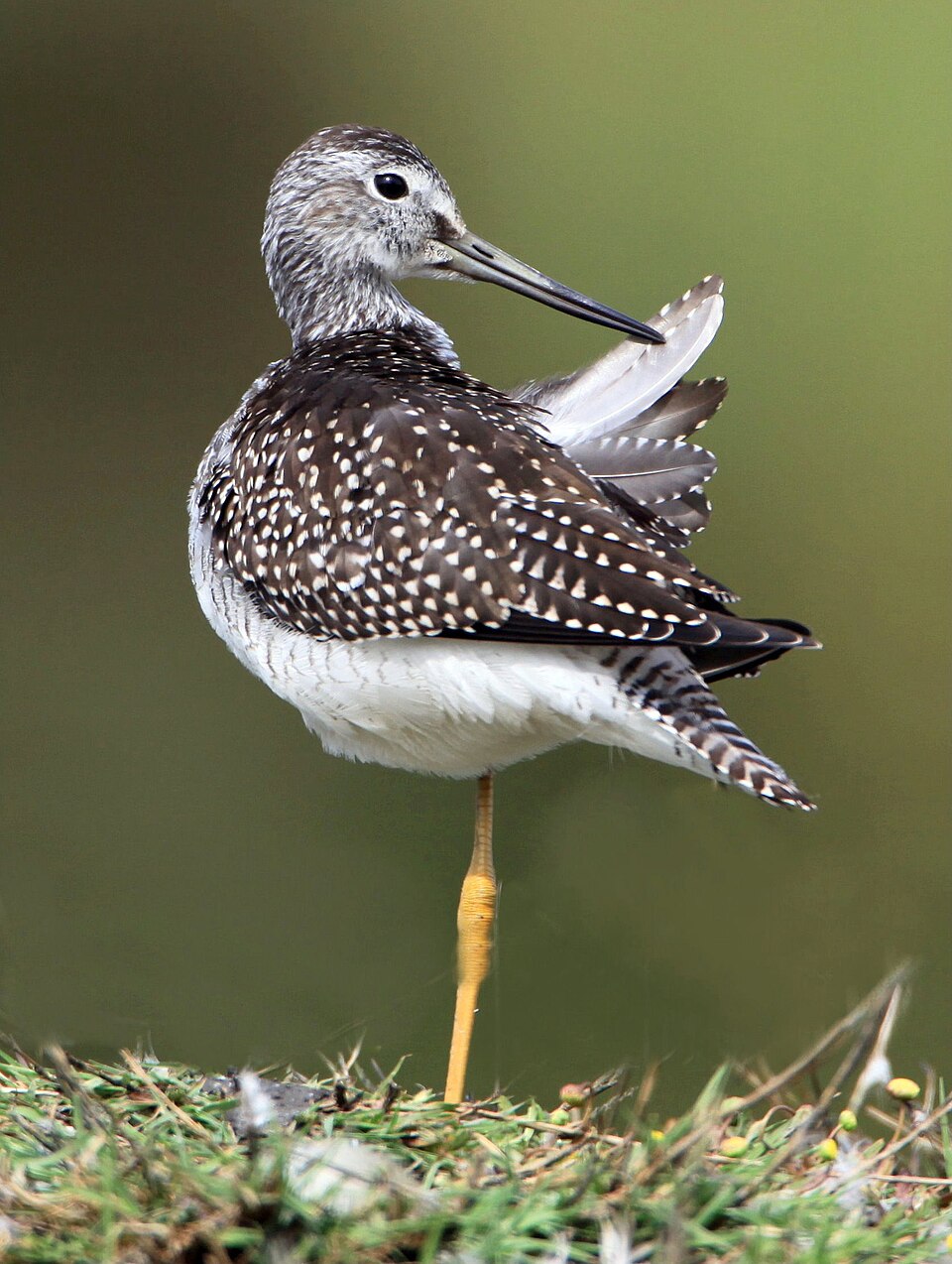
Greater Yellowlegs (Tringa melanoleuca) Greater Yellowlegs
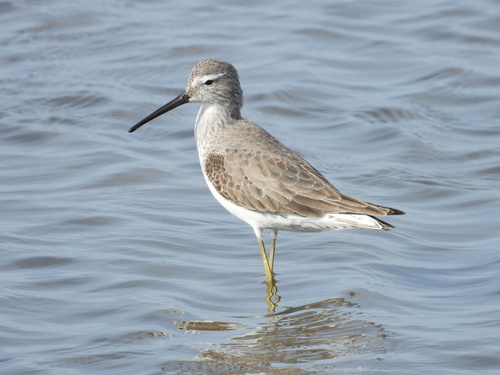
Stilt Sandpiper (Calidris himantopus) Stilt Sandpiper

Media

Loading…

In short

The most reliable way to separate Greater Yellowlegs from Stilt Sandpiper is by overall structure and bill shape: Greater Yellowlegs is a much larger, lankier bird with a long, straight, slightly upturned bill, while Stilt Sandpiper is smaller and more compact, with a shorter, slightly decurved bill. In flight, Stilt Sandpiper lacks a wingbar and shows a white rump, while Greater Yellowlegs has a plain gray-brown upperwing and white rump. Juvenile and nonbreeding plumages can be confusing, but the yellowlegs' longer legs and bolder streaking on the neck and breast are helpful. Voice is also a strong clue: Greater Yellowlegs gives a loud, clear three-note whistle, while Stilt Sandpiper is quieter.

Identification tips

  1. Size and structure: Greater Yellowlegs is much larger and taller than Stilt Sandpiper, with long, bright yellow legs and a lanky, upright stance. Use this especially when birds are side by side.
  2. Bill shape: Greater Yellowlegs has a long, straight to slightly upturned bill that is longer than its head. Stilt Sandpiper's bill is shorter, only slightly decurved, and never obviously upturned.
  3. Leg color: Both species have yellowish legs, but Greater Yellowlegs' are bright yellow, while Stilt Sandpiper's are greenish-yellow and usually duller. This is subtle and unreliable at distance or in poor light.
  4. Flight pattern: Both species show a white rump, but Stilt Sandpiper lacks any wingbar in flight, while Greater Yellowlegs has plain gray-brown upperwings. Neither has a strong contrasting wing pattern, so focus on size and structure in flight.
  5. Head pattern: Stilt Sandpiper (all ages) shows a strong white supercilium, especially obvious in juveniles and winter adults. Greater Yellowlegs lacks this, showing a more uniform head with fine streaking.
  6. Breast and belly: Breeding Stilt Sandpiper is heavily barred below, while Greater Yellowlegs has coarse, dark streaking on the neck and upper breast but is otherwise white below. Juvenile Stilt Sandpiper lacks barring below but has a clean, unstreaked belly.
  7. Back and scapulars: Juvenile Stilt Sandpiper shows white-fringed back feathers, giving a scaly appearance. Greater Yellowlegs has a plain gray-brown back in all plumages.
  8. Posture and feeding: Greater Yellowlegs stands tall and often feeds in deeper water, sometimes stirring the water with its bill. Stilt Sandpiper is more crouched and probes methodically.
  9. Voice: If you hear a loud, clear, three-note whistle, it's Greater Yellowlegs. Stilt Sandpiper is quiet and rarely calls conspicuously.
  10. Flock association: Stilt Sandpiper is usually with other small sandpipers ('peeps'), while Greater Yellowlegs is often solitary or with other yellowlegs.
  11. Bill color: Both have dark bills, but Greater Yellowlegs' bill is proportionally longer and more robust.
  12. Seasonal confusion: In nonbreeding plumage, both species become plainer, but the yellowlegs' size, longer legs, and streaked neck remain good clues.
  13. Habitat overlap: Both use similar wetland habitats on migration, so do not rely on context alone for identification.
  14. Juvenile confusion: Juvenile Stilt Sandpiper can be mistaken for yellowlegs at a distance, but note the smaller size, strong supercilium, and shorter, slightly drooping bill.
  15. When in doubt: If you cannot judge size or bill shape, look for the combination of strong supercilium (Stilt Sandpiper) versus streaked neck and breast (Greater Yellowlegs).

Size

Greater Yellowlegs is substantially larger and heavier than Stilt Sandpiper. Greater Yellowlegs averages about 170 g in body mass and measures 29–40 cm in length with a 60 cm wingspan. Stilt Sandpiper is much smaller, weighing only 50–70 g, with a length of 18–23 cm and a wingspan of 37–42 cm. In the field, Greater Yellowlegs stands much taller, with longer legs and a more elongated silhouette, while Stilt Sandpiper appears more compact and lower to the ground.

Plumage

Juvenile and nonbreeding Stilt Sandpipers show a strong white supercilium and a white rump, and in flight, they lack any wingbar—this is a key difference from many other shorebirds, but both species here have plain upperwings. Juvenile Stilt Sandpipers have a brownish back with white feather fringes and a strong head pattern, but no barring below. Adult breeding Stilt Sandpipers are heavily barred below and have reddish-orange patches above and below the supercilium. Greater Yellowlegs, in all plumages, shows a coarsely streaked neck and breast, with a mostly plain gray-brown back and white underparts. Both species have white rumps, but Greater Yellowlegs never shows the strong head pattern or barring below of breeding Stilt Sandpiper. The yellowlegs' bill is longer than the head and often slightly upturned, while Stilt Sandpiper's is shorter and only slightly decurved. Leg color is yellow in Greater Yellowlegs and greenish-yellow in Stilt Sandpiper, but this can be subtle at a distance.

Behaviour

Greater Yellowlegs often forages actively in shallow water, sometimes stirring the water with its bill, and tends to be more upright and alert in posture. Stilt Sandpiper feeds by probing methodically, often in deeper water than most small sandpipers, but still appears more crouched and less upright than yellowlegs. In mixed flocks, Greater Yellowlegs stands out by its height and tendency to wade deeper, while Stilt Sandpiper blends in more with other small sandpipers.

Habitat

Both species can be found in shallow wetlands, mudflats, and flooded fields during migration. Greater Yellowlegs is more likely to be seen in slightly deeper water and is often solitary or in small groups. Stilt Sandpiper is typically found in mixed flocks with other 'peeps' and prefers muddy edges and shallow water, but can also wade fairly deep. There is considerable overlap in migration stopover sites, so context alone is rarely diagnostic.

Voice

Greater Yellowlegs is much more vocal, giving a loud, clear, three-syllable whistle, with the third note lower in pitch. This call is distinctive and carries well. Stilt Sandpiper is generally quiet, with no loud, diagnostic call; its vocalizations are softer and less likely to be noticed by birders in the field.

Submit a better description

Use the same sections as the comparison. Your text is published immediately.

The most reliable way to separate Greater Yellowlegs from Stilt Sandpiper is by overall structure and bill shape: Greater Yellowlegs is a much larger, lankier bird with a long, straight, slightly upturned bill, while Stilt Sandpiper is smaller and more compact, with a shorter, slightly decurved bill. In flight, Stilt Sandpiper lacks a wingbar and shows a white rump, while Greater Yellowlegs has a plain gray-brown upperwing and white rump. Juvenile and nonbreeding plumages can be confusing, but the yellowlegs' longer legs and bolder streaking on the neck and breast are helpful. Voice is also a strong clue: Greater Yellowlegs gives a loud, clear three-note whistle, while Stilt Sandpiper is quieter.

  1. Size and structure: Greater Yellowlegs is much larger and taller than Stilt Sandpiper, with long, bright yellow legs and a lanky, upright stance. Use this especially when birds are side by side.
  2. Bill shape: Greater Yellowlegs has a long, straight to slightly upturned bill that is longer than its head. Stilt Sandpiper's bill is shorter, only slightly decurved, and never obviously upturned.
  3. Leg color: Both species have yellowish legs, but Greater Yellowlegs' are bright yellow, while Stilt Sandpiper's are greenish-yellow and usually duller. This is subtle and unreliable at distance or in poor light.
  4. Flight pattern: Both species show a white rump, but Stilt Sandpiper lacks any wingbar in flight, while Greater Yellowlegs has plain gray-brown upperwings. Neither has a strong contrasting wing pattern, so focus on size and structure in flight.
  5. Head pattern: Stilt Sandpiper (all ages) shows a strong white supercilium, especially obvious in juveniles and winter adults. Greater Yellowlegs lacks this, showing a more uniform head with fine streaking.
  6. Breast and belly: Breeding Stilt Sandpiper is heavily barred below, while Greater Yellowlegs has coarse, dark streaking on the neck and upper breast but is otherwise white below. Juvenile Stilt Sandpiper lacks barring below but has a clean, unstreaked belly.
  7. Back and scapulars: Juvenile Stilt Sandpiper shows white-fringed back feathers, giving a scaly appearance. Greater Yellowlegs has a plain gray-brown back in all plumages.
  8. Posture and feeding: Greater Yellowlegs stands tall and often feeds in deeper water, sometimes stirring the water with its bill. Stilt Sandpiper is more crouched and probes methodically.
  9. Voice: If you hear a loud, clear, three-note whistle, it's Greater Yellowlegs. Stilt Sandpiper is quiet and rarely calls conspicuously.
  10. Flock association: Stilt Sandpiper is usually with other small sandpipers ('peeps'), while Greater Yellowlegs is often solitary or with other yellowlegs.
  11. Bill color: Both have dark bills, but Greater Yellowlegs' bill is proportionally longer and more robust.
  12. Seasonal confusion: In nonbreeding plumage, both species become plainer, but the yellowlegs' size, longer legs, and streaked neck remain good clues.
  13. Habitat overlap: Both use similar wetland habitats on migration, so do not rely on context alone for identification.
  14. Juvenile confusion: Juvenile Stilt Sandpiper can be mistaken for yellowlegs at a distance, but note the smaller size, strong supercilium, and shorter, slightly drooping bill.
  15. When in doubt: If you cannot judge size or bill shape, look for the combination of strong supercilium (Stilt Sandpiper) versus streaked neck and breast (Greater Yellowlegs).

Greater Yellowlegs is substantially larger and heavier than Stilt Sandpiper. Greater Yellowlegs averages about 170 g in body mass and measures 29–40 cm in length with a 60 cm wingspan. Stilt Sandpiper is much smaller, weighing only 50–70 g, with a length of 18–23 cm and a wingspan of 37–42 cm. In the field, Greater Yellowlegs stands much taller, with longer legs and a more elongated silhouette, while Stilt Sandpiper appears more compact and lower to the ground.

Juvenile and nonbreeding Stilt Sandpipers show a strong white supercilium and a white rump, and in flight, they lack any wingbar—this is a key difference from many other shorebirds, but both species here have plain upperwings. Juvenile Stilt Sandpipers have a brownish back with white feather fringes and a strong head pattern, but no barring below. Adult breeding Stilt Sandpipers are heavily barred below and have reddish-orange patches above and below the supercilium. Greater Yellowlegs, in all plumages, shows a coarsely streaked neck and breast, with a mostly plain gray-brown back and white underparts. Both species have white rumps, but Greater Yellowlegs never shows the strong head pattern or barring below of breeding Stilt Sandpiper. The yellowlegs' bill is longer than the head and often slightly upturned, while Stilt Sandpiper's is shorter and only slightly decurved. Leg color is yellow in Greater Yellowlegs and greenish-yellow in Stilt Sandpiper, but this can be subtle at a distance.

Greater Yellowlegs often forages actively in shallow water, sometimes stirring the water with its bill, and tends to be more upright and alert in posture. Stilt Sandpiper feeds by probing methodically, often in deeper water than most small sandpipers, but still appears more crouched and less upright than yellowlegs. In mixed flocks, Greater Yellowlegs stands out by its height and tendency to wade deeper, while Stilt Sandpiper blends in more with other small sandpipers.

Both species can be found in shallow wetlands, mudflats, and flooded fields during migration. Greater Yellowlegs is more likely to be seen in slightly deeper water and is often solitary or in small groups. Stilt Sandpiper is typically found in mixed flocks with other 'peeps' and prefers muddy edges and shallow water, but can also wade fairly deep. There is considerable overlap in migration stopover sites, so context alone is rarely diagnostic.

Greater Yellowlegs is much more vocal, giving a loud, clear, three-syllable whistle, with the third note lower in pitch. This call is distinctive and carries well. Stilt Sandpiper is generally quiet, with no loud, diagnostic call; its vocalizations are softer and less likely to be noticed by birders in the field.

Discard your changes?

You have unsaved edits. If you leave now, those changes will be lost.

Greater Yellowlegs · Stilt Sandpiper · My Tricky Birds