

Little Blue Heron vs Tricolored Heron
Egretta caerulea contro Egretta tricolor
Fai un quiz con Little Blue Heron e Tricolored Heron
 Little Blue Heron
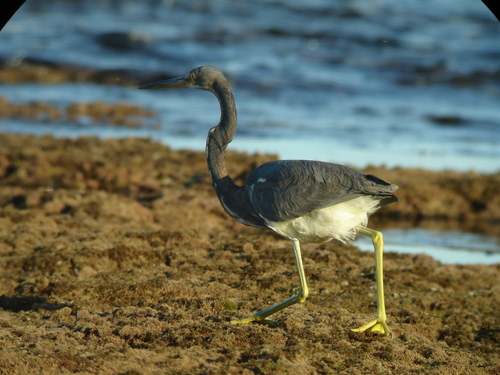 Tricolored Heron
In breve
Il segno di campo più affidabile per separare il Little Blue Heron dal Tricolored Heron è il modello del piumaggio, specialmente nei giovanili e negli adulti non in riproduzione. I giovanili Little Blue Heron sono completamente bianchi (eccetto per le primarie scure), mentre i Tricolored Heron non mostrano mai questa fase completamente bianca. Gli adulti Little Blue Heron sono uniformemente blu scuro con una testa color maroon, privi di bianco sotto, mentre gli adulti Tricolored Heron hanno una pancia bianca sorprendente e una linea bianca lungo il collo, in contrasto con la parte superiore blu-grigia. Anche il colore del becco e delle gambe differisce, specialmente durante la stagione di riproduzione, ma può essere sottile a distanza. Entrambe le specie sono simili in dimensioni e struttura, quindi concentrati sul piumaggio e sul colore del becco/gambe per una separazione sicura.
Consigli di identificazione
- Juvenile Plumage: Se vedi un airone completamente bianco con un becco bicolore (base blu, punta nera), è un giovanile Little Blue Heron. I Tricolored Heron non mostrano mai questa fase completamente bianca a qualsiasi età.
- Transition Plumage: I giovanili Little Blue Heron possono mostrare un patchwork di piume bianche e blu mentre mutano nel piumaggio adulto. I giovanili Tricolored Heron mantengono sempre una pancia bianca e una striscia sul collo, non apparendo mai maculati o completamente bianchi.
- Adult Underparts: Gli adulti Little Blue Heron sono uniformemente blu scuro senza bianco sulla pancia o sul collo. I Tricolored Heron mostrano sempre una pancia bianca brillante e una linea bianca lungo la parte anteriore del collo, in contrasto con la parte superiore blu-grigia.
- Bill Color: Il Little Blue Heron ha un becco bicolore (base blu pallido, punta nera) tutto l'anno. Il Tricolored Heron ha un becco giallastro o grigiastro con una punta nera nel piumaggio non in riproduzione, ma durante la stagione di riproduzione, il becco può diventare blu e nero. Il colore del becco è utile a distanza ravvicinata ma può sovrapporsi in luce brillante o in condizioni di riproduzione.
- Leg and Foot Color: Il Little Blue Heron ha gambe verdastre che diventano nere durante la stagione di riproduzione. Il Tricolored Heron ha gambe giallo scuro nel piumaggio non in riproduzione, diventando rosa negli adulti in riproduzione. Questo segno è sottile e meglio utilizzato in buona luce.
- Head and Neck Color: Durante la stagione di riproduzione, la testa del Little Blue Heron diventa rossa scura e le lore diventano turchesi. Il Tricolored Heron sviluppa piume blu sulla testa e sul collo, ma la testa rimane blu-grigia.
- White Neck Stripe: La linea bianca che corre lungo il collo è una caratteristica costante del Tricolored Heron a tutte le età e non è mai presente nel Little Blue Heron.
- Flight Appearance: In volo, il Tricolored Heron mostra un forte contrasto tra la pancia bianca e la parte superiore blu-grigia, mentre il Little Blue Heron appare uniformemente scuro (adulto) o completamente bianco (giovanile).
- Mixed Colonies: I Little Blue Heron spesso nidificano e si nutrono in colonie miste con altri aironi, incluso il Tricolored Heron. Fai attenzione al contesto; entrambi possono essere presenti insieme.
- Behavior: Il Tricolored Heron tende ad essere più solitario, ma questo non è un segno di campo forte; entrambe le specie possono essere viste sole o con altri.
- Size and Structure: Entrambe le specie sono simili in dimensioni e forma, con lunghi colli e gambe. Non fare affidamento sulla dimensione per la separazione.
- Seasonal Changes: Fai attenzione ai cambiamenti stagionali nel colore del becco, delle gambe e della testa, ma usali come segni di supporto piuttosto che identificatori primari.
- Regional Variation: Raramente, i giovanili Little Blue Heron a San Blas, Messico, possono mostrare castano sulla testa e punte delle ali più scure, ma questo è molto localizzato e di solito non è un fattore altrove.
- Voice: Non sono state notate differenze vocali distintive nelle fonti disponibili; non fare affidamento sui richiami per la separazione.
- Pitfalls: La maggiore confusione si verifica con i giovanili Little Blue Heron (completamente bianchi) e le Snowy Egrets, non con i Tricolored Heron. Per il Tricolored Heron, fai attenzione a non assumere che qualsiasi uccello completamente bianco sia un Tricolored—questo non si verifica mai.
Taglia
Both species are very similar in size, with Little Blue Heron averaging about 340g and Tricolored Heron about 375g [wikidata]. Both measure roughly 56–76 cm in length with comparable wingspans (Little Blue: 100–105 cm, Tricolored: 96 cm) [wikipedia]. In the field, size is not a reliable separator between these two; any perceived difference is minimal and often masked by posture or distance.
Piumaggio
-
Juvenile/Immature birds: Juvenile Little Blue Herons are almost entirely white, with only slightly dusky primaries, and a two-toned bill (pale blue base, black tip). As they molt into adult plumage, they show a patchy mix of white and blue feathers. Tricolored Heron juveniles never appear all white; instead, they have a blue-gray head, neck, and upperparts, with a white belly and a white line up the neck, even as immatures.
-
Adult nonbreeding: Adult Little Blue Herons are uniformly dark blue with a maroon to purple head and neck, and no white on the underparts. Tricolored Herons are blue-gray above, with a white belly and a white stripe running up the neck, creating a strong contrast.
-
Adult breeding: Both species develop ornamental plumes, but breeding Little Blue Herons show a dark red head and turquoise lores, with black legs and feet. Tricolored Herons develop blue filamentous plumes on the head and neck, buff plumes on the back, and their legs turn pink. Bill color in both can become more vivid, but Tricolored Heron may show a blue and black bicolored bill in breeding plumage.
Comportamento
I Tricolored Heron sono generalmente più solitari rispetto ai Little Blue Heron, che spesso nidificano e si nutrono in colonie miste. Tuttavia, entrambe le specie possono essere viste sole o in piccoli gruppi, e il comportamento di foraggiamento (caccia lenta in acque poco profonde) è ampiamente simile. Le differenze comportamentali sono sottili e di solito non sono diagnostiche per la separazione sul campo.
Habitat
Entrambe le specie si trovano in habitat umidi simili in tutto il continente americano, inclusi ambienti sia salini che dolci. I Little Blue Heron possono essere trovati in una gamma più ampia di habitat, ma entrambi sono regolarmente incontrati in paludi, lagune e estuari. L'habitat da solo non è un separatore affidabile, anche se il Tricolored Heron può mostrare una leggera preferenza per le aree costiere.
Little Blue Heron · Tricolored Heron · I miei uccelli difficili