
Motmot

ヒメアカクロサギ 対 サンショクサギ

Egretta caerulea 対 Egretta tricolor

ヒメアカクロサギとサンショクサギのクイズ

ヒメアカクロサギ (Egretta caerulea) ヒメアカクロサギ
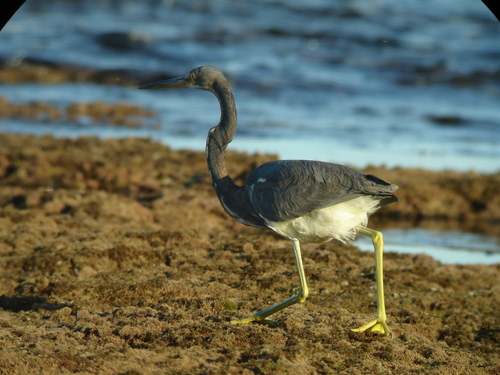
サンショクサギ (Egretta tricolor) サンショクサギ

メディア

読み込み中…

要点

ヒメアカクロサギとサンショクサギを区別する最も信頼できるフィールドマークは、特に幼鳥と非繁殖成鳥における羽毛のパターンです。幼鳥のヒメアカクロサギは完全に白色(薄暗い初列風切羽を除く)ですが、サンショクサギはこの完全な白色の段階を示すことはありません。成鳥のヒメアカクロサギは均一に濃い青色で、頭はマルーン色で、下には白色がありません。一方、成鳥のサンショクサギは目を引く白い腹部と首の上に白いラインを持ち、青灰色の上面と対照的です。くちばしと脚の色も異なり、特に繁殖期には顕著ですが、距離があると微妙に見えることがあります。両種はサイズと構造が似ているため、確実に区別するためには羽毛とくちばし/脚の色に注目してください。

識別のコツ

  1. Juvenile Plumage: 完全に白いヒロハシを見た場合、二色のくちばし(青い基部、黒い先端)を持つのは幼鳥のヒメアカクロサギです。サンショクサギはどの年齢でもこの完全な白色の段階を示しません。
  2. Transition Plumage: 幼いヒメアカクロサギは、成鳥の羽毛に換羽する際に白と青の羽毛のパッチワークを示すことがあります。サンショクサギの幼鳥は常に白い腹部と首のストライプを保持し、パッチ状や完全に白く見えることはありません。
  3. Adult Underparts: 成鳥のヒメアカクロサギは均一に濃い青色で、腹部や首に白色はありません。サンショクサギは常に明るい白い腹部と首の前に白いラインを示し、青灰色の上面と対照的です。
  4. Bill Color: ヒメアカクロサギは年間を通じて二色のくちばし(淡い青い基部、黒い先端)を持っています。サンショクサギは非繁殖羽毛では黄色がかったまたは灰色がかったくちばしを持ち、黒い先端がありますが、繁殖期にはくちばしが青と黒になることがあります。くちばしの色は近距離で有用ですが、明るい光や繁殖条件では重なることがあります。
  5. Leg and Foot Color: ヒメアカクロサギは繁殖期に黒くなる緑がかった脚を持っています。サンショクサギは非繁殖羽毛では暗い黄色の脚を持ち、繁殖成鳥ではピンクに変わります。このマークは微妙で、良い光の下で使用するのが最適です。
  6. Head and Neck Color: 繁殖期には、ヒメアカクロサギの頭は暗い赤色に変わり、目の周りはターコイズ色になります。サンショクサギは頭と首に青い羽毛を発達させますが、頭は青灰色のままです。
  7. White Neck Stripe: 首を上に走る白いラインは、サンショクサギのすべての年齢において常に存在する特徴であり、ヒメアカクロサギには決して存在しません。
  8. Flight Appearance: 飛行中、サンショクサギは白い腹部と青灰色の上面の間に強いコントラストを示しますが、ヒメアカクロサギは均一に暗い(成鳥)または完全に白い(幼鳥)ように見えます。
  9. Mixed Colonies: ヒメアカクロサギはしばしばサンショクサギを含む他のヒロハシと混合コロニーで巣を作り、餌を探します。文脈に注意してください。両方が一緒に存在することがあります。
  10. Behavior: サンショクサギは一般的にヒメアカクロサギよりも孤独ですが、これは強いフィールドマークではありません。両種は単独または他の個体と一緒に見ることができます。
  11. Size and Structure: 両種はサイズと形が似ており、長い首と脚を持っています。サイズに頼って区別しないでください。
  12. Seasonal Changes: くちばし、脚、頭の色の繁殖期の変化に注意を払い、これらを主な識別子ではなく補助的なマークとして使用してください。
  13. Regional Variation: メキシコのサンブラースでは、幼いヒメアカクロサギが頭に栗色を示し、翼の先端が暗くなることがありますが、これは非常に局所的であり、他の場所では通常要因ではありません。
  14. Voice: 利用可能な情報源では特に目立った声の違いは記載されていません。呼び声に頼って区別しないでください。
  15. Pitfalls: 最大の混乱は、幼いヒメアカクロサギ(完全に白)とユキコサギとの間で発生し、サンショクサギではありません。サンショクサギについては、完全に白い鳥がサンショクサギであると仮定しないように注意してください。これは決して起こりません。

大きさ

両種はサイズが非常に似ており、ヒメアカクロサギは平均約340g、サンショクサギは約375gです [wikidata]。両者は長さが約56〜76 cmで、翼幅も比較可能です(ヒメアカ: 100〜105 cm、サンショク: 96 cm) [wikipedia]。フィールドでは、サイズはこれら二種の間で信頼できる区別要因ではありません。認識される違いは最小限であり、姿勢や距離によってしばしば隠されます。

羽色

行動

サンショクサギは一般的にヒメアカクロサギよりも孤独ですが、両種は単独または小さな群れで見ることができ、餌を探す行動(浅い水でのゆっくりとした忍び寄り)は広く似ています。行動の違いは微妙で、通常フィールドでの区別には診断的ではありません。

生息環境

両種はアメリカ大陸全体の類似した湿地生息地に生息しており、塩水環境と淡水環境の両方を含みます。ヒメアカクロサギはより広範囲の生息地で見られることがありますが、両者は定期的に湿地、潟、河口で遭遇します。生息地だけでは信頼できる区別要因ではありませんが、サンショクサギは沿岸地域をわずかに好む傾向があります。

より良い説明を送る

比較と同じ項目を使ってください。文章はすぐに公開されます。

The most reliable field mark to separate Little Blue Heron from Tricolored Heron is the plumage pattern, especially in juveniles and nonbreeding adults. Juvenile Little Blue Herons are entirely white (except for dusky primaries), while Tricolored Herons never show this all-white phase. Adult Little Blue Herons are uniformly dark blue with a maroon head, lacking any white below, whereas adult Tricolored Herons have a striking white belly and a white line up the neck, contrasting with blue-gray upperparts. Bill and leg color also differ, especially in breeding season, but can be subtle at a distance. Both species are similar in size and structure, so focus on plumage and bill/leg color for confident separation.

  1. Juvenile Plumage: If you see an all-white heron with a two-toned bill (blue base, black tip), it is a juvenile Little Blue Heron. Tricolored Herons never show this all-white phase at any age.
  2. Transition Plumage: Immature Little Blue Herons may show a patchwork of white and blue feathers as they molt into adult plumage. Tricolored Heron immatures always retain a white belly and neck stripe, never appearing patchy or all-white.
  3. Adult Underparts: Adult Little Blue Herons are uniformly dark blue with no white on the belly or neck. Tricolored Herons always show a bright white belly and a white line up the front of the neck, contrasting with blue-gray upperparts.
  4. Bill Color: Little Blue Heron has a two-toned bill (pale blue base, black tip) year-round. Tricolored Heron has a yellowish or grayish bill with a black tip in nonbreeding plumage, but in breeding season, the bill can become blue and black. Bill color is useful at close range but can overlap in bright light or breeding condition.
  5. Leg and Foot Color: Little Blue Heron has greenish legs that turn black in breeding season. Tricolored Heron has dark yellow legs in nonbreeding plumage, turning pink in breeding adults. This mark is subtle and best used in good light.
  6. Head and Neck Color: In breeding season, Little Blue Heron's head turns dark red and the lores become turquoise. Tricolored Heron develops blue plumes on the head and neck, but the head remains blue-gray.
  7. White Neck Stripe: The white line running up the neck is a constant feature of Tricolored Heron at all ages and is never present on Little Blue Heron.
  8. Flight Appearance: In flight, Tricolored Heron shows a strong contrast between white belly and blue-gray upperparts, while Little Blue Heron appears uniformly dark (adult) or all white (juvenile).
  9. Mixed Colonies: Little Blue Herons often nest and forage in mixed colonies with other herons, including Tricolored Heron. Be cautious of context; both may be present together.
  10. Behavior: Tricolored Heron tends to be more solitary, but this is not a strong field mark; both species can be seen alone or with others.
  11. Size and Structure: Both species are similar in size and shape, with long necks and legs. Do not rely on size for separation.
  12. Seasonal Changes: Pay attention to breeding season changes in bill, leg, and head color, but use these as supporting marks rather than primary identifiers.
  13. Regional Variation: Rarely, juvenile Little Blue Herons in San Blas, Mexico, may show chestnut on the head and darker wingtips, but this is very localized and not usually a factor elsewhere.
  14. Voice: No distinctive vocal differences noted in the available sources; do not rely on calls for separation.
  15. Pitfalls: The biggest confusion occurs with juvenile Little Blue Herons (all white) and Snowy Egrets, not Tricolored Herons. For Tricolored Heron, beware of assuming any all-white bird is a Tricolored—this never occurs.

Both species are very similar in size, with Little Blue Heron averaging about 340g and Tricolored Heron about 375g [wikidata]. Both measure roughly 56–76 cm in length with comparable wingspans (Little Blue: 100–105 cm, Tricolored: 96 cm) [wikipedia]. In the field, size is not a reliable separator between these two; any perceived difference is minimal and often masked by posture or distance.

  • Juvenile/Immature birds: Juvenile Little Blue Herons are almost entirely white, with only slightly dusky primaries, and a two-toned bill (pale blue base, black tip). As they molt into adult plumage, they show a patchy mix of white and blue feathers. Tricolored Heron juveniles never appear all white; instead, they have a blue-gray head, neck, and upperparts, with a white belly and a white line up the neck, even as immatures.

  • Adult nonbreeding: Adult Little Blue Herons are uniformly dark blue with a maroon to purple head and neck, and no white on the underparts. Tricolored Herons are blue-gray above, with a white belly and a white stripe running up the neck, creating a strong contrast.

  • Adult breeding: Both species develop ornamental plumes, but breeding Little Blue Herons show a dark red head and turquoise lores, with black legs and feet. Tricolored Herons develop blue filamentous plumes on the head and neck, buff plumes on the back, and their legs turn pink. Bill color in both can become more vivid, but Tricolored Heron may show a blue and black bicolored bill in breeding plumage.

Tricolored Herons are generally more solitary than Little Blue Herons, which often nest and forage in mixed-species colonies. However, both species can be seen alone or in small groups, and foraging behavior (slow stalking in shallow water) is broadly similar. Behavioral differences are subtle and not usually diagnostic for field separation.

Both species occur in similar wetland habitats across the Americas, including both saltwater and freshwater environments. Little Blue Herons may be found in a wider range of habitats, but both are regularly encountered in marshes, lagoons, and estuaries. Habitat alone is not a reliable separator, though Tricolored Heron may show a slight preference for coastal areas.

変更を破棄しますか?

保存していない編集があります。今離れると失われます。

ヒメアカクロサギ · サンショクサギ · 苦手な鳥