

Pacific Emerald Dove vs Bronze Ground Dove
Chalcophaps longirostris contro Pampusana beccarii
Fai un quiz con Pacific Emerald Dove e Bronze Ground Dove
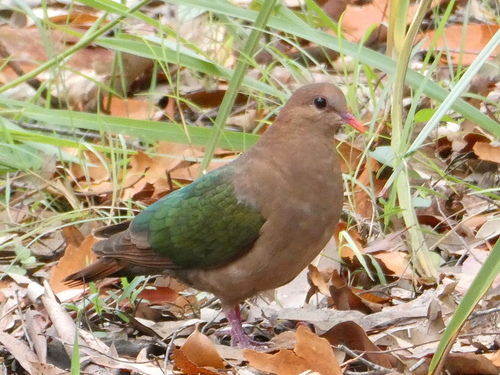 Pacific Emerald Dove
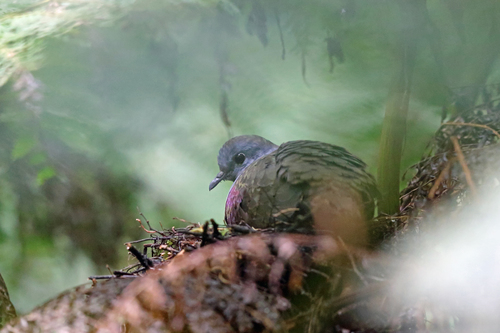 Bronze Ground Dove
In breve
Il segno di campo più affidabile per separare il Pacific Emerald Dove dal Bronze Ground Dove è la combinazione di parti superiori di un brillante verde smeraldo e ampie barre nere e bianche sulla parte bassa della schiena, visibili in volo sul Pacific Emerald Dove, rispetto all'assenza di un verde così vivido e di barre nel Bronze Ground Dove. I Pacific Emerald Dove immaturi mostrano una scollatura marrone sulle ali e sul corpo, una caratteristica non descritta per il Bronze Ground Dove. Il Pacific Emerald Dove è più grande, più terrestre e spesso visto camminare a terra in aree aperte di foresta densa, mentre il Bronze Ground Dove è tipicamente più piccolo e meno appariscente. Se vedi un piccione tozzo di dimensioni medie con un becco rosso brillante, ali smeraldo e una tendenza a camminare piuttosto che a volare, è probabile che sia un Pacific Emerald Dove.
Consigli di identificazione
- Il Pacific Emerald Dove immaturo mostra una scollatura marrone sul corpo e sulle copritrici delle ali—se lo vedi, specialmente su un uccello con ali verdi, non è un Bronze Ground Dove.
- In volo, cerca ampie barre nere e bianche sulla parte bassa della schiena del Pacific Emerald Dove; il Bronze Ground Dove non ha queste.
- Le parti superiori e le ali di un brillante verde smeraldo sono diagnostiche per il Pacific Emerald Dove in tutte le livree tranne che nei più giovani giovanili; il Bronze Ground Dove non è mai di questo verde.
- Il maschio adulto del Pacific Emerald Dove ha una corona grigia e una macchia bianca sulla spalla; nessuna di queste caratteristiche è presente nel Bronze Ground Dove.
- Le femmine e gli immaturi del Pacific Emerald Dove sono più marroni ma mostrano ancora verde sulle ali; il Bronze Ground Dove mancherà sia del verde che dei segni sulla spalla.
- Il Pacific Emerald Dove ha un becco rosso brillante e zampe/piedi rufous—utile a distanza ravvicinata o con buona luce.
- Il Pacific Emerald Dove è più robusto e lungo (23–28 cm) rispetto al Bronze Ground Dove; la dimensione può essere giudicata se entrambe le specie sono viste insieme o con esperienza.
- Il Pacific Emerald Dove spesso cammina a terra in aree aperte o ai margini della foresta, mentre il Bronze Ground Dove è più riservato e meno probabile da vedere camminare in aree aperte.
- Il volo del Pacific Emerald Dove è veloce, diretto e basso, con sottovoli color crema e penne volanti castanee; il volo del Bronze Ground Dove non è descritto ma manca del verde e delle barre.
- Se senti una sequenza di cooing bassa e crescente o un nasale 'hoo-hoo-hoon,' è il Pacific Emerald Dove; il richiamo del Bronze Ground Dove non è descritto qui.
- Il Pacific Emerald Dove è generalmente domestico e avvicinabile; se un piccione terrestre consente un avvicinamento ravvicinato, è più probabile che sia questa specie.
- Controlla il contesto: il Pacific Emerald Dove utilizza una vasta gamma di habitat, inclusi giardini e mangrovie; il Bronze Ground Dove è più probabile in foreste dense e indisturbate.
- La coda e le penne volanti del Pacific Emerald Dove sono nerastre; cerca contrasto con il dorso verde negli uccelli in posa.
- I maschi del Pacific Emerald Dove eseguono una danza oscillante durante il corteggiamento—se vedi questo comportamento, è diagnostico.
- Se sei incerto, concentrati sulla combinazione di parti superiori verdi, becco rosso e abitudini terrestri per il Pacific Emerald Dove; l'assenza di queste caratteristiche dovrebbe sollecitare cautela e ulteriori verifiche.
Taglia
Il Pacific Emerald Dove è un piccione tozzo di dimensioni medie, tipicamente lungo 23–28 cm [wikipedia]. Il Bronze Ground Dove è più piccolo, ma le misure esatte non sono fornite nelle note disponibili. Sul campo, il Pacific Emerald Dove apparirà notevolmente più robusto e lungo rispetto al Bronze Ground Dove, con una costruzione più robusta e una coda proporzionalmente più lunga.
Piumaggio
- Uccelli immaturi/giovanili: Gli immaturi del Pacific Emerald Dove assomigliano alle femmine ma mostrano una scollatura marrone distintiva sul corpo e sulle copritrici delle ali, una caratteristica non descritta per il Bronze Ground Dove. Questa scollatura è un forte indizio per il Pacific Emerald Dove negli uccelli giovani.
- Maschi adulti: I maschi del Pacific Emerald Dove hanno un dorso e ali di un brillante verde smeraldo, una corona grigia e una macchia bianca sulla spalla. Il Bronze Ground Dove manca di queste parti superiori verdi vivide e della macchia bianca sulla spalla.
- Femmine adulte: Le femmine del Pacific Emerald Dove sono più marroni dei maschi, con un segno grigio sulla spalla, ma mostrano ancora verde sulle ali. Le femmine del Bronze Ground Dove non sono descritte in dettaglio, ma ci si aspetta l'assenza di verde e segni sulla spalla.
- Volo: In volo, il Pacific Emerald Dove mostra un sottovolo color crema, penne volanti castanee, coda nerastra e ampie barre nere e bianche sulla parte bassa della schiena—queste non sono presenti nel Bronze Ground Dove. L'impressione generale di verde e forti barre è unica per il Pacific Emerald Dove.
- Becco e zampe: Il Pacific Emerald Dove ha un becco rosso brillante e zampe e piedi rufous, che non sono descritti per il Bronze Ground Dove ma sono distintivi sul campo.
Comportamento
Il Pacific Emerald Dove è piuttosto terrestre, spesso camminando a terra in cerca di frutta caduta, ed è generalmente domestico e avvicinabile. Preferisce allontanarsi camminando piuttosto che volare quando disturbato, e quando vola, si muove abilmente attraverso la foresta densa. Il comportamento del Bronze Ground Dove non è dettagliato nelle note disponibili, ma è generalmente meno appariscente e meno probabile da vedere camminare in aree aperte. Se vedi un piccione camminare con sicurezza sul pavimento della foresta, specialmente in aree più aperte, è più probabile che sia un Pacific Emerald Dove.
Habitat
Il Pacific Emerald Dove abita la foresta pluviale, boschi umidi densi, fattorie, giardini, mangrovie e brughiere costiere, spesso in aree con macchie di copertura densa ma anche in habitat più aperti e disturbati. L'habitat del Bronze Ground Dove non è descritto nelle note, ma è generalmente più ristretto a foreste dense e meno probabile da trovare in habitat aperti o ai margini rispetto al Pacific Emerald Dove.
Voce
Il Pacific Emerald Dove emette un cooing basso, morbido e lamentoso di circa sei o sette note, iniziando silenziosamente e crescendo, così come un nasale 'hoo-hoo-hoon.' Le vocalizzazioni del Bronze Ground Dove non sono descritte nelle note disponibili, quindi la voce è diagnostica solo se senti il cooing distintivo del Pacific Emerald Dove.
Pacific Emerald Dove · Bronze Ground Dove · I miei uccelli difficili