

Pied-billed Grebe vs Common Gallinule
Podilymbus podiceps contro Gallinula galeata
Fai un quiz con Pied-billed Grebe e Common Gallinule
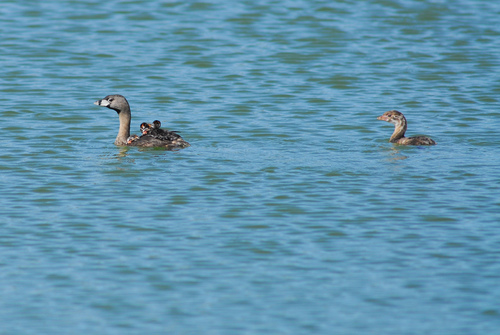 Pied-billed Grebe
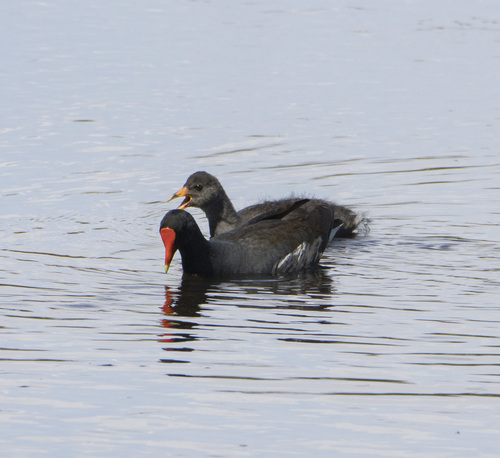 Common Gallinule
In breve
Il segno distintivo più affidabile per separare il Pied-billed Grebe dal Common Gallinule è la forma e la colorazione del becco: il Pied-billed Grebe ha un becco corto e spesso, simile a quello di un pollo, con una base chiara e una bold band nera in estate, mentre il Common Gallinule mostra un becco rosso brillante con una punta gialla e uno scudo frontale rosso prominente (adulti). In volo, il Pied-billed Grebe non presenta bianco sulla parte superiore dell'ala, mentre il Common Gallinule mostra copritail bianchi e flash bianchi lungo i fianchi e l'ala inferiore. Anche la struttura è distintiva: il Pied-billed Grebe è compatto, con collo corto, e galleggia basso nell'acqua, mentre il Common Gallinule è più snello, con gambe più lunghe, e spesso si vede camminare o nuotare con la testa che dondola. Anche i giovani differiscono: i giovani grebes sono striati, mentre i giovani gallinule sono più marroni e mancano dello scudo rosso. Entrambe le specie possono essere trovate in habitat umidi simili, ma il loro comportamento e la loro forma sono piuttosto diversi.
Consigli di identificazione
- Forma e colore del becco (tutte le età): Il Pied-billed Grebe ha un becco corto e spesso, simile a quello di un pollo, che è chiaro con una band nera in estate; il Common Gallinule ha un becco snello e appuntito che è rosso brillante con una punta gialla e uno scudo frontale rosso (adulti).
- Schema dell'ala superiore in volo (tutte le età): Il Pied-billed Grebe non mostra bianco sull'ala superiore, apparendo uniformemente marrone; il Common Gallinule mostra flash bianchi lungo i fianchi e l'ala inferiore, con copritail bianchi visibili in volo e quando nuota.
- Piumaggio giovanile: I giovani grebes sono audacemente striati in bianco e nero sul viso e sul collo; i giovani gallinule sono di un marrone uniforme e mancano dello scudo rosso e del becco.
- Struttura del corpo: Il grebe è compatto, con collo corto, e si trova basso nell'acqua; il gallinule è più snello, con gambe più lunghe, con una postura più eretta e spesso si vede camminare o stare in piedi sulla vegetazione.
- Piedi e camminata: Il grebe ha dita lobate e non può camminare sulla terra; il gallinule ha dita lunghe e non palmate ed è spesso visto camminare, saltare o correre sulla terra o su piante galleggianti.
- Postura di nuoto: Il grebe galleggia basso, spesso con solo la testa e il collo visibili, specialmente quando allarmato; il gallinule si trova più in alto ed è più galleggiante.
- Gola e viso (adulti in riproduzione): Il grebe mostra una macchia nera sulla gola in estate; il gallinule ha una gola scura uniforme ma uno scudo rosso brillante sopra il becco.
- Sottocoda: Entrambe le specie hanno copritail bianchi, ma quelli del gallinule sono più prominenti e spesso gonfi, specialmente quando sbattono la coda.
- Colore delle gambe: Il gallinule ha gambe gialle; le gambe del grebe non sono di solito visibili.
- Comportamento in volo: Il grebe vola raramente e appare goffo, con i piedi che penzolano dietro; il gallinule decolla più facilmente, con le gambe penzolanti e forti battiti d'ala.
- Schema della testa: Il grebe ha una corona scura e un viso uniforme; il gallinule ha un viso scuro uniforme negli adulti, ma lo scudo è diagnostico.
- Comportamento quando disturbato: Il grebe si tuffa e può riemergere lontano dal pericolo; il gallinule spesso corre o vola per brevi distanze, a volte con i giovani che si aggrappano all'adulto.
- Uso dell'habitat: Se visto camminare sulla terra o su piante galleggianti, è quasi certamente un gallinule, non un grebe.
- Cambiamenti stagionali: Il grebe perde la gola nera e la band del becco in inverno ma rimane uniforme; il becco e lo scudo del gallinule diventano più opachi ma la struttura e i fianchi bianchi rimangono.
- Confusione potenziale: Gli osservatori inesperti possono scambiare i grebes per anatre a causa delle loro abitudini, ma la forma del becco e la mancanza di comportamento di camminata sono distinzioni chiave.
Taglia
Il Pied-billed Grebe e il Common Gallinule sono simili in lunghezza (Grebe: 31–38 cm; Gallinule: 32–35 cm), ma il Gallinule è leggermente più pesante in media (massa del Grebe: 440 g; Gallinule: 310–456 g). Il Gallinule ha un'apertura alare più lunga (54–62 cm contro i 45–62 cm del Grebe) e appare più snello e con gambe più lunghe, mentre il grebe è più compatto e si trova più in basso nell'acqua. Il corpo del grebe è più robusto e con collo più corto, con i piedi posizionati molto indietro, rendendolo goffo sulla terra, mentre il gallinule è più eretto e agile sia sulla terra che sulla vegetazione galleggiante.
Piumaggio
- Uccelli giovanili/immaturi: I giovani Pied-billed Grebe sono audacemente striati in bianco e nero sul viso e sul collo, somigliando a una versione più piccola e chiara dell'adulto ma con striature chiare. I giovani Common Gallinule sono più marroni in generale, mancano dello scudo rosso e del becco, e non mostrano striature.
- Adulti in volo: Il Pied-billed Grebe non presenta bianco sulla parte superiore dell'ala, apparendo uniformemente marrone sopra; il Common Gallinule mostra copritail bianchi e flash bianchi lungo i fianchi e l'ala inferiore quando vola o sbatte.
- Piumaggio di riproduzione degli adulti: Il Pied-billed Grebe è marrone uniforme con una macchia nera sulla gola e un becco spesso e chiaro con una band nera. Il Common Gallinule è scuro nel complesso ma con un becco rosso brillante, punta gialla e scudo rosso, oltre a gambe gialle e sottocoda bianca.
- Non riproduttivo/inverno: Il grebe perde la gola nera e la band del becco diventa meno distintiva, ma rimane marrone uniforme. Il gallinule mantiene il sottocoda e i fianchi bianchi, ma il becco e lo scudo sono più opachi.
Comportamento
Il Pied-billed Grebe è quasi sempre visto nuotare o tuffarsi, raramente venendo sulla terra, e spesso affonda basso nell'acqua o si tuffa quando disturbato. I suoi piedi sono posizionati molto indietro, rendendolo incapace di camminare sulla terra. Il Common Gallinule è spesso visto nuotare, ma cammina anche e cerca cibo sulla vegetazione galleggiante o sul fango, usando le sue lunghe dita per bilanciarsi. Il gallinule è più probabile che venga visto camminare, saltare su foglie di ninfea, o persino correre su terreni aperti. In volo, i grebes appaiono goffi e volano raramente, di solito solo quando allarmati; i gallinule volano più facilmente e possono mostrare esplosioni di battiti d'ala rapidi con le gambe penzolanti.
Habitat
Entrambe le specie si trovano in zone umide d'acqua dolce, stagni e paludi con vegetazione emergente. Il Pied-billed Grebe preferisce acque ferme ed è più strettamente acquatico, raramente avventurandosi sulla terra o su vegetazione densa. Il Common Gallinule utilizza habitat simili ma è più probabile che venga visto camminare lungo il bordo dell'acqua, su piante galleggianti, o persino in canali e fossati. Entrambi possono essere trovati insieme, ma le abitudini terrestri del gallinule possono essere un indizio.
Pied-billed Grebe · Common Gallinule · I miei uccelli difficili